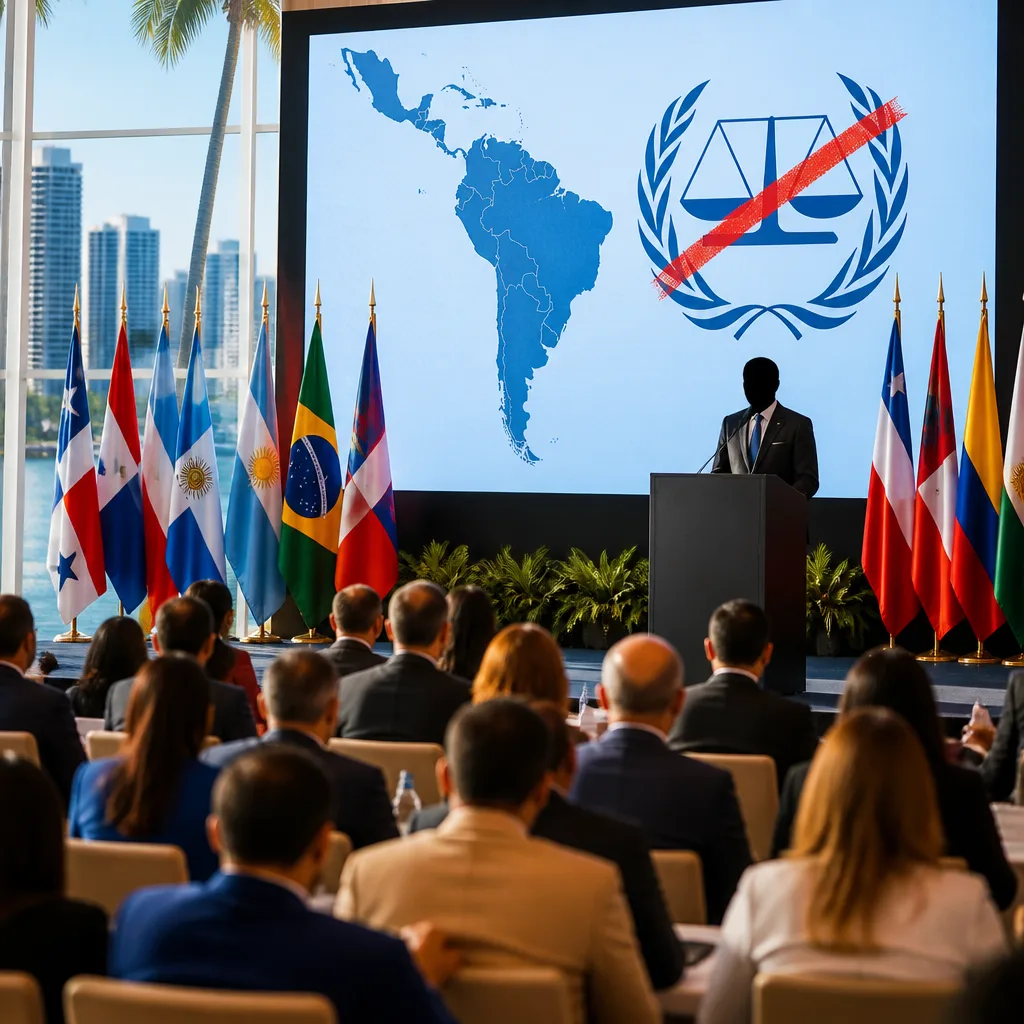
US Defence Secretary Pete Hegseth on 12 August 2026 publicly urged Latin American members of the Americas Counter‑Cartel Coalition (ACCC) to withdraw from the International Criminal Court (ICC), saying the tribunal was eroding national sovereignty and threatening the ability of states to deploy their forces under domestic law.
Why the call matters
Hegseth’s intervention deepens a geopolitical campaign by Washington against the ICC and raises questions for ICC member states about political and legal pressure from a powerful security partner. South Africa, as an ICC member that has emphasised international criminal justice in recent years, faces reputational and diplomatic stakes if regional partners follow the US lead.
Speaking in Panama, Hegseth told ACCC members:
“I strongly encourage every ACCC member to leave the ICC and reject their attempts to rob your governments and your courts of your sovereignty.”
He framed the court as attempting to assert jurisdiction over US and partner military personnel and described its actions as a “lawless power grab”, according to reporting of his remarks. Hegseth argued countries should keep the authority to deploy forces and defend citizens under their own laws and constitutions.
Context of US opposition
The United States is not a party to the ICC and has long resisted the court’s jurisdiction. The source reports that Washington has intensified its campaign against the tribunal after the ICC issued arrest warrants in November 2024 for Israeli Prime Minister Benjamin Netanyahu and former Israeli defence minister Yoav Gallant over alleged crimes related to operations in Gaza.
Hegseth’s remarks followed a broader push by senior US officials. The source references efforts led by Secretary of State Marco Rubio and the stated support of former President Donald Trump for measures to curb the court’s reach. At Camp David last month, Rubio described the ICC as having made itself “illegitimate” by asserting jurisdiction over non‑member states; Trump said Rubio sought to “defend Bibi and various other people,” according to the report.
- Who spoke: US Defence Secretary Pete Hegseth.
- Where: Remarks delivered in Panama to ACCC members.
- Core message: Withdraw from the ICC to protect sovereignty and national control over military deployments.
Immediate and wider consequences
If ACCC members act on Hegseth’s call, the ICC’s universality in the Americas would be further weakened, complicating international efforts to hold individuals accountable for core international crimes. For South Africa, which has invoked the ICC in high‑profile cases, a regional erosion of support could reduce diplomatic leverage and fragment approaches to international justice.
Hegseth’s comments also underline an emerging fault line between countries that prioritise multilateral legal mechanisms and those advocating unilateral national control of security policy. The source notes Hegseth’s long‑standing view that international rules limit military effectiveness — a theme he has promoted as part of a wider “warrior culture” initiative.
| Actor | Position on ICC (from source) |
|---|---|
| Pete Hegseth / US Defence Department | Urges ACCC members to leave the ICC; calls court a threat to sovereignty |
| United States (administration context) | Not a party to the ICC; increased pressure after ICC arrest warrants for Israeli leaders in Nov 2024 |
The debate is likely to resurface in diplomatic channels and at regional security forums. For ICC supporters, Hegseth’s intervention is a reminder that legal institutions operate within contested political environments, and that strategic partnerships can influence member states’ decisions on treaty commitments.
South African foreign policy makers and legal authorities will watch closely to see whether ACCC states take steps to withdraw from or otherwise distance themselves from the ICC, and what follow‑on effects that may have for accountability efforts globally.