The United Nations has warned that the current El Niño cycle represents a “significant” threat to global health, with the potential to amplify disease outbreaks, food insecurity and humanitarian crises unless governments take urgent action.
World Health Organization highlights disease risks
The warning, delivered by the World Health Organization (WHO) in Geneva, says the climate pattern — driven by warming surface waters in the Pacific Ocean — is associated with higher temperatures and episodes of both severe drought and widespread flooding. These conditions can create environments favourable to infectious diseases.
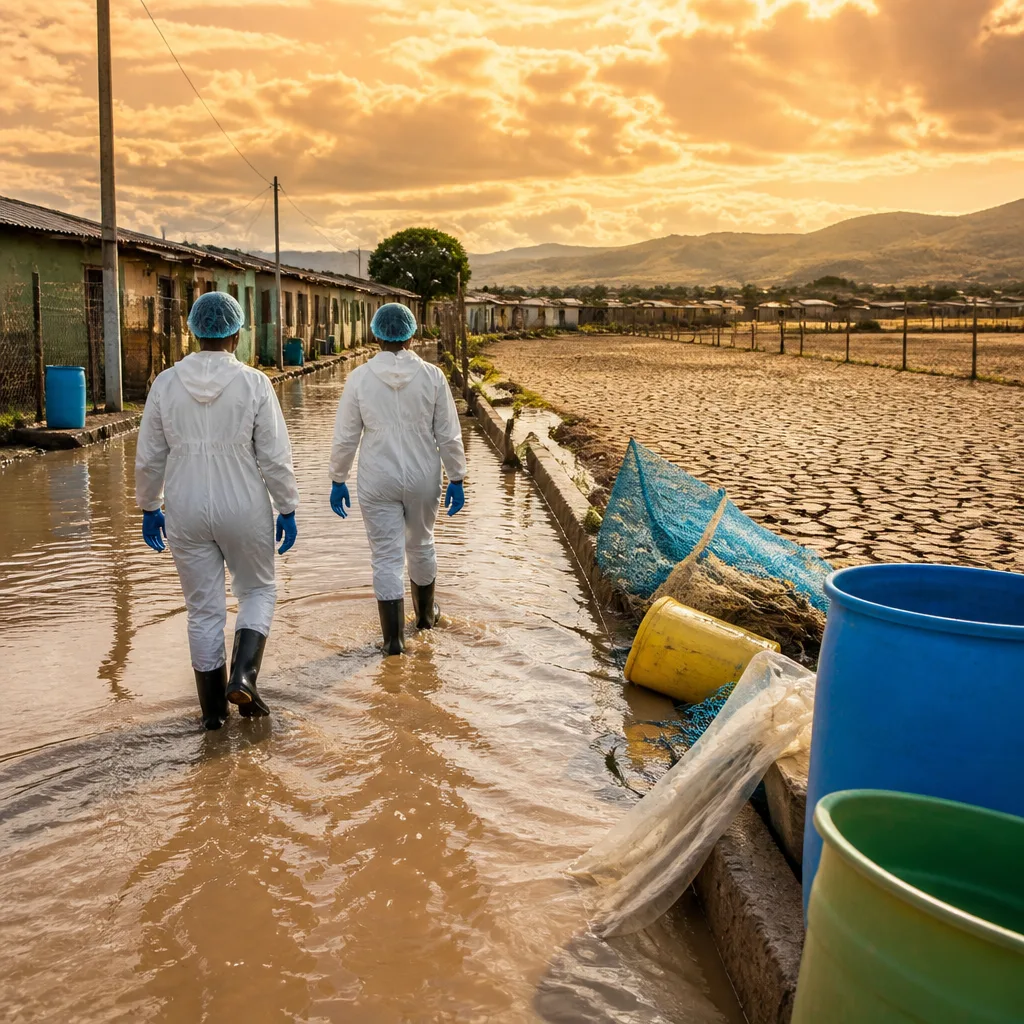
According to the WHO, heavy rains can boost conditions for cholera and increase populations of disease‑carrying insects such as mosquitoes, raising the risk of illnesses including malaria, chikungunya and dengue. The agency says health impacts will be most severe where weak health systems intersect with limited healthcare access, food insecurity and displacement.
“The most severe impacts will be experienced while climate shocks intersect with weak health systems, limited access to healthcare, food insecurity, displacement and humanitarian crisis,”
Teresa Zakaria, WHO Unit Head for Risk Reduction, Humanitarian Operations and Climate Change, described El Niño as a “risk multiplier” and urged countries to act immediately to mitigate impacts and reduce loss of life and suffering.
Stronger than past events, warns WMO
The UN’s World Meteorological Organization (WMO) has forecast this El Niño to be the strongest since comparable records began about 40 years ago. The agencies noted that while El Niño itself is a natural phenomenon and not caused by climate change, it is occurring on a planet already warmed by human activity, which is expected to intensify extremes.
Armel Castellan, an adviser on extreme heat with the WHO‑WMO Climate and Health Joint Programme, said every El Niño differs from the last. He warned that this event’s uniqueness stems from its timing against a backdrop of record‑breaking temperatures.
“Every El Niño is different. However, this El Niño, coupled with temperatures that were already record‑breaking, is what makes this one unique.”
What governments and health services should focus on
WHO and WMO guidance underlines a narrow window to prepare before risks escalate. Key public‑health priorities include surveillance, vector control, water and sanitation measures, stockpiling essential supplies and supporting food systems to reduce malnutrition and food insecurity.
- Disease surveillance: expand monitoring for waterborne and vectorborne infections.
- Water and sanitation: protect potable water supplies and prepare cholera response plans.
- Vector control: intensify mosquito control where flooding and standing water are expected.
- Health system resilience: bolster primary care access and emergency response capacity.
WHO officials stressed that the most damaging outcomes are likely where health systems are already fragile and communities face poverty, displacement or food shortages. Acting now can reduce preventable illness and death, they said.
| Risk factor | Potential health consequence |
|---|---|
| Heavy rainfall and flooding | Cholera, other waterborne diseases |
| Increased mosquito populations | Malaria, dengue, chikungunya |
| Higher temperatures | Heat‑related illness, worsened chronic conditions |
The UN agencies emphasised that while the meteorological event will play out over months, its health effects could persist into 2027. They urged national and subnational health planners to use the lead time available to scale up preventive measures and protect vulnerable populations.
For South Africa, where health facilities and public‑health programmes already face resource pressures, the WHO message underlines the importance of preparedness — from ensuring uninterrupted primary care services to protecting water supplies in areas prone to flooding or drought. International agencies say coordinated action now can prevent an escalation of risks into large‑scale humanitarian crises.
The WHO and WMO called for immediate international collaboration to share forecasts, strengthen health system readiness and support countries with limited capacity to respond to the unfolding El Niño.