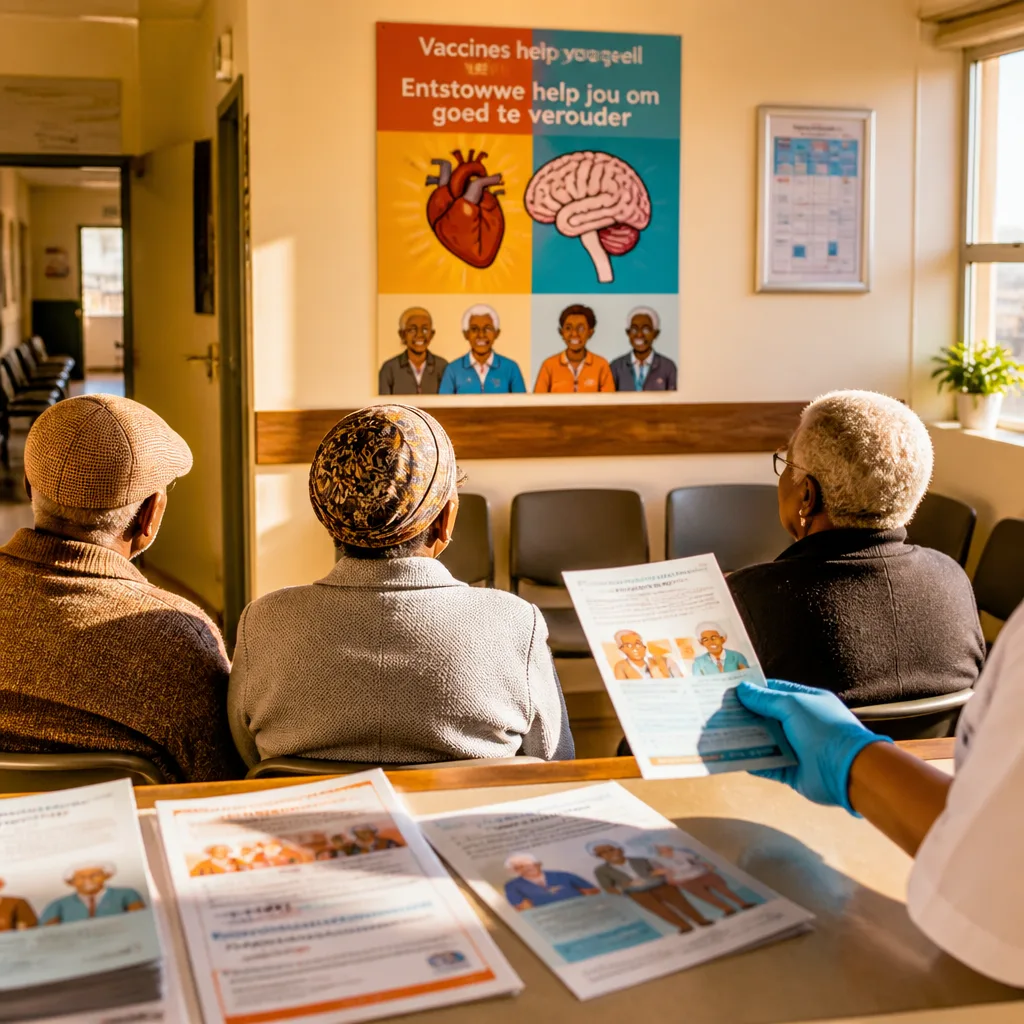
The idea that vaccines do more than prevent infection — that they also help people "age well" by protecting heart and brain health — could encourage more older adults to accept recommended immunisations, according to a survey-based study published in Vaccine this week.
Messaging that matters
The research, reported by the University of Minnesota's Center for Infectious Disease Research and Policy, analysed questionnaires completed by 2,416 adults aged 60 and older living in Auvergne-Rhône-Alpes, a region of southern France. Participants were asked whether they agreed with statements such as
"Vaccination helps me age well"and
"I get vaccinated to protect my loved ones, my children and grandchildren."
Researchers found that information emphasising how vaccination reduces the risk of stroke and myocardial infarction (heart attack) generated the greatest interest in vaccination among respondents. Messaging that linked vaccination to reduced risk of dementia also showed promising effects. By contrast, messages about preventing falls and fractures were least persuasive.
Why older adults respond to healthy-ageing messages
The authors note that, unlike many infectious threats, cardiovascular events and neurocognitive decline are among the outcomes older people most commonly fear because of their impact on independence and quality of life. That practical concern — the desire to remain independent — may make messages about heart and brain protection more salient than more abstract public‑health appeals.
The study also found a clear association between existing vaccine behaviour and responsiveness to messaging: people who had already received more of the recommended adult vaccines were likelier to agree with the healthy‑ageing statements, while those with fewer vaccines were less easily persuaded by the tested messages.
- Highest impact messages: reduced risk of stroke and heart attack.
- Moderate impact: potential protection against dementia.
- Lowest impact: prevention of falls and fractures.
Implications for South African vaccination efforts
Although the study was conducted in France, the findings highlight a communication approach that could be relevant to South Africa's ageing population. Public health programmes and clinicians offering adult immunisations — such as influenza, pneumococcal and shingles vaccines where indicated — may increase acceptance by aligning messages with older adults' priorities: maintaining independence and cognitive and cardiovascular health.
Targeted messaging could be particularly useful in primary care and community outreach where vaccine hesitancy is shaped by perceived personal benefit rather than abstract population-level arguments. The authors argue that tailoring messages to the population's needs, motivations and barriers is a promising strategy to raise adult vaccination coverage — an area where many countries, including France, report suboptimal uptake.
| Survey detail | Figure |
|---|---|
| Participants | 2,416 adults |
| Age group | 60 years and older |
| Location | Auvergne-Rhône-Alpes, France |
For South African health services, the study reinforces the value of patient‑centred communication. Clinics and outreach teams can adapt materials and brief counselling scripts to mention how vaccines may contribute to preserving mobility, preventing disabling heart events, and protecting thinking skills — outcomes that clearly resonate with older patients.
However, the study also underlines that messaging alone will not resolve access or supply barriers. Older adults who are not up to date with recommended vaccines were the least likely to be persuaded, suggesting that structural barriers — cost, availability, clinic access and provider recommendation — must be addressed alongside improved communication.
The research adds to a growing evidence base advising health authorities to combine practical, benefit‑oriented messages with measures that make vaccination easy and affordable for older people. For clinicians, the practical takeaway is simple: speak to what matters most to the patient — staying independent and mentally sharp — and ensure vaccines are accessible when that conversation takes place.