
Progress in public health is not guaranteed, a lesson drawn starkly this year as a string of outbreaks has tested disease surveillance and prevention systems. Recent events in the United States and beyond — including resurgent measles and several other infections reaching or circulating within U.S. borders — have prompted concerns that leaner public‑health agencies and mixed messaging are increasing vulnerability to infectious threats.
Incidents that have raised alarm
While it is difficult to assign a single cause to any one outbreak, observers say the pattern is worrying. Among the events cited are:
- Measles — cases in the U.S. this year have climbed above 2,300, exceeding last year’s total and representing the worst season in decades.
- Cyclospora and screwworm — outbreaks that flared domestically.
- Hantavirus — an infection detected on a cruise ship after passengers travelled internationally.
- Ebola — cases imported from the Democratic Republic of the Congo.
| Disease | Context |
|---|---|
| Measles | Resurgence in the U.S.; >2,300 cases reported this year |
| Cyclospora | Domestic outbreaks prompting investigation |
| Screwworm | Detected within U.S. territory |
| Hantavirus | Detected on a cruise ship after international travel |
| Ebola | Imported cases originating in DRC |
“If FDR hadn’t gotten the Americans into the war when he did, Hitler would have won.”
The line above, recalled from a conversation with Sir John Crofton — renowned for his work on tuberculosis — is used to underscore a point: health gains can be reversed when systems are weakened or neglected.
Vaccination coverage and leadership challenges
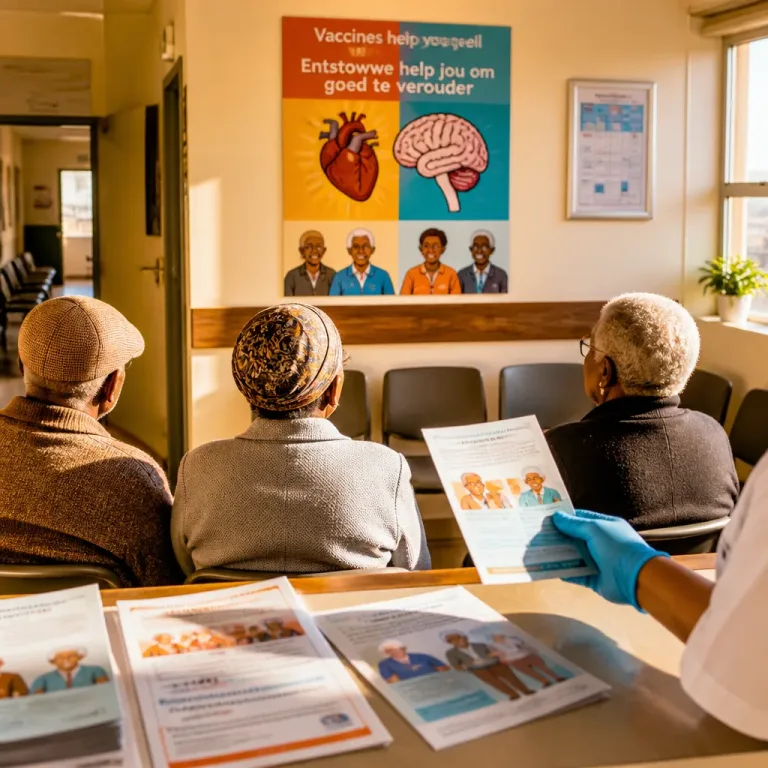
Vaccination is singled out as a decisive factor. Coverage for routine childhood immunisations in the U.S. has slipped from about 95% before the COVID‑19 pandemic to under 93% in more recent years. Observers note that even modest declines in vaccine uptake can open the door to thousands of additional cases of highly transmissible diseases such as measles.
Beyond coverage rates, leadership and public messaging matter. The reporting highlights that changes and contested communication from health authorities, including at the Department of Health and Human Services, have complicated response efforts. Cuts to core agencies — specifically the Centres for Disease Control and Prevention and the Food and Drug Administration — have also been cited as weakening early‑warning and response capacity.
What this means for South Africa
Although the incidents described occurred mainly in the United States and internationally, the underlying lessons are relevant here. South Africa relies on robust surveillance networks, steady vaccine uptake and clear public‑health leadership to prevent and control outbreaks. In a globally connected world, outbreaks can cross borders rapidly via travel and trade.
Practical implications include the need to:
- Maintain and invest in laboratory and surveillance capacity so threats are detected early;
- Protect and monitor immunisation programmes to sustain high coverage;
- Ensure consistent, evidence‑based public messaging from health authorities;
- Safeguard funding and staffing for agencies responsible for disease control and regulation.
Public‑health professionals caution that it is challenging to prove direct causation between budgetary decisions and any single outbreak because disease emergence is multifactorial. Still, the clustering of events this year is being treated as a warning: underinvestment and unclear leadership increase risk.
For patients waiting in clinic queues, the message is simple and immediate — keep routine vaccinations up to date, use prevention measures where advised, and seek timely care for possible infectious symptoms. For policymakers, the moment calls for renewed attention to the systems that prevent small sparks from becoming large fires.
These are not theoretical concerns. The recent sequence of outbreaks demonstrates how quickly progress can stall when the structures that backed decades of gains are weakened.