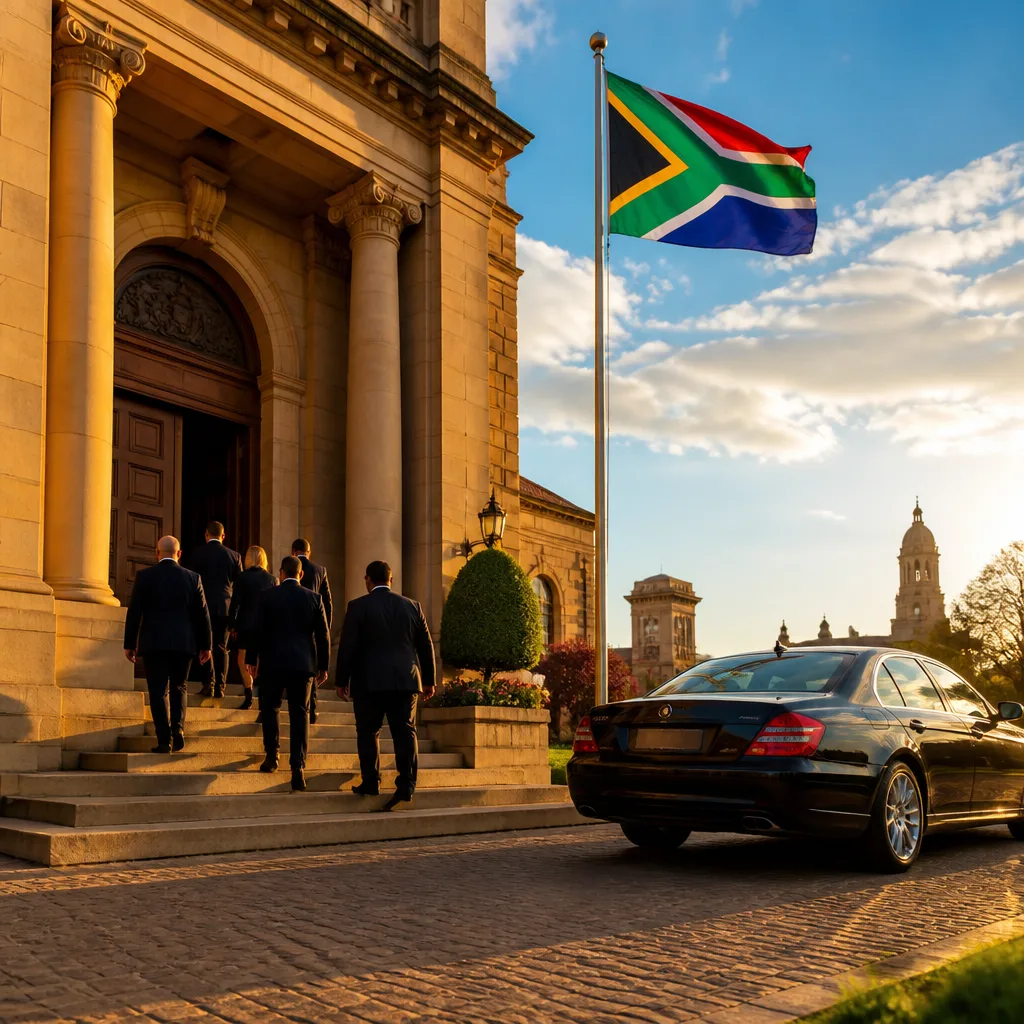
South Africa on Tuesday summoned United States ambassador Leo Brent Bozell III in a formal demarche after a series of public remarks by the envoy sharply critical of the government, according to local reporting and a US official who confirmed the démarche.
What happened
The Department of International Relations and Cooperation (Dirco) called in the ambassador to register a strong diplomatic reprimand over comments Bozell made in the South African media in recent weeks, the reporting said. A US official confirmed the demarche but reiterated Washington’s demands that Pretoria address a set of domestic policy matters that have troubled the US.
Context and prior incidents
This is the second time the ambassador has been demarched in recent months. Bozell was previously summoned in March, soon after his arrival, after he described the "Kill the Boer" struggle chant as hate speech and said he did not accept a South African court’s ruling that had found the chant to be protected expression. The March incident set an early tone of friction between the envoy and elements of the South African political establishment.
The most recent demarche appears linked to a string of critical media statements by Bozell about Pretoria’s response to a message from former US president Donald Trump to President Cyril Ramaphosa on 27 August. The US asked for an update on how South Africa was addressing five specific domestic policy issues.
"A demarche is a strong diplomatic reprimand, usually involving a foreign ambassador being summoned to the ministry of foreign affairs to be scolded for his or her behaviour," the reporting said.
The five US concerns
The reporting summarised the US position as seeking action or reform on five domestic matters:
- Exempting US companies from Black Economic Empowerment (BEE) requirements;
- Repealing expropriation without compensation;
- Obtaining a clear government condemnation of the Kill the Boer chant;
- Addressing farm murders effectively;
- Ensuring Pretoria does not interfere with a US programme offering refugee status to white Afrikaners said to be persecuted on racial grounds.
Pretoria’s reply and diplomatic posture
President Cyril Ramaphosa responded to the US in a letter delivered on 12 September in which he reported what Pretoria regarded as "considerable progress" in meeting the US concerns, the reporting said. Ramaphosa’s international policy adviser Alistair Ruiters provided that update to the reporting outlet.
Despite the president’s account of progress, the demarche shows tensions remain between the two governments. The US official who acknowledged the démarche to the reporting outlet repeated Washington’s position that South Africa must address the listed policy issues.
Implications
The demarche underscores strains in the bilateral relationship at a time when both countries must engage on trade, investment and regional security matters. A formal complaint to a visiting ambassador is a clear diplomatic signal that Pretoria considers recent remarks beyond acceptable norms for a foreign envoy.
How the two governments manage the fallout could influence future cooperation across a range of areas, from commerce to international forums where South Africa and the US interact. The reporting did not indicate any immediate changes to diplomatic staffing or to formal bilateral programmes.
| Event | Date / Detail |
|---|---|
| Trump message to Ramaphosa | 27 August (reporting referenced) |
| Ramaphosa's reply | Letter delivered 12 September, reporting said |
| Previous demarche of Bozell | March (soon after his arrival, over remarks on the "Kill the Boer" chant) |
The exchange highlights the fine line envoys tread between public diplomacy and commentary that host governments may view as interference. Pretoria’s use of a demarche signals it will publicly rebuke foreign diplomats whose statements it judges to undermine South Africa’s domestic policy choices.
The reporting outlet did not provide further details on the content of the most recent meeting between Dirco officials and the ambassador, nor an immediate response from the US embassy in Pretoria beyond the acknowledgement by a US official that the démarche took place.