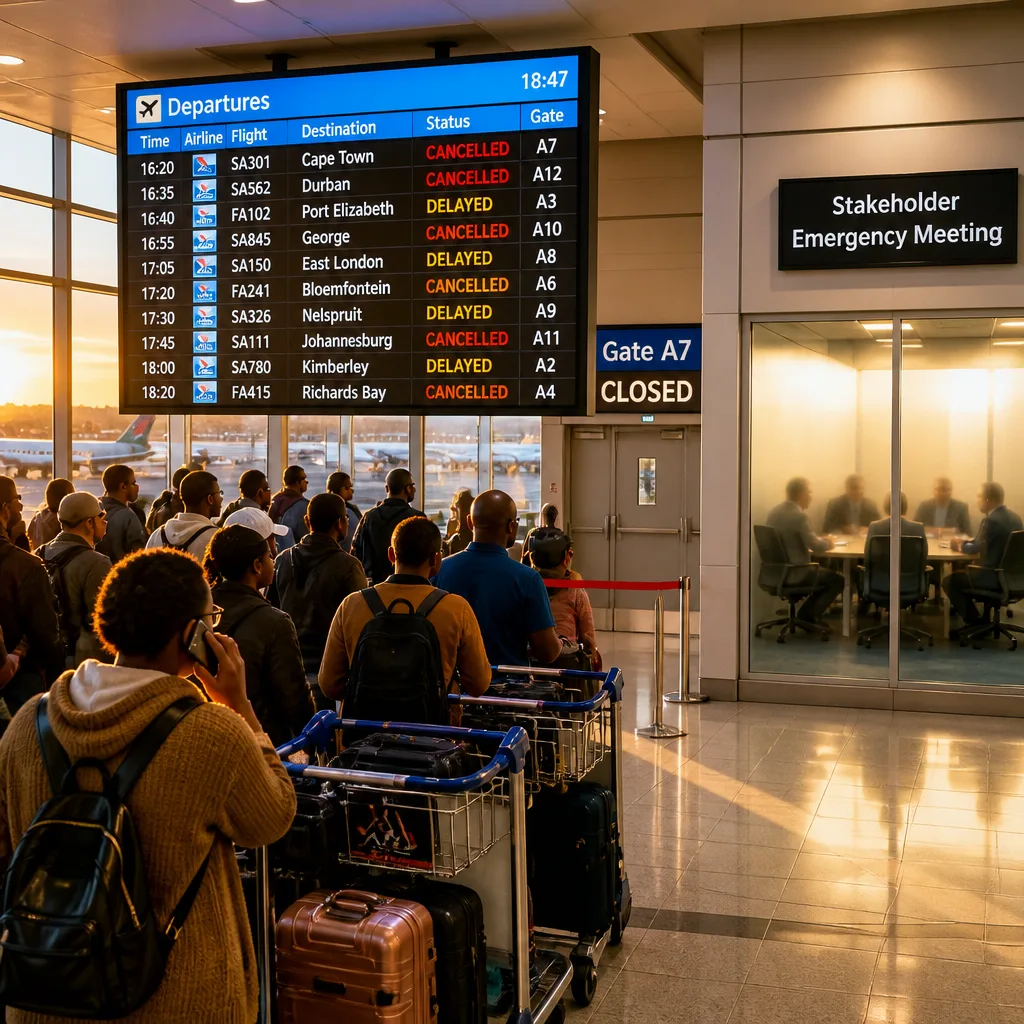
Passengers across Nigeria continue to experience sudden flight cancellations and delays despite arriving on time and completing check‑in procedures, an investigation by the News Agency of Nigeria (NAN) reported. The persistent disruptions have drawn concern from airline operators, unions, regulators and passengers, and prompted government engagement to address operational faults.
Industry and regulator views diverge
Capt. John Ojikutu, chief executive of Centurion Security and Safety, told NAN that a major driver of the instability is the perceived incursion of foreign carriers into Nigeria’s domestic market via commercial rights in bilateral air service agreements. He argued these arrangements undermine local operators and contribute to the high rate of cancellations and delays.
“If the commercial agreement was included in the Bilateral Air Services Agreement (BASA) during the era of Nigeria Airways, why did Nigeria Airways not fly to Gatwick, whereas British Airways (BA) was permitted to include Abuja and Lagos as part of its designated routes under the BASA?”
Ojikutu questioned why a range of international carriers — including British Airways, carriers listed as VK, Emirates, Qatar, Etihad and Ethiopian Airlines — operate to major Nigerian airports while a sizable number of domestic airlines cannot sustain daily services to the same hubs. He framed this as a structural problem rooted in bilateral rights rather than purely operational defects.
Government action and stakeholder engagement
The report noted that the Minister of Aviation and Aerospace Development, Festus Keyamo, has emphasised consultation with industry participants as part of measures to stabilise operations. In August 2026 the minister convened an emergency meeting that brought together aviation unions, airline operators and government agencies to discuss industrial tensions that had contributed to recent disruptions.
That meeting signals a willingness from government to involve multiple stakeholders in seeking short‑ and medium‑term fixes, although NAN’s account did not specify concrete policy changes emerging from the talks.
What passengers face
Frequent delays and cancellations raise practical and financial burdens for travellers: missed connections, additional accommodation and transport costs, and lost work or business time. The ongoing pattern also damages consumer confidence in the domestic aviation market and could affect tourism and inter‑city commerce if not addressed.
- Main concerns: sudden cancellations and delays disrupting travel plans
- Industry view: foreign carriers’ market access and BASA provisions are cited as structural causes
- Government response: emergency stakeholder meeting in August 2026 to address industrial tensions and operational challenges
| Stakeholder | Role / Claim |
|---|---|
| Capt. John Ojikutu / Centurion Security and Safety | Attributes frequent disruptions to foreign carrier access and commercial rights in bilateral agreements |
| Minister Festus Keyamo | Convened emergency stakeholder meeting to seek solutions to operational problems |
Analysts and passengers will be watching whether consultations yield concrete regulatory or commercial steps: for example, revising bilateral arrangements, improving slot management, strengthening domestic carriers’ capacity, or measures to reduce industrial action and operational failures.
For now, NAN’s reporting highlights a sector under strain where policy, international agreements and on‑the‑ground operations intersect — and where uncertainty continues to hit travellers’ plans and wallets.