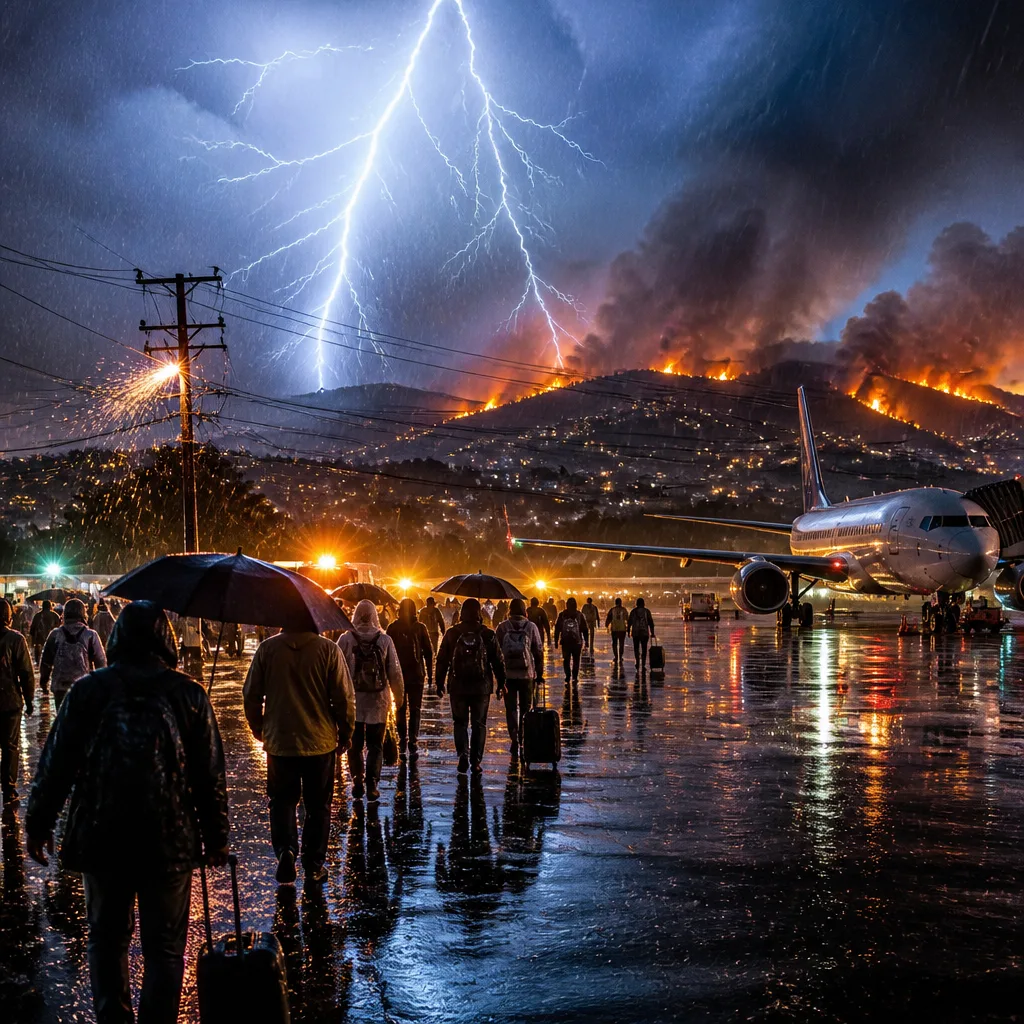
An unusually powerful storm swept across southern and central British Columbia overnight, leaving thousands without power, forcing lengthy aircraft delays at a major airport and igniting multiple new wildfires, according to news reports and utility data.
Flights stalled on tarmac for hours
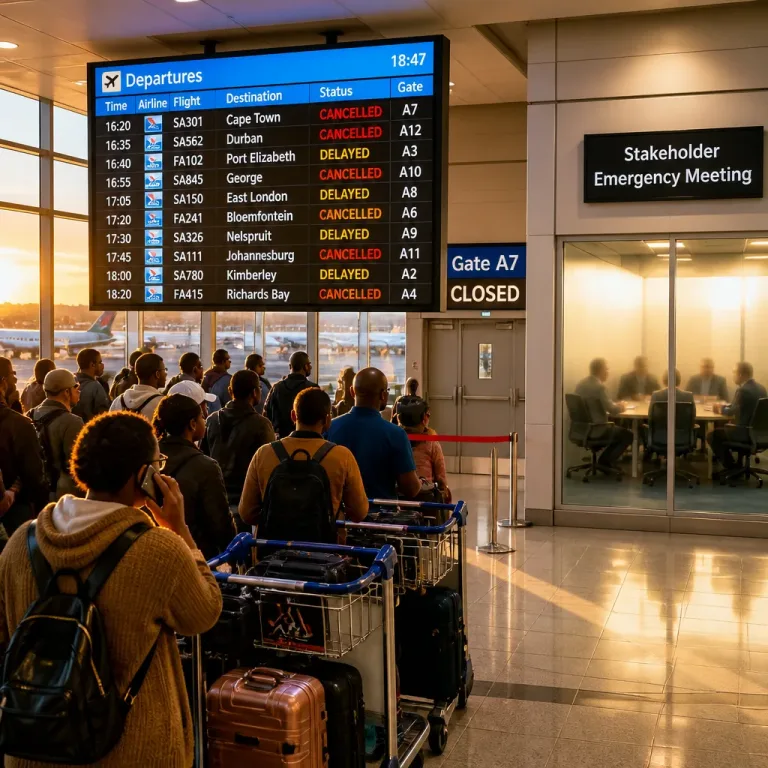
Passengers on at least one flight reported being held on the plane for more than six hours after landing, then waiting a further four hours before ground staff could escort them to the gate. The Canadian Press reported the account on Sunday.
“Six and a half hours later we’re still sitting on the tarmac waiting for a groundcrew to pull us in… When the lightning stopped at around 1:30 a.m., there were not enough groundcrew members to get them to their gate,” the report quoted a passenger surnamed Ermter.
The airport provided a safety rationale: when lightning is close to the airfield, ground operations must be paused to protect staff and passengers. The airport said additional personnel were brought in across the weekend as it worked to recover the schedule.
Power cuts, heavy rain and thousands of strikes
BC Hydro’s outage map showed that thousands of customers lost electricity in the early hours as lightning strikes toppled trees and damaged lines. Environment Canada issued severe thunderstorm warnings for the Metro Vancouver area and warned that parts of Central B.C. — notably the Cariboo and Chilcotin regions — could see between 25 mm and 50 mm of rain.
The storm produced an extraordinary number of lightning discharges. The BC Wildfire Service reported that more than 7,000 lightning strikes were recorded, and that multiple new wildfires had ignited across the province on Saturday night.
Costs to travellers and continuing disruption
The Canadian Press said the passenger who described the tarmac delay had incurred about R11,700 (reported as US$700 in the original) in overnight hotel costs and planned to file complaints with both the airline and the airport to seek reimbursement. The airport acknowledged ongoing impacts to flights as it attempted to return operations to normal.
- Flight tarmac delay: about 6.5 hours before any movement, then an additional ~4 hours, according to the passenger account.
- Rainfall warning: 25–50 mm forecast for parts of Central B.C. (Cariboo and Chilcotin).
- Lightning strikes: more than 7,000 recorded, said the BC Wildfire Service.
- Power outages: thousands of BC Hydro customers affected in the early morning period.
| Metric | Reported value |
|---|---|
| Estimated lightning strikes | 7,000+ |
| Rainfall warning | 25–50 mm |
| Passenger hotel costs (reported) | R11,700 (reported as US$700) |
| Flight tarmac delay (reported) | ~10.5 hours total on the aircraft for the cited passenger |
Authorities and service providers face immediate priorities: restoring power where lines were damaged, containing newly ignited wildfires, and helping travellers affected by prolonged airport disruptions. The storm’s combination of heavy rain, frequent lightning and strong winds created simultaneous pressure on utilities, aviation operations and wildfire prevention teams.
For travellers, the situation underlines the importance of contingency planning during severe-weather periods: maintain flexible accommodation plans, keep receipts for potential reimbursement claims, and monitor airline and airport updates closely. For residents in fire‑prone areas, the rapid onset of new fires after large numbers of lightning strikes highlights the continuing wildfire risk even during wet storms.
The Canadian Press first published the report on 23 August. Airport and utility statements were included in the reporting, which said extra staff had been deployed to assist with passenger care and to speed the return to normal operations.