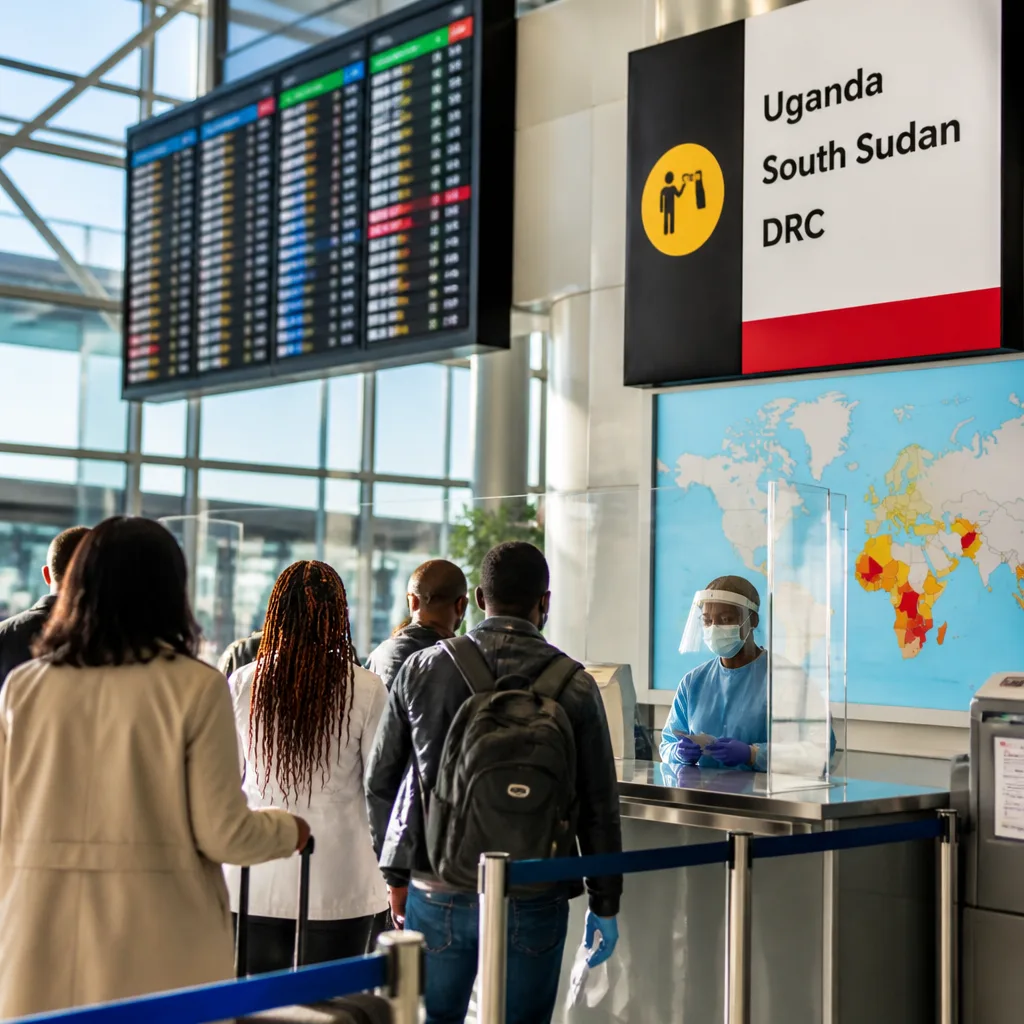
The United States has put in place temporary travel restrictions and enhanced screening for passengers who recently visited Uganda, South Sudan or the Democratic Republic of Congo (DRC), the US Centres for Disease Control and Prevention (CDC) said on Friday.
What the new measures require
Under the updated public‑health protocols, American citizens and US nationals who were in Uganda or South Sudan within 21 days before arriving in the US will have their air travel routed through designated US airports so they can undergo public‑health entry screening, the CDC said. The requirement also applies to travellers who merely transited through Uganda or South Sudan on a connecting flight.
People who have been in the DRC within 21 days before departure face stricter rules. The CDC said such travellers
"would not be allowed to board commercial flights with US destinations"and should remain outside the US until 21 days have elapsed since they left the DRC. The agency also noted that travellers who were in Ebola‑affected provinces in the DRC may face additional local travel requirements before they are permitted to leave the country.
How this affects travellers
The CDC measures are part of routine efforts to reduce the risk of international spread of Ebola during outbreaks. Practical implications include:
- Some passengers will be required to re‑route travel so they enter the US through specific airports where health screening is available.
- Transit through Uganda or South Sudan counts as having been in those countries for the purposes of the 21‑day rule.
- People recently present in affected DRC provinces may be prevented from boarding flights bound for the US until the 21‑day period ends and may be subject to additional restrictions imposed by local authorities in the DRC.
The CDC did not publish a list of the designated US ports in the source material; travellers planning return or onward travel to the US should consult the CDC and their airline for specific routing and screening details.
Context and public‑health rationale
Ebola virus disease has a recognised incubation period during which infected people may be asymptomatic but still progress to become ill. Many countries apply a 21‑day monitoring period because this covers the known incubation window for Ebola. Routing symptomatic or potentially exposed travellers through selected entry points allows public‑health authorities to perform focused screening and follow‑up.
These measures aim to strike a balance between enabling necessary travel and reducing the risk of exportation of cases to countries with limited on‑arrival surveillance for viral haemorrhagic fevers.
Practical advice for travellers
- Check recent travel history carefully: transit through an affected country may trigger screening or restrictions.
- Contact your airline or the CDC for details on designated entry airports and documentation required for travel to the US.
- Allow extra time for travel arrangements and screening if you have been in Uganda, South Sudan or the DRC in the previous 21 days.
- If you were in affected provinces of the DRC, be aware you may face local exit requirements before you can depart.
| Country | Time window | CDC action |
|---|---|---|
| Uganda | Within 21 days before US arrival | Routed through designated US airports for entry screening |
| South Sudan | Within 21 days before US arrival | Routed through designated US airports for entry screening |
| Democratic Republic of Congo (DRC) | Within 21 days before US departure | Not permitted to board US‑bound commercial flights; remain outside US until 21 days have passed |
The CDC added that local DRC authorities might impose further travel conditions on those who have been in outbreak‑affected provinces.
Travellers to and from the region should monitor updates from the CDC, their airline and relevant national health authorities. Health screening and travel‑routing rules can change as public‑health assessments evolve.