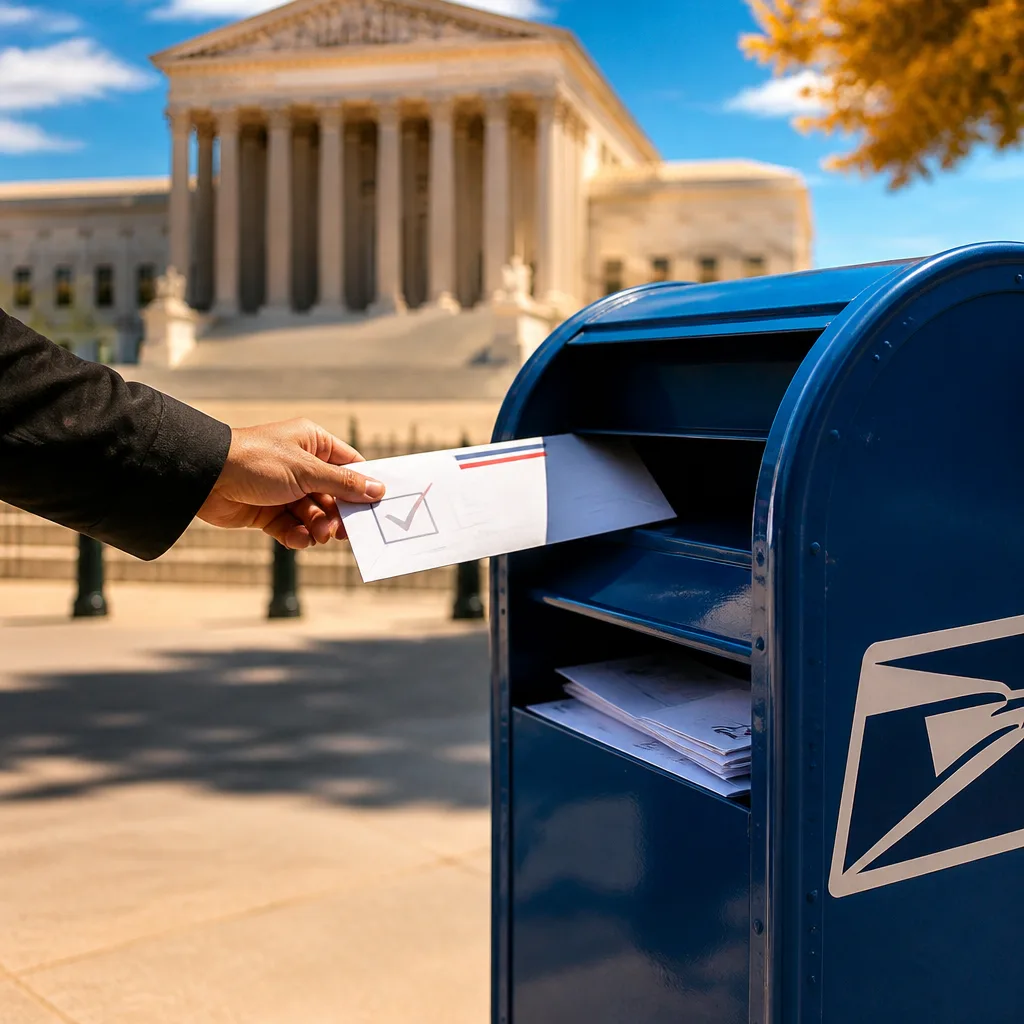
The Trump administration asked the US Supreme Court on Sunday to allow a new US Postal Service (USPS) rule governing the handling of mail‑in ballots to take effect, just two days after a federal judge blocked the regulation, the third time the matter has been escalated to the high court this election season.
What the government wants
In its filing to the Supreme Court, the administration argued the USPS rule imposes only “modest envelope‑design and addressee‑information requirements for federal‑election ballots sent via U.S. Mail.” The rule would require states to upload the name, address and barcode information of intended recipients of ballot mail into an online portal, the filing said — information that election officials already possess when sending ballots.
“Contrary to the claims of the district court and respondents that the Postal Service is trying to federalize the rules for mail‑in voting, the Postal Service’s final rule imposes only modest envelope‑design and addressee‑information requirements for federal‑election ballots sent via U.S. Mail.”
Administration lawyers urged the court to stay the preliminary injunction issued by US District Judge Indira Talwani and allow the rule to be implemented immediately while litigation proceeds.
The district court block and the legal stakes
On Friday, Judge Indira Talwani issued an order preventing the administration from implementing the USPS regulation, concluding the rule was likely unlawful and unconstitutional for the federal government to dictate how states handle mail‑in ballots. Talwani noted the compressed timeline for the regulation’s final implementation and warned of the risk of disenfranchisement.
Talwani wrote that the “immediate implementation of the Final Rule issued less than seventy days before the November 2026 election threatens disenfranchisement of millions of United States citizens who seek to vote by mail.”
The administration’s move to the Supreme Court marks the third escalation of the dispute to the high court this campaign season. The litigation centres on whether the federal government can impose new rules that affect ballot design, processing and the data states must provide when sending ballots through the mail — areas historically administered by the states.
Timing, states and the midterm calendar
The legal fight has coincided with differing state practices: North Carolina became the first state last week to begin sending mail‑in ballots to voters less than 60 days before the November midterms, an action highlighted in court filings. The administration argues the rule would help the Postal Service track ballots and ensure proper delivery; opponents say it creates new barriers and risks of wrongful rejection.
- Immediate issue: Whether the Supreme Court will stay the district court injunction and allow the USPS rule to take effect while litigation continues.
- Practical effect: The rule would require states to upload voter and barcode information to a USPS portal for ballots sent by mail.
- Timing risk: The rule was finalised fewer than 70 days before the November 2026 midterm elections, a point underscored by the district court.
| Date | Event |
|---|---|
| Less than 70 days before 3 November 2026 | USPS final rule issued (as referenced by the district court) |
| Friday before filing | US District Judge Indira Talwani issued a preliminary injunction blocking the rule |
| Sunday | Trump administration filed to the US Supreme Court seeking a stay of the injunction |
The dispute raises core questions about the balance between federal authority and state control over how elections are administered. The administration contends the rule merely standardises envelope information and supports ballot tracking, while opponents — and Judge Talwani’s order — view the measure as an unlawful federal intrusion that could be implemented at a time that risks confusing voters and administrators.
Potential consequences
If the Supreme Court grants the stay and allows the rule to take effect, states and election officials would face new operational requirements weeks before many ballots are mailed. That may increase the administrative burden on election offices and the Postal Service, potentially triggering disputes over compliance and the handling of ballots not matching the portal data.
Conversely, if the Court leaves the injunction in place, the status quo — in which states continue to conduct elections under their existing rules — would prevail while lower court litigation continues. Either outcome will shape the practical mechanics of mail voting and the legal precedents governing federal involvement in election administration heading into and beyond November.
The Supreme Court’s response to the emergency filing will determine whether the rule can be enforced for the 2026 midterms while the broader constitutional challenge proceeds in the lower courts.