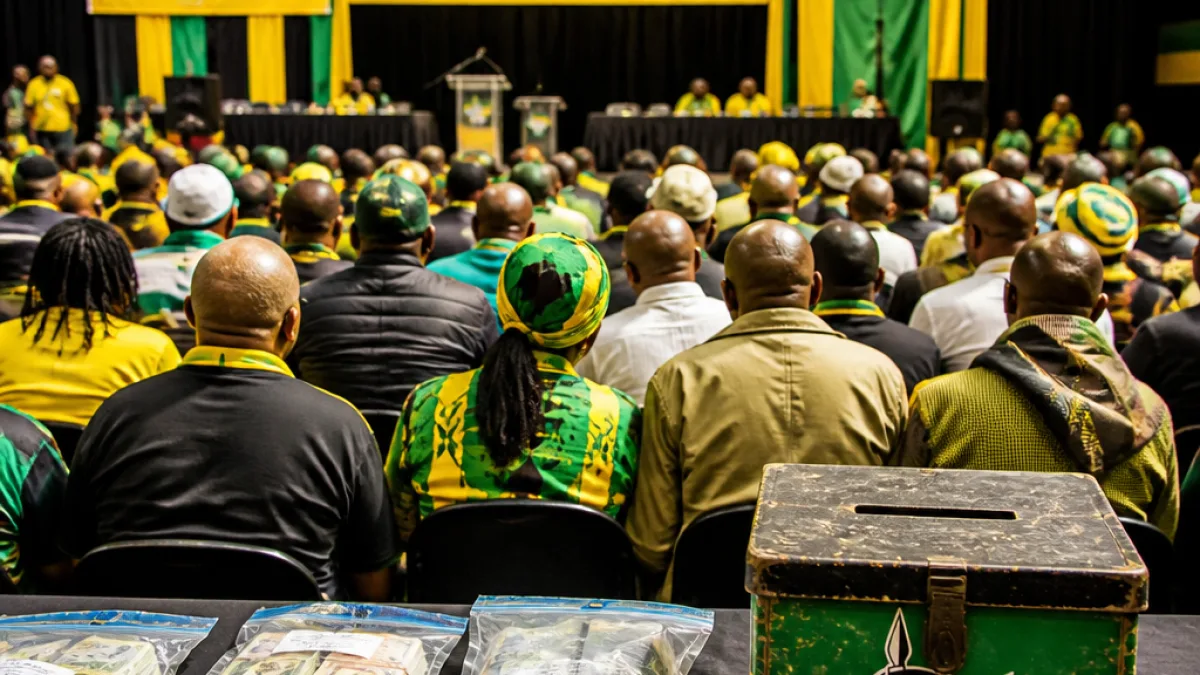
BOKSBURG — The role of money in internal African National Congress (ANC) politics remains a live issue, Northern Cape chair Zamani Saul said on Friday, acknowledging the party has repeatedly recognised the problem and is trying to find ways to reduce its influence on leadership contests.
Saul’s comments followed renewed scrutiny after an NEC member demanded a retraction over claims of vote-buying at the ANC’s 2017 national elective conference. The dispute has again focused attention on whether financial resources distort internal democratic processes within the ruling party.
Three conferences have noted the problem
Saul told delegates that the matter was not new and that it had been addressed in the ANC’s resolutions on organisational renewal at three consecutive conferences. He said the party was actively looking at mechanisms to limit the impact of cash on leadership contests.
"There is nothing new in that allegation. We have acknowledged that. Look at our resolutions on organisational renewal from the past three conferences. The role of money in shaping the politics of the African National Congress has been acknowledged," Saul said.
He emphasised that the party had recognised the pattern and was attempting to devise practical responses. "Nobody says money is not being used. Three ANC conferences in a row have acknowledged that there is use of money to influence the leadership race," Saul added.
Why this matters locally
For Northern Cape voters and party members, the issue is not abstract. When financial clout helps determine nominations or leadership outcomes, it can marginalise grassroots voices, affect candidate selection in municipal wards and influence policy priorities. The province’s own ANC structures must contend with those pressures as they prepare for local, provincial and national electoral cycles.
The matter also has wider implications for governance. If internal party positions are secured through financial means rather than broad-based support, questions arise about accountability and service delivery priorities once those individuals assume public office.
What the party says it will do
Saul said the ANC was exploring ways to reduce the role of money, though he did not set out a timetable or specific interventions in his remarks. His comments came amid calls from within and outside the party for clearer rules and stronger enforcement to prevent vote-buying and undue financial influence.
At present, ANC resolutions on organisational renewal are the primary reference point for members seeking reform, but translating broad resolutions into enforceable rules and mechanisms remains a challenge.
- Recognition: The ANC has acknowledged the use of money in leadership contests at three consecutive conferences.
- Response: Party leaders say they are working on mitigation measures but have not yet announced specific steps.
- Local impact: Northern Cape structures and voters face the consequences when internal party contests favour those with greater resources.
Observers say meaningful change would require stronger internal oversight, transparent funding rules for campaigns, and effective sanctions for breaches — measures that must be agreed at national level and enforced through provincial and branch structures.
| Issue | Party position |
|---|---|
| Use of money to influence leadership races | Acknowledged at three consecutive conferences; mitigation measures being explored |
For many members in the Northern Cape, the test will be whether national commitments translate into change on the ground. Branch activists and ward organisers say they need clearer rules so that local contests are competitive and reflective of member will rather than financial leverage.
Saul’s intervention adds a local voice to national debate. It does not resolve the outstanding disputes — including recent calls for retractions and legal threats between senior figures — but it does underscore that party leaders acknowledge the problem and view it as a recurring organisational weakness.
How the ANC moves from acknowledgment to concrete action will be watched closely in the Northern Cape, where communities already face pressing service-delivery and governance challenges that demand accountable representation.