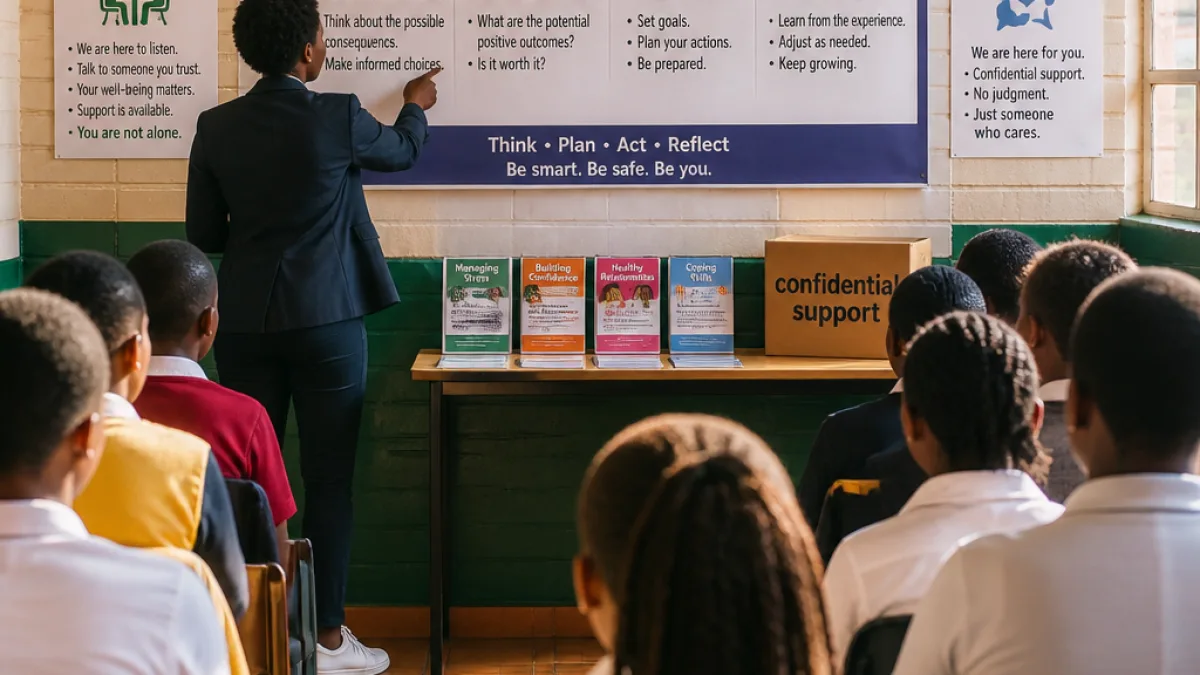
Programme rolled out in August to curb gambling among pupils
Several schools in Kuruman were reached in August by the National Responsible Gambling Programme’s school initiative, aimed at informing learners about the risks and legal restrictions surrounding underage gambling and pointing them towards support where needed.
The outreach in the Northern Cape is part of the Taking Risks Wisely School Edition, an education and prevention effort managed by the South African Responsible Gambling Foundation in partnership with the Northern Cape Gambling and Liquor Board. The foundation’s Advocacy, Communication and Prevention manager, Lebohang Seoheng, said the programme focuses on harm reduction and coping strategies for young people.
“Peer pressure, access to illegal underage gambling, exposure to gambling culture and the normalisation of risky behaviour all play a role in drawing young people into gambling activities,”
The intervention addresses why adolescents might be attracted to betting: some see gambling as a coping mechanism during stress, a way to gain social acceptance, or even a supplementary income source amid household financial strain. The programme’s materials and sessions were designed to help learners recognise these drivers and consider alternative activities.
What the school edition offers
According to the foundation, the school edition combines awareness, education and practical support. The stated aims are to reduce harm, strengthen young people’s ability to refuse risky offers, and to make learners and caregivers aware of where to find help.
- Awareness sessions on legal restrictions for minors and the potential consequences of gambling at a young age;
- Skills-building on coping with peer pressure and managing risk-taking tendencies;
- Information on alternative leisure activities and how to access treatment or counselling;
- Free counselling options for affected learners and adults, with parental or guardian consent required for minors.
The foundation highlighted research that points to several factors increasing early exposure to gambling: social influence, easy access to gambling platforms and advertising, and certain personality traits such as sensation-seeking.
Support and referrals
The programme offers both psycho-educational and psychotherapeutic counselling services to minors who are impacted by gambling, provided with parental or legal guardian consent. Adults who are affected can access the same services. The foundation describes these services as part of a broader harm-reduction approach rather than punitive action.
| Component | Primary purpose |
|---|---|
| School workshops | Raise awareness and build refusal skills |
| Counselling services | Treat or manage gambling-related harm |
| Referral information | Connect families to further support |
Local education stakeholders were not named in the foundation’s release, but the partnership with the provincial Gambling and Liquor Board indicates co-operation between the foundation and regulatory authorities at provincial level. The programme’s presence in Kuruman reflects concern about underage gambling in towns beyond major metropolitan areas.
Community responses to the rollout have varied in other areas where the programme has run: some parents welcome school-based prevention and the availability of free counselling, while others raise questions about the role of schools in addressing family economic pressures that can drive children towards risky behaviour.
Implications for Kuruman
For Kuruman residents, the initiative aims to equip learners with knowledge and coping strategies that may reduce both immediate harms and longer-term addiction risks. It also establishes local referral pathways for those already affected. The foundation stresses the need for community involvement — parents, educators and local regulators — to address the underlying conditions that make underage gambling attractive to young people.
As the school edition continues to be implemented, its impact will depend on ongoing engagement with learners, consistent access to counselling, and broader efforts to alleviate the socioeconomic pressures that can push children towards risky income-generating activities.