What Barberton’s Issue 5 would do
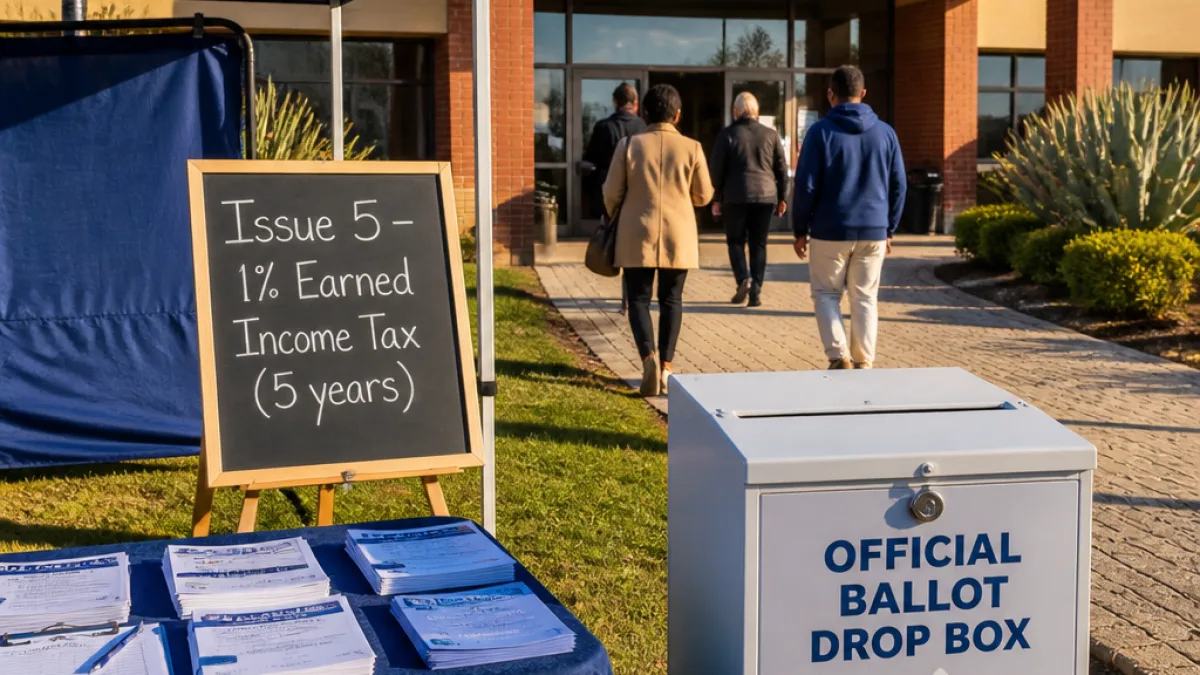
The Barberton City School District is asking voters to approve a 1% earned income tax that would run for five years, according to reporting on the Nov. 3 ballot measures. District officials say the additional revenue is necessary to help the district emerge from a state fiscal emergency.
The proposal — labelled Issue 5 on the ballot — would apply only to earned income such as wages, salaries and income from self-employment. It would not apply to income from pensions, Social Security, interest or dividends. The tax would be levied on residents who live in the school district; non-residents who work in the district and corporations would not be taxed. Property taxes would also be unaffected by the measure.
How much the district expects to raise
District projections in the reporting indicate the tax would generate approximately R4.73 million a year for Barberton City Schools. The levy would expire after five years if approved by voters.
- Rate: 1% of earned income
- Duration: Five years (sunset provision)
- Scope: Residents only; excludes pensions, Social Security, interest and dividends
- Estimated revenue: R4.73 million per year (district estimate)
Why the district says it needs the money
Leaders in the district say they face a shortfall large enough that state authorities have placed the district under a fiscal emergency. The school board argues additional local revenue is essential to stabilise finances and maintain or restore services at current levels.
“District officials say additional money is necessary to help the district escape state fiscal emergency,”
The decision to seek a time-limited earned income tax follows similar requests across the county. Barberton is one of five Summit County districts with tax measures on the same ballot, the reporting shows, with nearby districts also seeking new or renewed levies as they contend with rising costs and constrained revenue under state funding rules.
Broader context in the county
Summit County voters have rejected every school tax request for additional revenue in the previous two elections, the reporting notes. District leaders across the region have pointed to several structural funding pressures, including limits on how much money districts can receive from previously approved property tax levies and a school funding formula they say does not reflect current costs.
Officials from multiple districts argued that state policy choices have left local boards with little choice but to ask voters for new revenue. Those complaints include how the state may suppress revenue from prior levies, how districts are limited in raising funds beyond ballot questions, and how funding shifts can place a larger burden on residents when communities’ property values and incomes rise.
What voters need to know before they go to the polls
Voters in the Barberton City School District who are registered in time for the 3 November election will decide whether to approve Issue 5. If approved, the tax will affect residents’ earned income for five years. It is a narrowly framed measure that excludes several income streams and non-resident workers.
| Item | Detail |
|---|---|
| Ballot label | Issue 5 |
| Tax type | Earned income tax (residents only) |
| Rate | 1% |
| Duration | 5 years |
| Estimated annual revenue | R4.73 million (district estimate) |
Residents weighing the proposal will need to consider whether the additional local levy is preferable to the potential service reductions that the district warns could follow if the fiscal emergency continues. The measure’s five-year sunset gives voters a fixed review point at which the district will need to return to the ballot or find alternative funding if it remains under financial strain.
Local ballot measures affect classroom programmes, staffing, maintenance and extracurricular offerings. Voters should consult official district materials and the county elections office for the full ballot language, voter registration deadlines and polling information ahead of 3 November.