Professor Thenjiwe Meyiwa has signalled a shift in leadership at the University of Mpumalanga (UMP), saying the institution’s future must be shaped with people rather than imposed from on high. Her inaugural address on Friday set out a programme emphasising inclusivity, collaboration and practical impact, notably on gender‑based violence and femicide (GBVF).
Leadership that listens, Meyiwa says
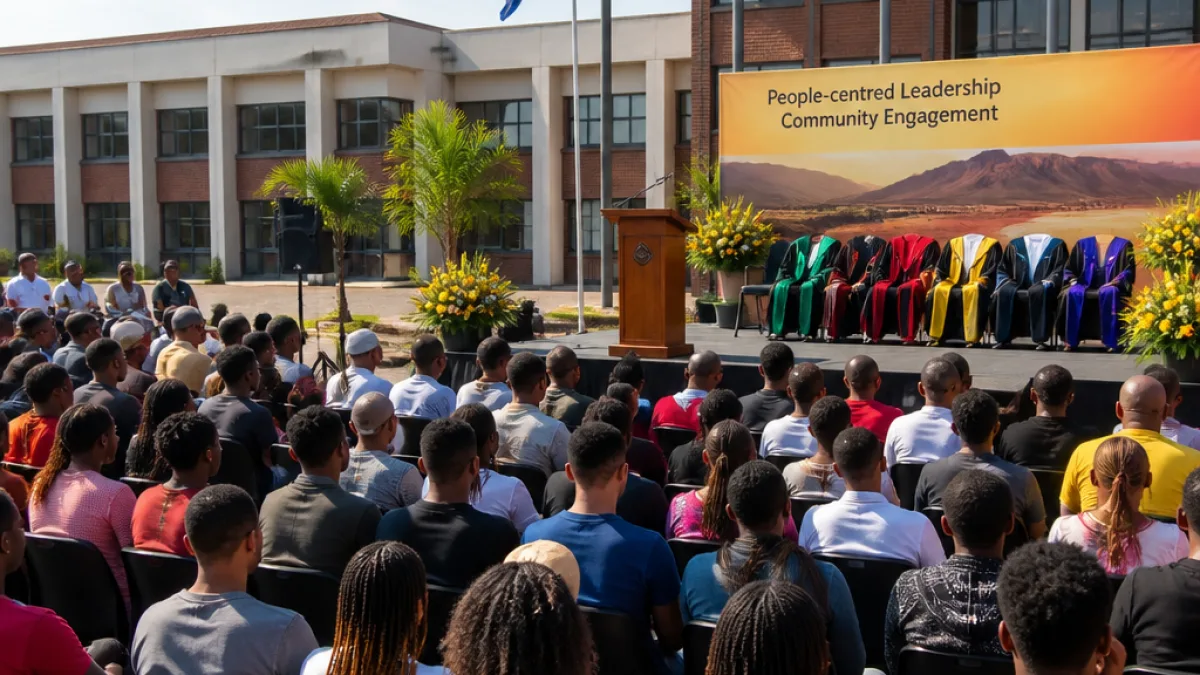
Addressing academics, government representatives, students and guests at her inauguration, Meyiwa framed leadership as a collective undertaking. She stressed that decision‑making should begin inside the university, where staff and students have a role in shaping policy and priorities before the institution engages with communities, government and industry partners.
“My vision is about inclusivity and impact… It is not just a question of management leading from the top. I’ve started engaging people from the ground to understand what they think and where they believe the university should go,”
She described her approach as people‑centred, arguing that meaningful change comes when those affected by decisions are part of the conversation rather than passive recipients of programmes designed in executive offices.
GBVF a central concern
Meyiwa identified the fight against gender‑based violence and femicide as a priority. Rather than rolling out top‑down interventions, she said the university will seek solutions informed by survivors, witnesses and caregivers — those with lived experience of GBVF.
She urged students to explore technological and innovative responses to the crisis, noting that digital tools and applications may offer new ways to prevent, report and support victims of violence.
Practical commitments and engagement
While the inauguration speech emphasised principles rather than detailed policy, Meyiwa indicated the following directions for UMP under her stewardship:
- Inclusive governance: deepen staff and student participation in decision‑making processes;
- Community partnerships: strengthen co‑designed programmes with local communities and government;
- GBVF innovation: support initiatives led by survivors and frontline caregivers, and encourage technological solutions from students and researchers;
- Impact orientation: prioritise research and teaching that address regional social and economic challenges.
Those priorities align with a wider trend in South African higher education towards greater institutional accountability and community relevance, particularly in provinces where universities play a central role in regional development.
What this means for students and staff
For students and academic staff, a people‑centred approach could mean more participatory governance structures, greater consultation on curriculum and campus safety, and new opportunities to engage in applied research. For the wider Mpumalanga community, the approach suggests potential collaboration on projects addressing local needs, including safety, health and economic opportunity.
| Focus area | Likely emphasis |
|---|---|
| Governance | Staff and student inclusion in decisions |
| GBVF | Survivor‑informed programmes and tech solutions |
| Community engagement | Co‑designed interventions with local partners |
Meyiwa’s remarks also pose operational questions for the university. Implementing a people‑centred model requires clear mechanisms for participation, adequate resourcing, and monitoring to ensure that consultation leads to concrete change. Staff, student representative bodies and community organisations will likely test how readily those mechanisms are put in place.
Expectations and next steps
Observers will look for early signs of implementation: advertised consultative forums, shifts in governance instruments such as senate or council procedures, and initial projects addressing GBVF that explicitly involve survivors and caregivers in design and leadership.
For now, Meyiwa’s inauguration sets a tone. Whether the rhetoric translates into measurable change will depend on follow‑through from the vice‑chancellor’s office and buy‑in from the many constituencies that make up the university.
Key stakeholders — students, academic staff, campus support services, local government and civil society groups working on GBVF — will be essential partners if UMP’s stated ambitions are to be realised.
As the new leadership takes office, scrutiny will centre on how inclusive processes are structured and how quickly tangible initiatives emerge, particularly those that support survivors of gender‑based violence and strengthen campus and community safety.