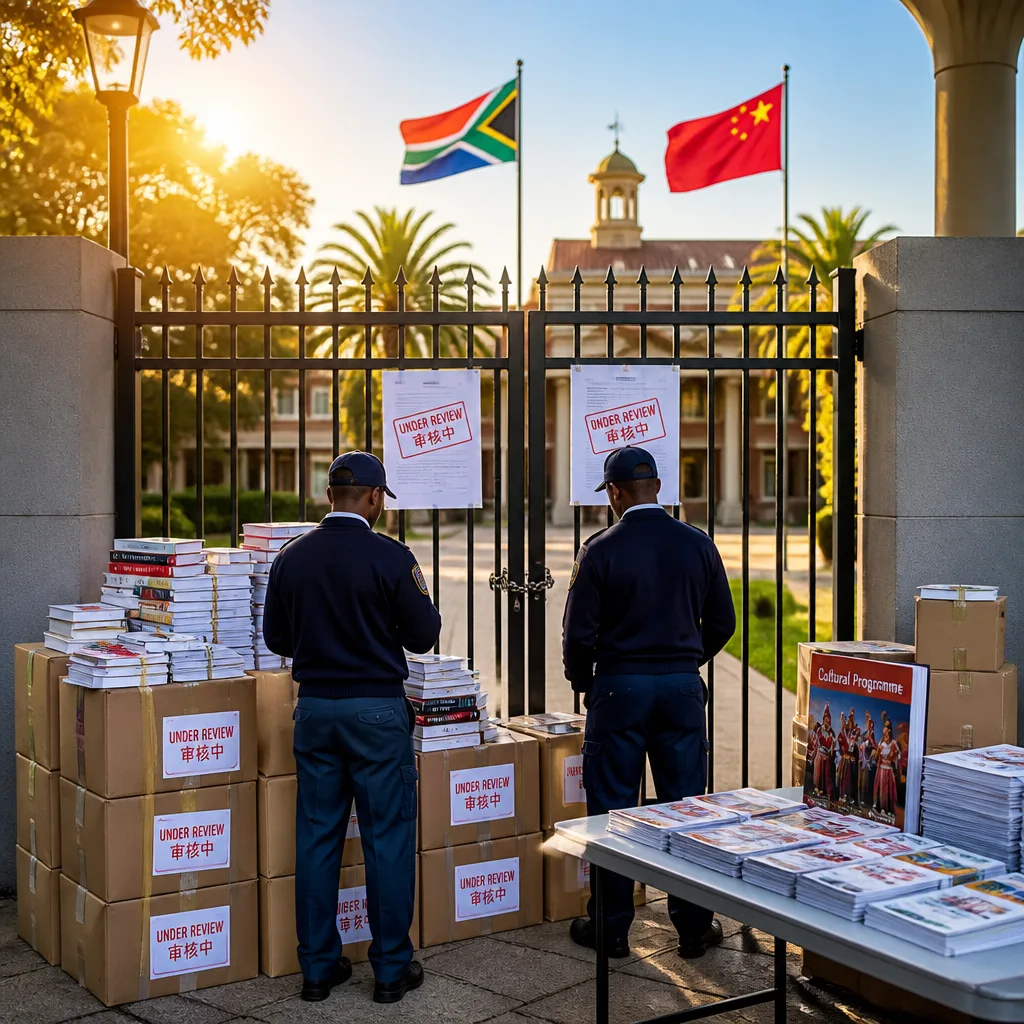
Beijing has dismissed recent Philippine concerns about the influence of Chinese state‑linked institutions in the education sector, calling Manila’s move an "extremely serious political provocation" and accusing a small group of anti‑China forces in the Philippines of seeking political gain.
What sparked the dispute
The row stems from a statement issued by the Philippine Department of National Defence the previous week that defended tighter oversight of foreign government‑backed academic and cultural exchange programmes. The department pointed to China’s National Intelligence Law, which it said compels Chinese organisations and citizens to assist state intelligence work when requested — a provision Manila argued justifies greater scrutiny of Chinese‑affiliated institutions operating in the country.
China’s Foreign Ministry rejected the Philippine position as misleading and politically motivated. In comments provided to Reuters and reported by Daily Maverick, Beijing suggested the Philippine statement aimed to damage people‑to‑people ties and to divert attention from Manila’s actions in the South China Sea.
"A small group of anti‑China forces in the Philippines, seeking political gain and attempting to cover up their country’s maritime violations, are resorting to political manipulation and media distortion," the ministry said, according to Reuters reporting.
Wider context and recent tensions
The diplomatic exchange is the latest sign that the bilateral dispute between the two countries has broadened beyond maritime confrontations in the busy South China Sea to include areas such as education, information and national security. The two neighbours already have overlapping territorial claims in the waterway, and officials are increasingly viewing academic links through a strategic lens.
Reporting cited an earlier incident in which Philippine defence chief Gilberto Teodoro called China "wicked" in June; Beijing characterised that remark as a stunt made for political self‑interest. The reporting also referenced the conviction last year of a former mayor — identified as a Chinese national and allegedly with links to criminal syndicates — for human trafficking, a case that has helped fuel suspicion of certain Chinese activities in the Philippines.
Possible consequences for education and exchanges
Manila’s move to strengthen oversight of foreign government‑backed programmes could lead to:
- Stricter vetting of partnerships between Philippine institutions and Chinese universities or cultural bodies;
- Reduced scope for exchange programmes and joint research projects if perceived as national security risks;
- Heightened political scrutiny of individual Chinese nationals involved in local governance or community programmes.
Beijing’s insistence that the allegations are politically motivated, and its warning against manipulated media narratives, underscore how diplomatic tensions can quickly spill into educational and cultural spheres. The dispute illustrates a broader regional trend: governments increasingly treat academic and cultural exchange as potential vectors for influence or intelligence activity.
| Actor | Position |
|---|---|
| Philippine Department of National Defence | Argues for tighter oversight citing China’s National Intelligence Law as a risk to national security. |
| China’s Foreign Ministry | Calls the Philippine allegations false, politically motivated and designed to harm bilateral ties. |
How this will affect concrete cooperation — such as scholarships, institutional links and cultural exchanges — remains to be seen. Both sides have framed the dispute in public statements; without follow‑up measures being announced, the immediate impact may be political and reputational rather than administrative. However, analysts and education administrators in the region will likely watch for new vetting rules, registration requirements or suspension of programmes.
For South Africa and other countries with significant academic ties to both Beijing and Manila, the episode is a reminder of how geopolitics can reshape the operating environment for international education. Institutions that depend on cross‑border collaboration may need to reassess risk frameworks and compliance procedures if other states follow Manila’s lead.