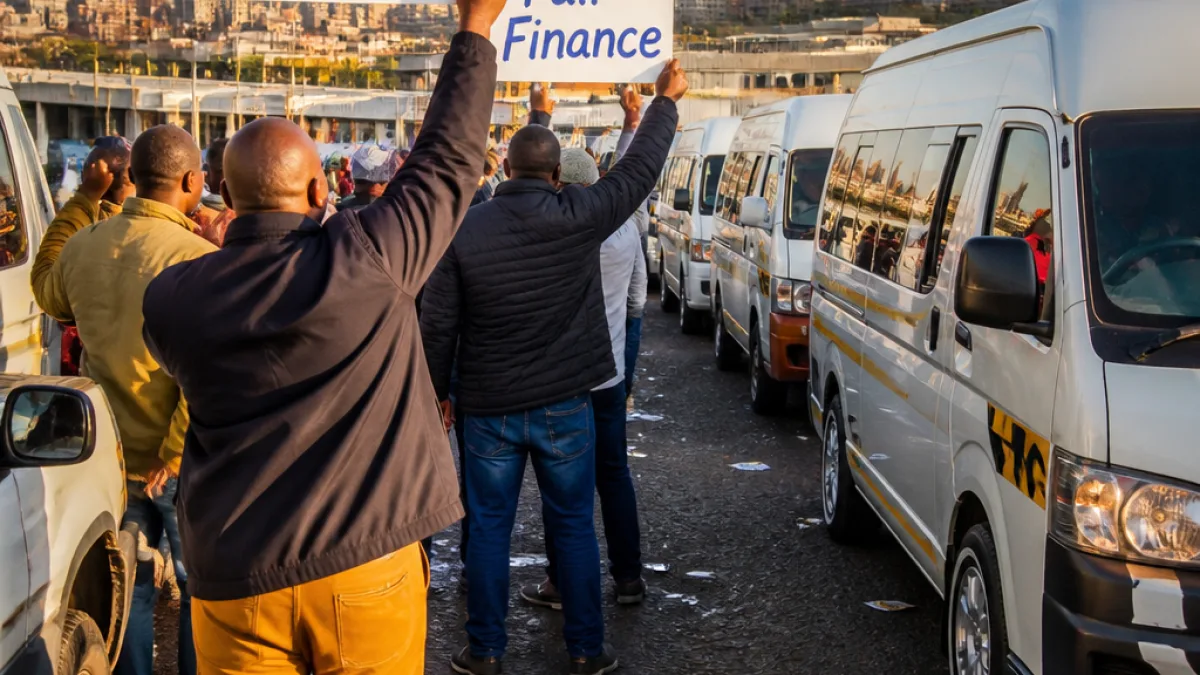
The National Taxi Alliance (NTA) has signalled the possibility of national protest action after accusing Transport Minister Barbara Creecy of failing to deliver adequate relief to minibus taxi operators grappling with rising costs and shrinking markets.
Alliance demands targeted support
The NTA has presented a package of reforms to the Department of Transport aimed at stabilising the industry. Central to the alliance’s demands is a targeted fuel rebate for qualifying minibus taxi operators for at least 12 months and access to cheaper financing options, the organisation said.
The NTA argues that taxi operators have been treated as a high-risk market by financiers, attracting elevated interest rates that push monthly repayments beyond affordability. As an example of the pressure on operators, the alliance highlighted the cost of a diesel Toyota Quantum: a purchase price of R606,000 with monthly repayments of about R18,000 for a taxi operator.
"A diesel Quantum retails for R606,000, and the repayment thereof is R18,000 for a taxi operator, which is not affordable. We have actually been classified as a risk market."
The NTA also called for the formalisation of parts of the industry, the rollout of an electronic fare collection system and a funded, commuter-centred subsidy that would allow minibus taxis to compete on equal terms with other transport modes.
Industry under pressure in Gauteng
In Gauteng – the country’s busiest province and the NTA’s main operating area – operators say they are losing passengers to e-hailing services and a growing number of seven-seater private vehicles. The alliance said the sector’s daily passenger counts, often referred to as "bump counts", have fallen significantly since the rise of app-based services.
Those shifts compound the challenge of high input costs, particularly fuel and vehicle finance, reducing margins for operators who typically run tight schedules and rely on high daily turnover.
Proposed measures and expected outcomes
The NTA’s proposals seek both immediate relief and longer-term structural change. The alliance framed the measures as necessary to protect livelihoods, maintain commuter services and level the playing field with subsidised or differently regulated transport modes.
- Short-term relief: A targeted fuel rebate for qualifying operators for a minimum of 12 months.
- Financial reform: Cheaper, taxi-specific financing to reduce monthly repayments.
- Modernisation: Rollout of an electronic fare collection system to streamline revenue and integrate with other public transport systems.
- Subsidy: A funded, commuter-centred subsidy to make taxis competitive with other modes.
| Proposal | Intended effect |
|---|---|
| Targeted fuel rebate (12 months) | Lower operating costs, immediate cash-flow relief for drivers/operators |
| Cheaper financing | Reduce monthly repayments and risk of repossession |
| Electronic fare collection | Improve revenue management and integration with public transport |
| Funded commuter subsidy | Allow taxis to compete fairly with other subsidised modes |
Risk of disruption and questions for government
The NTA’s notice of potential protest raises the prospect of significant disruption in urban centres across Gauteng, where millions depend on minibus taxis for daily travel. Commuters, employers and transport planners could face major impacts if operators withdraw services or stage demonstrations.
The alliance’s public remarks place pressure on Minister Creecy and the Department of Transport to respond with concrete measures or negotiations. So far, the alliance is publicly critical of the minister’s record on delivering relief for the taxi industry, arguing that current interventions do not address the sector’s unique financing and operating realities.
What this means for commuters
Commuters should be alert to potential service interruptions and to announcements from both the NTA and the Department of Transport. If protests are organised, disruptions will most likely affect peak travel times on major taxi routes in Gauteng’s metropolitan areas.
Operators and advocacy groups advocating for formalisation and electronic payments say such changes could benefit passengers through safer, more reliable services and clearer fare structures, but the transition would require planning, funding and time.
The NTA’s statements underscore growing tensions between the informal yet vital taxi sector and formal transport policy frameworks. How the national and provincial governments respond in the coming days will determine whether the industry’s grievances are resolved through talks or escalate into public demonstrations with wider consequences for mobility in Gauteng.