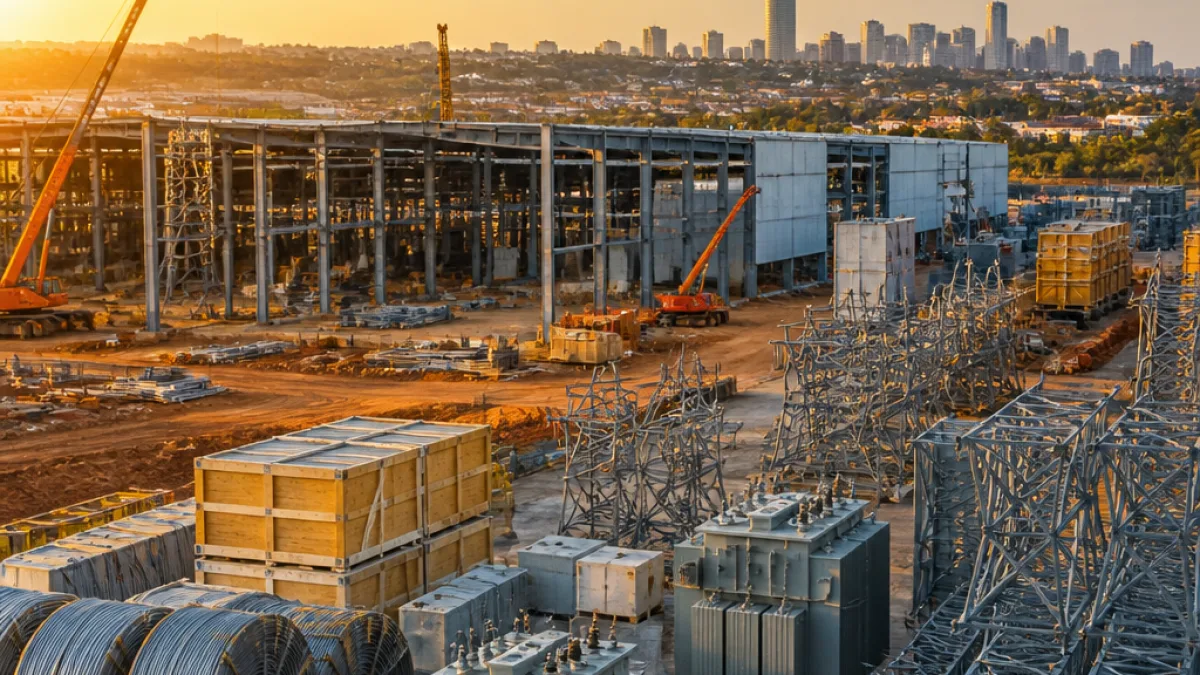
Johannesburg — Six Chinese companies will set up factories in Gauteng to manufacture components for transmission infrastructure, Electricity and Energy Minister Kgosientsho Ramokgopa said on Thursday, as government pushes to expand the national grid to accommodate additional generation capacity.
Local manufacturing to support grid build
Ramokgopa said the planned facilities will produce wire, transformers and pylons, elements that are central to high-voltage transmission networks. The announcement forms part of broader efforts to strengthen domestic supply chains and accelerate grid expansion needed to evacuate new electricity capacity — including renewables and other generation — into the system.
He expressed optimism that Chinese manufacturers would take up the opportunity to base production in South Africa and supply the local market, reducing reliance on long lead times and imports for critical transmission equipment.
What this means for Gauteng
- Industrial activity: The factories are set to increase manufacturing presence in the province, potentially creating opportunities in construction, engineering and logistics.
- Project delivery: Onshore production of wire, transformers and pylons should shorten procurement timelines for transmission projects, which have been hampered by global supply constraints.
- Grid expansion: Local availability of transmission components supports the rollout of lines and substations needed to connect new generation to the national grid.
Ramokgopa’s comments point to a coordinated effort between government and foreign manufacturers to address bottlenecks that have slowed grid expansion. He framed the industrialisation move as complementary to the country’s energy transition, where integrating new capacity requires strengthening transmission corridors.
Details and timelines still limited
The announcement did not include firm investment values, employment projections or construction timetables for the Gauteng facilities. Nor were the names of the six companies disclosed in the statement summarised in reporting.
Officials will need to provide further details on planning approvals, land or industrial parks to be used, local procurement commitments and expected dates for first production if the plants are to have the intended impact on near-term project delivery.
| Item | Details reported |
|---|---|
| Number of firms | 6 Chinese companies |
| Products to be manufactured | Wire, transformers, pylons |
| Location | Gauteng province |
Why transmission matters now
Transmission infrastructure is a precondition for connecting new generation, whether from utility-scale solar, wind or other sources. Delays in procuring transmission equipment have been a recurring constraint in rolling out new lines and substations. Increasing local capacity to make components could help reduce lead times and support the pace of grid projects that the Department of Electricity and Energy is prioritising.
For Gauteng, which is a major demand centre and a logistical hub, onshore production could also cut transport costs and improve maintenance turnaround times for critical items such as transformers.
Ramokgopa’s announcement signals government engagement with international manufacturers to address a national infrastructure bottleneck. The next steps will be transparency on specific investors, formal agreements or memoranda of understanding, and clear commitments on localisation and skills development so that the planned factories deliver tangible benefits for workers and the regional economy.
Further detail from the Department of Electricity and Energy and project partners will determine how quickly these facilities move from announcement to production and whether they materially change timelines for transmission projects in Gauteng and nationally.