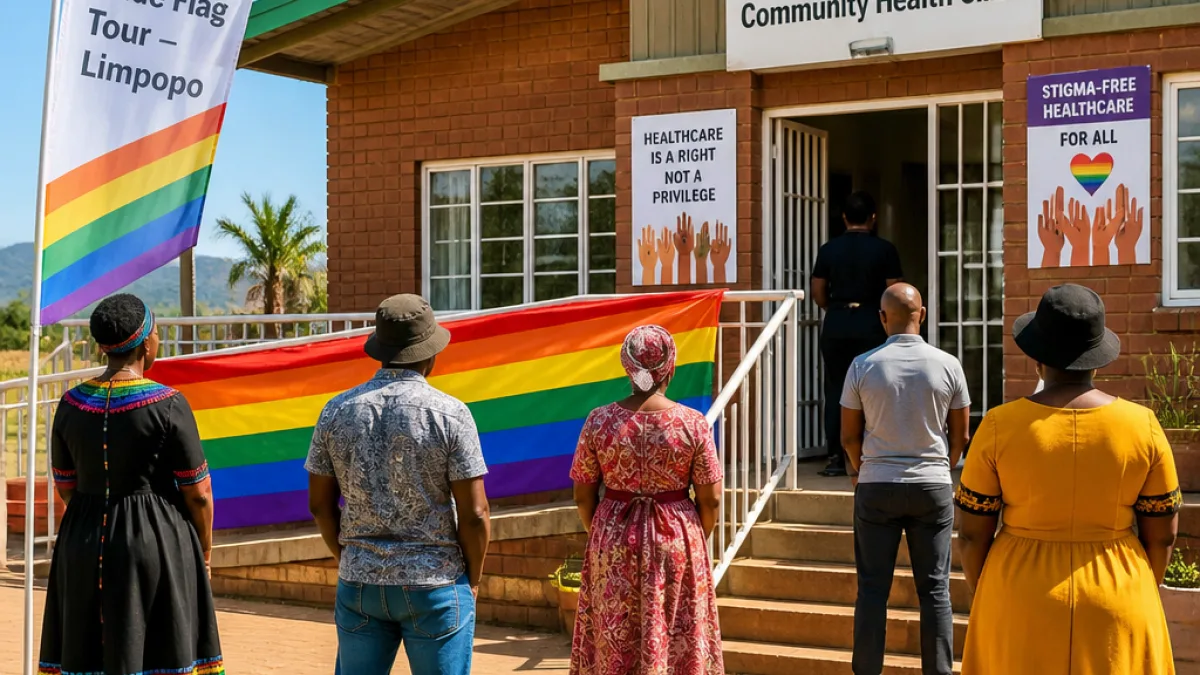
Tzaneen, Limpopo — A national campaign to promote stigma‑free, inclusive healthcare for LGBTIQ+ people and other key populations started in Limpopo this week with a series of stakeholder engagements in Tzaneen and surrounding districts, organisers said.
Campaign seeks commitments from local leaders and health workers
The Pride Flag Tour is being led by The Aurum Institute’s POP INN programme in partnership with the Institute of Health Programmes and Systems (IHPS). According to the organisers, the project brought together government representatives, traditional leaders, healthcare providers, civil society and community members to highlight the right of everyone to access healthcare with dignity.
Events in Limpopo included beneficiary testimonies, community conversations and the ceremonial unveiling of a Pride Flag as a visible symbol of inclusion. Participants were invited to sign the flag as a public show of support for non‑discriminatory health services.
Five districts targeted across the province
Organisers said the tour will engage stakeholders across all five district municipalities in the province. The initial week of events in Limpopo covered a range of activities intended to increase awareness among frontline staff and to strengthen local referral pathways for prevention, treatment and mental health services.
| District | Primary focus in launch week |
|---|---|
| Vhembe | Stakeholder engagement, community conversations |
| Mopani | Launch event in Tzaneen, beneficiary testimonies |
| Capricorn | Health provider workshops |
| Waterberg | Public commitments and flag signing |
| Sekhukhune | Community conversations and mobilising civil society |
The table above summarises the districts named by the organisers and the primary focus described for the launch week.
Addressing stigma as HIV response shifts
The Pride Flag Tour comes as the national HIV response is being restructured, a change organisers link to reductions in some international funding. The Aurum Institute said it remains essential to address barriers that prevent key populations from seeking care because of stigma, discrimination and fear.
"Healthcare should never depend on who you are, who you love or where you come from," the Aurum Institute said.
Programme leads said stronger partnerships across districts are intended to improve access to prevention, treatment and mental health services while protecting the dignity and rights of those most affected by stigma.
Questions about sustainability and funding
Local coverage and the organisers’ statements make clear the campaign is a response to a changing funding landscape at national and international levels. What remains unanswered is how sustained, on‑the‑ground improvements in service quality and access will be financed once initial advocacy and training phases conclude.
Key questions for provincial and district health authorities include:
- How will inclusive and stigma‑reduction training for health workers be financed and institutionalised within existing staff development budgets?
- Which district health programmes will absorb ongoing support for referral networks and mental health services for key populations?
- What monitoring and accountability mechanisms will be used to measure whether signatory clinics and facilities maintain actionable changes in practice?
Those organising the Pride Flag Tour emphasised partnership working with government, traditional leadership and civil society. Still, the sustainability of interventions will require clarity on financial and human resources at provincial and district level.
Potential local impact
For communities in Limpopo, the campaign aims to reduce barriers that discourage people from accessing HIV prevention and treatment and broader health services. Organisers say improving dignity and respect in health settings should increase uptake of services, reduce late presentation for care and help ensure continuity of treatment for people living with HIV.
Provincial health officials were listed among participants in launch events, though the organisers framed the project as a joint effort that depends on public and civil society collaboration. The next phase of the Pride Flag Tour will determine whether local commitments translate into lasting changes at facility level across the province.
As the campaign continues, residents and health stakeholders will be watching for detailed commitments that specify budgets, timelines and measurable outcomes. Without those, visible gestures such as flag signing risk remaining symbolic rather than catalytic.
Reporting from Tzaneen for Limpopo notes that the Pride Flag Tour is one of several initiatives seeking to reimagine local HIV and health service delivery in a period of shifting funding and programme priorities.