Government calls for international linkages and more capacity at Centre for Global Change
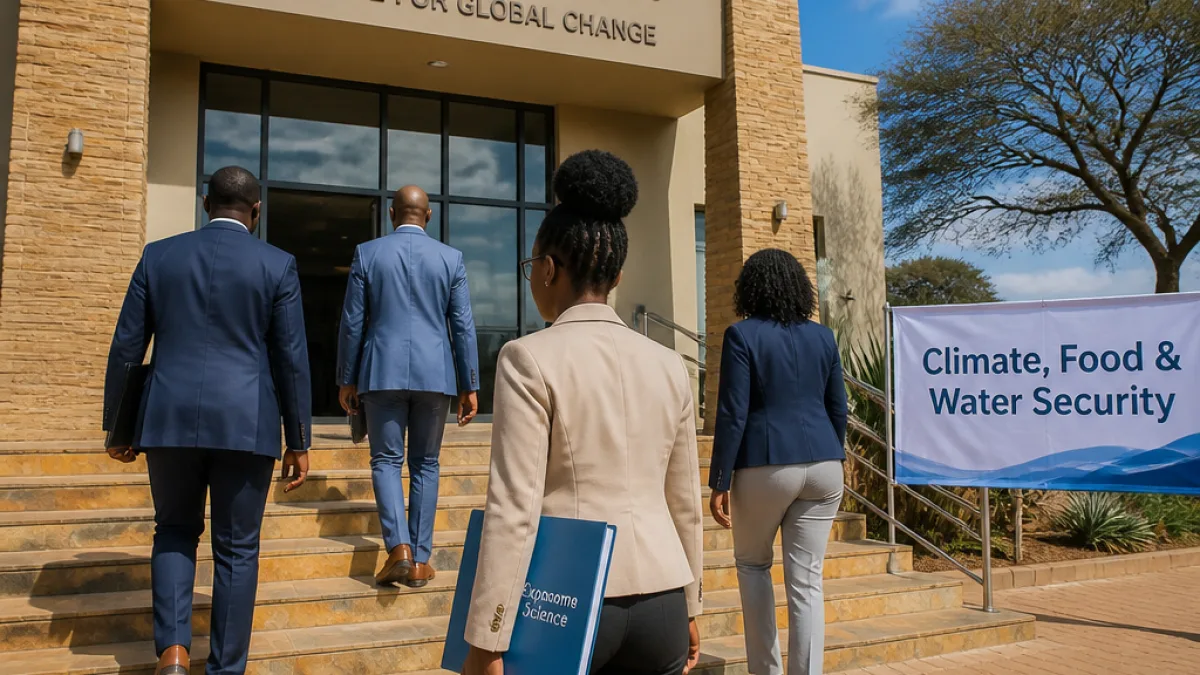
The Department of Science, Technology and Innovation (DSTI) has urged the University of Limpopo’s Centre for Global Change to strengthen its international research networks and develop into a continental hub for the emerging field of Exposome Science. The call came during a visit by Deputy Minister Nomalungelelo Gina, who described the university as a national asset with responsibilities that extend beyond classroom teaching to research, innovation and public service.
Gina framed the centre’s work as central to government priorities, emphasising that investments in historically disadvantaged institutions are essential to build an inclusive knowledge economy. She linked the centre’s programmes directly to pressing national challenges such as climate change, food insecurity, water scarcity and environmental degradation.
“These institutions are central to building an inclusive knowledge economy and ensuring that the benefits of science and innovation reach all communities,”
The deputy minister’s remarks coincided with the close of National Science Month, a national campaign that highlights the role of science, technology and innovation in development. During the visit, Gina congratulated the university for graduating its first cohort from a short learning programme on climate change mitigation and adaptation, saying these new graduates will be valuable for communities, institutions and government responding to climate impacts.
Officials framed the Centre for Global Change’s activities around research and capacity-building efforts aimed at practical, local problems. The centre’s current focus areas include climate resilience, adaptation, food systems, water security, soil science and sustainable agriculture — domains the deputy minister described as "not only academically relevant but essential to South Africa’s future development".
Priorities and questions about capacity and funding
While the policy case for strengthening the centre is clear, the next steps raised during and after the visit point to practical challenges: how will the centre be resourced to expand into Exposome Science, what partnerships will be prioritised, and how will research be translated into policy and local action?
These are key implementation questions for provincial stakeholders who often see research announcements but are left waiting for tangible investments. The deputy minister stressed government commitment to supporting historically disadvantaged institutions, but did not detail specific funding packages or timelines during the visit.
- Research focus: climate resilience, adaptation, food systems, water security, soil science, sustainable agriculture
- Strategic aim: position the centre as an African hub for Exposome Science
- Capacity goal: deepen international collaboration and enhance research and human capital development
Exposome Science, an interdisciplinary area that studies the totality of environmental exposures over a lifetime and their effects on health, is still nascent in African research institutions. The deputy minister’s encouragement signals an ambition to build advanced capabilities locally, but success will depend on sustained investment, specialist training and cross-border academic partnerships.
| Area | Reported focus |
|---|---|
| Climate | Resilience and adaptation |
| Food systems | Security and sustainability |
| Water | Security and management |
| Soil | Science for sustainable agriculture |
University representatives and DSTI officials cited the recent graduation from the Climate Change Mitigation and Adaptation Short Learning Programme as an early example of building local skills that can be deployed to respond to climate impacts. The graduates, the deputy minister said, could support communities and government entities facing climate-related challenges.
For communities across Limpopo, research that improves water security, soil health and food systems is directly relevant. Yet for outcomes to change lives, documentation-heavy discussions about strategy must be followed by transparent funding decisions and implementation plans. How much will be channelled to research posts, laboratory upgrades, field trials and training? Over what timescale will partnerships with international networks be forged?
These are the accountability questions that remain after high-level visits. Government rhetoric around strengthening historically disadvantaged institutions must be matched by visible budget lines and measurable milestones so provincial residents and local government can assess progress.
As the Centre for Global Change seeks to deepen its role, the province will watch whether that ambition translates into new research jobs, improved agricultural practices, and stronger local responses to climate stressors. For now, the visit clarifies intent; the crucial next phase will be securing resources and converting academic outputs into practical interventions that benefit communities across Limpopo.