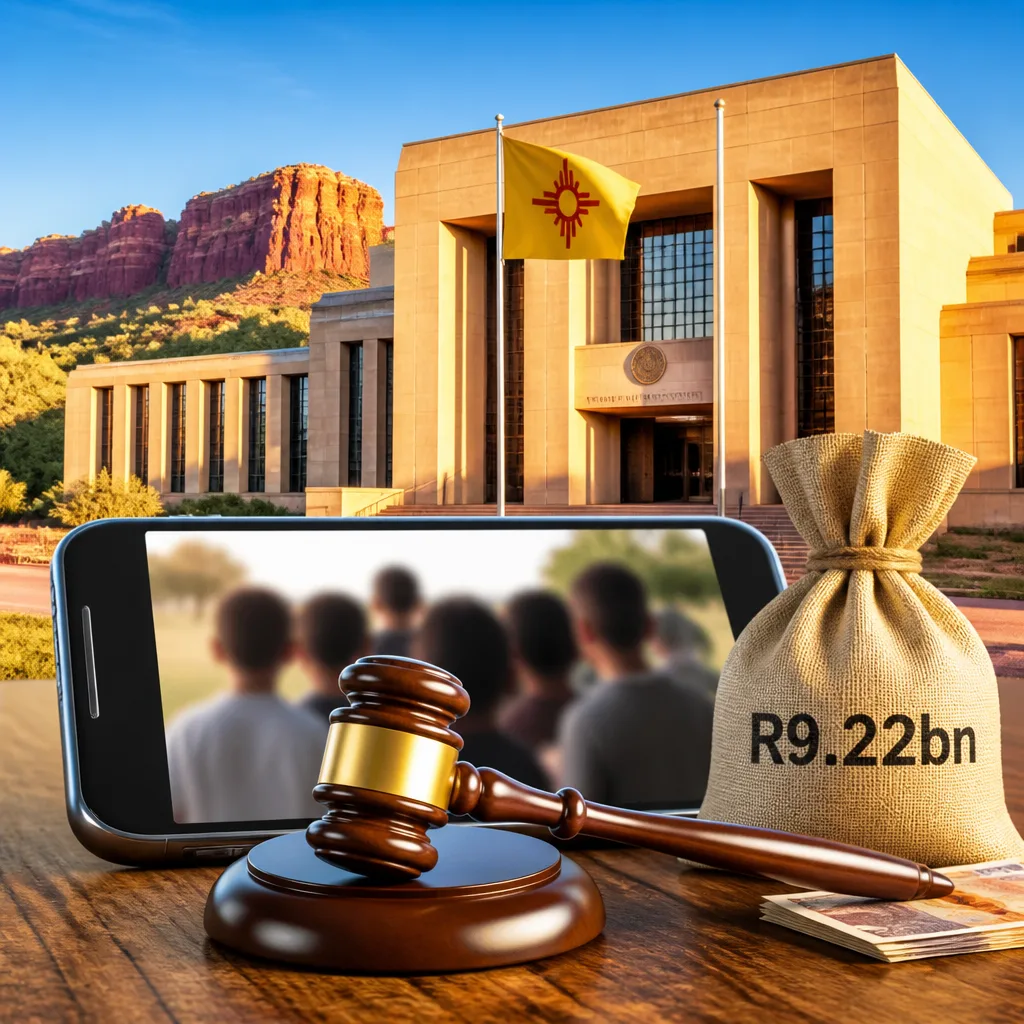
A state court in New Mexico has ordered Meta to place $567 million (R9.22 billion) into a fund for teen mental health and to change how its services operate for young users, after finding the company had created a public nuisance that harmed children’s wellbeing.
Judgement and required changes
Judge Bryan Biedscheid in Santa Fe concluded the social media company’s design and practices contributed to harmful outcomes for minors, siding with New Mexico Attorney-General Raúl Torrez. The ruling follows a previous jury decision in which Meta was ordered to pay $375 million (R6.10 billion) after being found to have violated consumer protection laws by misrepresenting how safe Facebook and Instagram were for young people.
The court’s decree, which will remain in place for five years, directs Meta to introduce a range of youth safety measures on Facebook and Instagram. These include:
- monthly limits on teens’ time on the platforms;
- controls to reduce notifications;
- tighter restrictions on adults contacting minors;
- safeguards for AI chatbots interacting with young users;
- enhanced review and handling of child sexual abuse reports.
Responses and wider implications
Meta said it intends to appeal the ruling and reiterated that it is confident in its record on protecting teenagers online. The company also said it continues to work on identifying and removing harmful content.
“We are confident in our record of protecting teens online and will continue to defend ourselves against claims that misrepresent the facts,” Meta said.
Attorney-General Raúl Torrez characterised the judgment as forcing stronger child protections and criticised the company for prioritising profit over safety. He described the decision as a potential model for other jurisdictions:
“This is not just a judgment against one company. It is a blueprint,” Torrez said.
Legal analysts and public-health advocates are watching the case as part of a larger movement in the United States. The New Mexico ruling is among numerous actions by states, school districts and municipalities that have pursued public nuisance litigation against social media firms, seeking not only damages but also court-ordered product changes aimed at reducing harms to young people.
Why this matters for health services and families
For clinicians, educators and parents, the case highlights concerns about how platform design can affect mental health and safety among adolescents. While the ruling arose in the US, its implications are global: policymakers and regulators in other countries may look to similar legal approaches when considering protections for under‑18s online. The judgement also adds to growing pressure on technology companies to adapt product features to reduce addiction-like engagement and the risk of exploitation.
It remains uncertain how the appellate process will unfold, and whether the measures ordered by the court will be implemented during appeals. Meta’s stated intention to contest the decision means the legal fight is likely to continue.
| Item | Amount/Action |
|---|---|
| New fund ordered | $567m (R9.22bn) |
| Earlier jury award | $375m (R6.10bn) |
| Decree duration | 5 years |
Health professionals and child welfare groups will be monitoring how changes to platform practices might affect appointment pressures in clinics, referrals for mental‑health support, and the nature of online risks presented to young patients. As technology and health increasingly intersect, courts and regulators are becoming venues where public-health concerns about children’s online lives are contested and potentially resolved.