
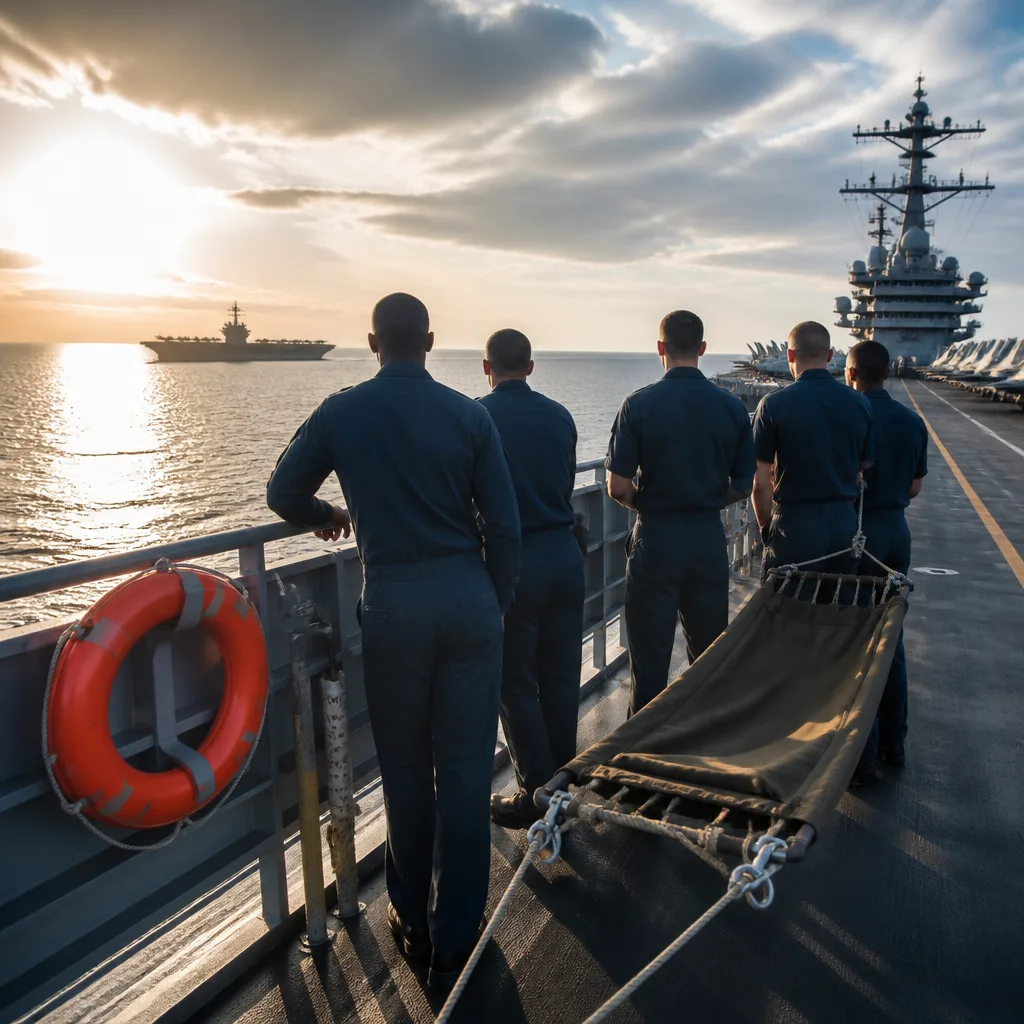
The senior US Central Command commander has acknowledged mental health challenges aboard the aircraft carrier USS Abraham Lincoln after reports that sailors had attempted to go overboard during the ship's extended Middle East deployment.
Leadership visit follows reports of low morale
Adm. Brad Cooper visited the Lincoln on Saturday and, in a statement posted to X, said the ship currently had "among the lowest number of cases related to mental health" of the US Navy's 11 active aircraft carriers. He nonetheless accepted that prolonged service at sea can be difficult for some personnel.
"Find any of the nearly 4 million Navy veterans in America today and they will likely tell you that service at sea for long periods isn't for everyone," Adm. Cooper said, according to his statement.
The admiral's visit and public comments came after news outlets reported widespread morale and mental health concerns aboard the Lincoln, which has been deployed for more than eight months. The Navy Times and Stars and Stripes published accounts that included sailors attempting to go overboard.
Dispute over the scale and portrayal of problems
While military leadership has sought to frame the situation as manageable, the narrative has been contested across political and media lines. President Donald Trump and Defence Secretary Pete Hegseth have both downplayed reporting that suggested deteriorating morale, with Hegseth saying the reports were "completely misrepresented," according to published accounts.
The president was asked whether the Lincoln's deployment had gone on too long and replied, "No, no, no" and added, "not nearly long enough," according to reporting. Trump also indicated the Lincoln would be replaced soon in the region.
Media reports state that the carrier USS George Washington is en route to the Middle East and is expected to relieve the Lincoln.
Questions from lawmakers
Lawmakers have raised questions about conditions aboard the carrier and the wider implications for force welfare. Sen. Kirsten Gillibrand (D-N.Y.), who sits on the Senate Armed Services Committee, was reported to have criticised the Pentagon over the ship's conditions.
The public exchange underscores competing priorities: operational demands tied to a prolonged deployment in a region with heightened tensions, and the duty to protect sailors' mental health and morale.
What the numbers show
Available figures cited during coverage provide context rather than a full clinical picture:
- 11 – number of active US aircraft carriers
- More than eight months – length of the Lincoln's deployment in the Middle East
- Nearly 4 million – total number of US Navy veterans referenced by Adm. Cooper
| Item | Figure |
|---|---|
| Active US aircraft carriers | 11 |
| Lincoln deployment duration | >8 months |
| US Navy veterans | ~4 million |
Health and operational implications
Mental health concerns in deployed military forces raise both clinical and operational questions. Extended deployments at sea can increase stress, isolation and fatigue, factors known to affect mood, sleep and coping. The admiral said the Lincoln's leadership was making "mental health and crew resilience a leadership priority," according to his statement.
Public reporting of attempts by sailors to go overboard prompted scrutiny of support systems aboard the ship, including access to counselling and the mechanisms commanding officers use to monitor and support crew wellbeing during sustained operations. Details about specific support measures and case numbers were not disclosed in the reporting.
For health services and policymakers, the situation highlights the need to balance mission requirements with proactive mental health care, timely rotation and clear communication with families and lawmakers.
As relief forces move into the region and the situation develops, oversight from congressional committees and further statements from the Pentagon and Navy will be watched for changes in policy or additional measures to support sailors' mental health.