
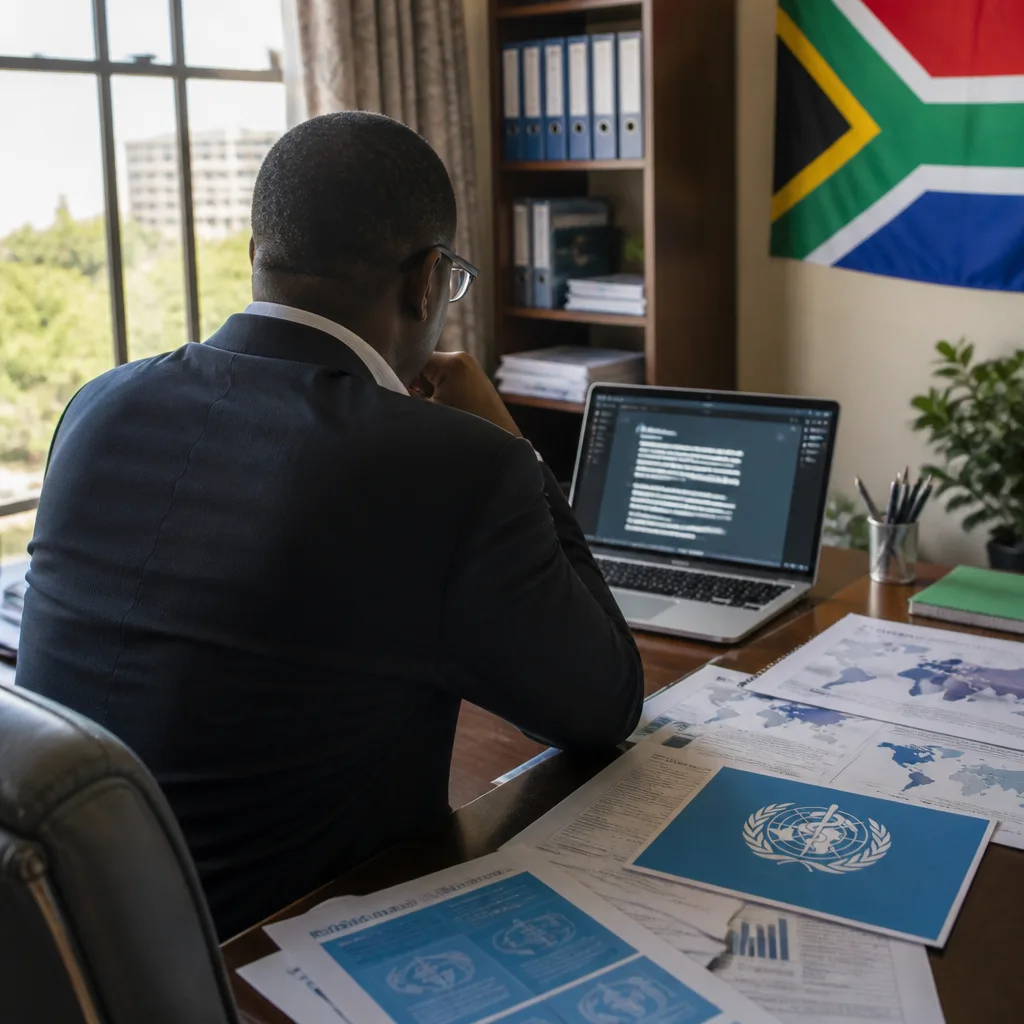
Generative artificial intelligence (AI) is already changing how national health ministries use World Health Organization (WHO) outputs and is a central, if largely unspoken, driver behind recent budget debates at the UN health agency, recent reporting finds.
AI reduces the friction in converting guidance
According to the reporting, a health official in a mid‑income country can now use a general‑purpose AI assistant to produce a workable national draft from WHO guidance in hours — a task that previously required a WHO mission, contracted consultants or weeks of staff time. That practical shift, multiplied across many countries, is altering what member states consider the value of the WHO’s services and therefore how much they are willing to fund Geneva’s operations.
“It simply became true, quietly, over the past two years, and it is already reshaping what happens when member states next debate how much to pay Geneva.”
The reporting argues that this technological change has not been publicly owned by organisations in Geneva, despite its implications for the agency’s finances and role.
New rule‑making, but an unfinished conversation on value
WHO continues to lead on governance of AI in health, joining other UN agencies to produce frameworks for safe and ethical AI use in the sector. The recent joint framework launched with the International Telecommunication Union and the World Intellectual Property Organization complements WHO’s ongoing work to set standards and norms for AI and health innovation.
But the reporting warns that while WHO has been busy producing rules, it has not yet fully addressed the harder question: how AI changes the intrinsic value of WHO outputs and who is capable of producing similar products in future.
Two simultaneous shocks
The piece describes two shocks affecting WHO at once. One is financial: member states are reassessing budget priorities as AI lowers the cost and time needed to adapt international guidance. The other is technological: generative AI is creating new ways to produce policy drafts, guidance summaries and technical products that were once the preserve of specialised teams.
| Shock | Effect on WHO |
|---|---|
| Financial | Member states may reduce funding as perceived need for missions and external consultants falls |
| Technological | Generative AI enables rapid local adaptation of guidance, changing who can produce credible outputs |
- Speed: AI can produce a draft national protocol in hours rather than weeks.
- Scale: The capability is replicable across many ministries, potentially reducing demand for bespoke WHO missions.
- Governance gap: WHO has produced AI guidance but has not publicly addressed how AI alters the organisation’s value proposition.
The reporting also notes a surge in generative‑AI patenting: publications of such patents in the previous two years overtook the total from the preceding decade, underscoring the rapid expansion of capabilities in this technology and the pressure to govern it.
Implications for national health policy
For South African health planners, the shift has practical consequences. Ministries could accelerate adaptation of international guidance using AI tools, reducing delays in implementing updated protocols. At the same time, reliance on local AI‑driven adaptation places a premium on ministries’ capacity to judge technical quality and to guard against errors, bias or misuse.
The reporting frames the coming choices as urgent: the window to decide WHO’s role in an AI‑enabled world aligns with the term of the next Director‑General. How member states define the agency’s remit and funding during that period will influence global health collaboration for years to come.
As national and provincial health departments consider whether to adopt AI tools for guideline adaptation, they will need clear governance, robust quality assurance and transparent budgeting discussions about what services should come from WHO, what can be produced locally, and how to maintain standards in the era of rapid automation.