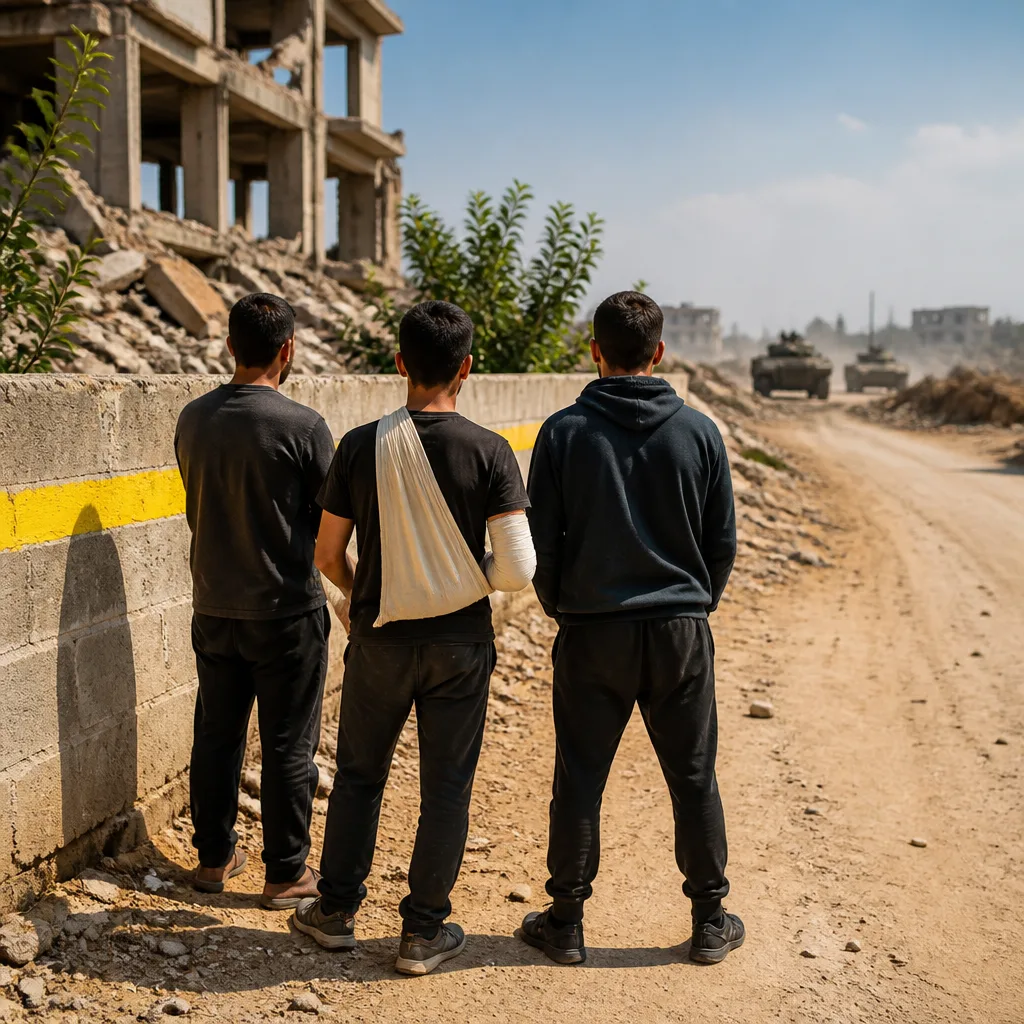
Three Palestinians were reported injured on 8 August in northern Khan Younis, an event that exemplifies growing concerns over civilian safety despite a declared ceasefire in Gaza. Local reporting said Israeli forces allegedly fired on a gathering north of the city, while demolition and further military activity were reported elsewhere in Gaza City.
Why the incident matters
The episode exposes a core contradiction of the current pause in hostilities: diplomatic announcements of a ceasefire have not created a uniformly safe environment on the ground. Humanitarian and legal expectations are that a ceasefire should give civilians a credible expectation of safety. Instead, the boundary now commonly referenced as the Yellow Line has taken on the character of a fluid and uncertain frontier.
The single incident cited in reporting raises several unresolved questions central to international humanitarian standards: whether Israeli forces were operating in the area, what kind of munitions were used, whether an identifiable threat justified live fire, and if civilians had been warned or displaced from the area beforehand. The Israeli military did not provide a response to the Anadolu account cited in reporting.
“Three Palestinians were injured”
What was reported
- Local sources, cited by Wafa and reported via Anadolu, said three Palestinians were injured after forces allegedly fired north of Khan Younis on 8 August.
- Separate reports described extensive demolition operations south of Khan Younis.
- Military vehicles were reported to have been firing east of Salah al‑Din Street near the Wadi Gaza Bridge in central Gaza.
The accounts did not include the names, ages or medical conditions of those injured, nor did they provide precise coordinates or independent verification of the surrounding circumstances. Those omissions are significant but do not negate the broader concern: civilians are still vulnerable in areas supposedly covered by the ceasefire.
Implications for civilian protection and accountability
In any context involving armed control, the burden falls on the authorities exercising force to explain the rationale for its use, and to show how civilian protection was ensured. Where clarity is absent, accountability mechanisms and humanitarian actors face obstacles in assessing compliance with international law and in protecting civilians effectively.
The evolving geography of the Yellow Line means that frontiers of danger are no longer fixed. For affected populations, this creates uncertainty about where it is safe to remain, move to, or access assistance. For aid agencies and mediators, it complicates planning for relief corridors, evacuations and the repair of essential services.
| Date | Location | Reported activity |
|---|---|---|
| 8 August | North of Khan Younis | Alleged firing; three Palestinians injured |
| 8 August | South of Khan Younis | Extensive demolition operations reported |
| 8 August | Central Gaza (Salah al‑Din Street near Wadi Gaza Bridge) | Military vehicles reported to be firing east of the street |
The absence of an on‑record response from the Israeli military in the cited report leaves those responsible for the use of force unidentified and questions about legality and necessity unanswered. That gap intensifies calls from human rights monitors and humanitarian organisations for transparent incident reporting and for mechanisms that can verify allegations and provide redress where violations occur.
For external observers and regional actors, the Yellow Line’s instability signals a fragile ceasefire that could easily be undermined by miscalculation or further localized use of force. For civilians inside Gaza, the practical consequence is persistent insecurity that limits movement, access to aid and confidence in negotiated pauses.
As diplomatic efforts continue around ceasefire terms and implementation, clarity about frontlines, clear designation of safe zones, and verifiable incident investigation will be essential to translate pauses in fighting into tangible protections for civilians.