
International Cat Day, observed each year on 8 August, was established by the International Fund for Animal Welfare (IFAW) in 2002 to promote adoption, share care advice and celebrate companion animals. Reporting on the day highlights how cats have become woven into domestic life, and how their presence affects routines, remote work and emotional wellbeing.
Pets and the home office
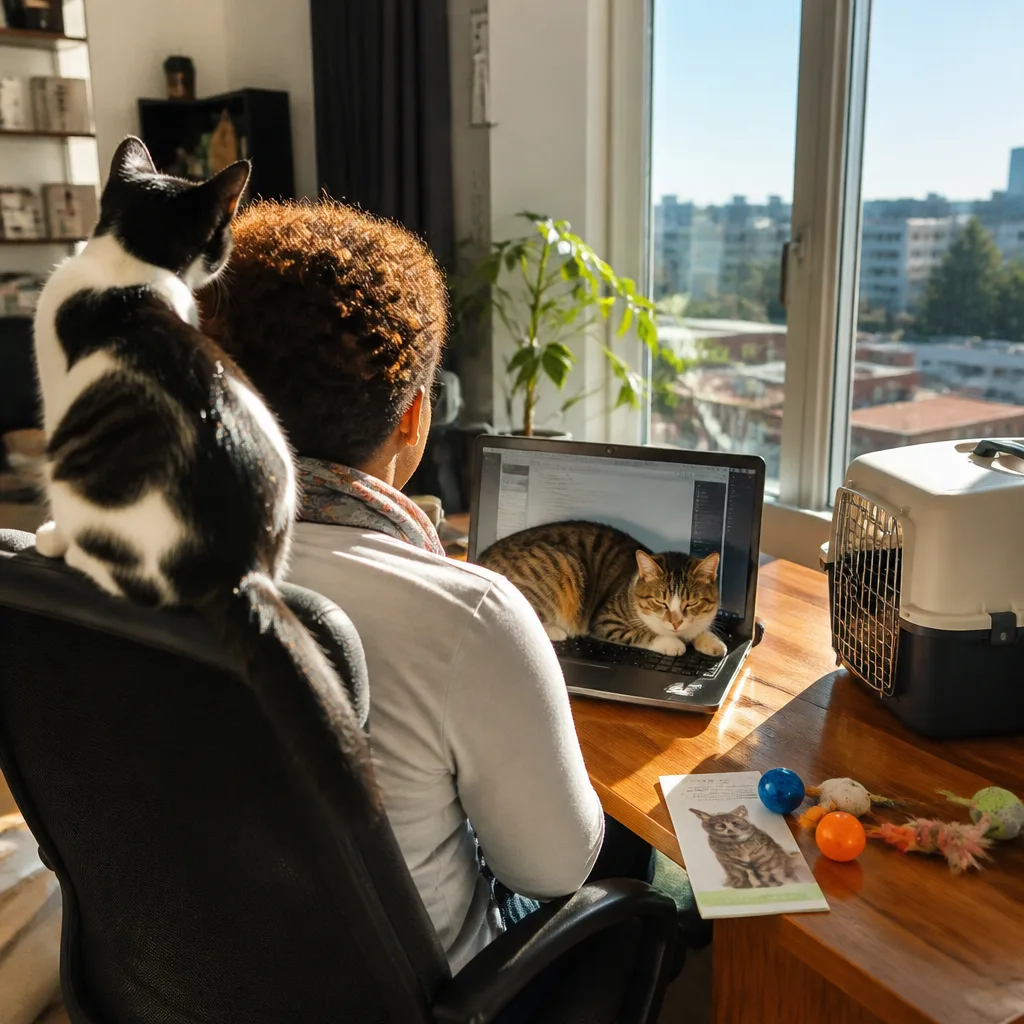
Profiles of household cats published to mark the day underline a simple shift: for many owners, cats are no longer background companions but active participants in day‑to‑day life. One owner describes a cat that alternates between curling up on laps and perching on desks; another recounts a cat that prefers to hide behind a computer or claim a chair as a vantage point behind its owner’s head. Those domestic patterns reflect broader changes since the rise of remote working, when pets commonly share the same footprint as laptops and conference calls.
These short portraits also signal how owners anthropomorphise behaviours — naming cats with affectionate and playful titles and framing routine actions as personality traits. Such framing matters because it influences how people prioritise animal care and consider adoption. The IFAW’s aim in creating International Cat Day was explicitly to boost adoption and spread information on cat welfare; public interest pieces like these serve that objective by making companion animals visible and relatable.
Personalities and provenance
The profiles include anecdotes about feline antics and temperament. One owner speaks of a cat that was initially misidentified at the veterinary clinic but quickly revealed a bold, energetic disposition at home. Another owner contrasts two cats who, though similar in appearance, display very different temperaments: one calm under stress, the other delighting in heat and sunbathing.
“This a** likes to headbutt me,” one owner said, adding the remark in a tone that mixes exasperation with fondness.
Small details like these — preference for sunlit floors, a propensity for chewing cables, or a fondness for commandeering keyboards — are familiar to many pet owners and speak to everyday risks (such as chewing hazards) and pleasures (companionship during long hours at home).
Why this matters here
For South African readers, the human–animal bond illustrated by International Cat Day has practical implications. Increased pet ownership alongside expanded remote work arrangements affects household spending, veterinary demand and municipal considerations such as licensing and stray animal management. Promoting adoption and responsible care can reduce shelter overcrowding and improve animal welfare outcomes, while advisory content distributed on these awareness days helps share best practice on feeding, enrichment and safety.
- Origins: International Cat Day was founded by IFAW in 2002 to encourage adoption and share care guidance.
- Domestic impact: Cats commonly interact with workspaces, influencing owners’ daily routines and well‑being.
- Welfare outcomes: Visibility and storytelling around companion animals can drive adoption and informed care.
Snapshot
Below is a brief table drawn from the published profiles that illustrates the variety of cat personalities and how owners describe them:
| Owner | Cat(s) | Noted traits |
|---|---|---|
| Aaron Reich | Medici; Judy | Cuddly, desk companion; hides behind computer, sun‑lounger |
| Sam Halpern | Syl (formerly Fievel) | Playful, chews cables, energetic |
| Audrey Leinoff | Cookie; Coco | Contrasting temperaments — calm under stress; sun‑loving |
International Cat Day’s mix of light‑hearted profiles and practical messaging can prompt more considered pet ownership. For readers considering adoption, the day offers a chance to learn about care requirements; for policymakers and animal welfare groups it is an opportunity to remind the public about responsible ownership, veterinary access and the benefits of adopting from shelters.
As households and workplaces evolve, the role of companion animals in daily life remains solid: visible, sometimes mischievous, and for many owners, an integral source of comfort and company.