Severe monsoon rains and a spate of landslides in Bangladesh’s Cox’s Bazar refugee camps have underlined the fragility of a decade‑long humanitarian response and the limits of policies that treat prolonged displacement as temporary. Between 4 and 9 July 2026, hundreds of weather‑related incidents were reported across the camps, leaving at least 17 people dead and forcing more than 3,000 people from their homes, according to the reporting.
Why this matters
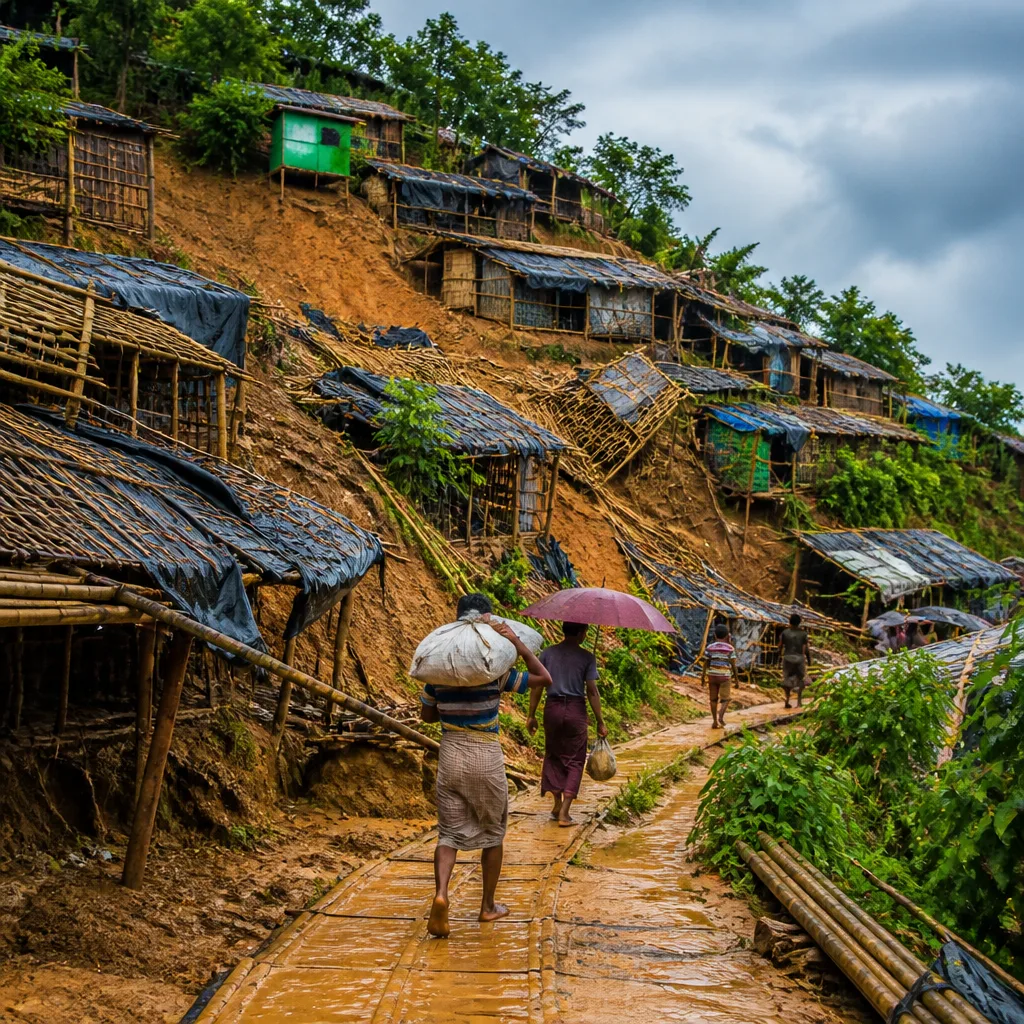
The Cox’s Bazar settlements host about 1.2 million Rohingya refugees and other forcibly displaced people from Myanmar, most living in 33 densely packed camps. Shelters are largely bamboo and tarpaulin structures built on steep, environmentally sensitive slopes. What began as emergency, short‑term accommodation has become effectively permanent, but without the infrastructure or land tenure needed for durable, resilient housing.
That mismatch between the duration of displacement and the temporary nature of the settlements heightens vulnerability to predictable seasonal hazards. The recent rains damaged shelters and critical services — roads, bridges, latrines, water points and learning spaces — while heavy slopes and weak drainage made landslides more likely.
- Casualties and displacement: At least 17 fatalities reported; more than 3,000 people displaced during the July incidents.
- Scope of the population: Approximately 1.2 million Rohingya and other displaced people live in Cox’s Bazar camps.
- New arrivals: Since November 2023, an estimated 152,000–153,640 Rohingya people reportedly arrived, increasing pressure on already limited space and services.
Operational and policy challenges
The most recent emergency has highlighted several structural problems that compound weather risk:
- Overcrowding: Camps were not designed to host a population at this scale for years on end.
- Unsafe settlement patterns: Shelters on steep slopes and near gullies increase exposure to landslides.
- Inadequate shelter quality: Bamboo and tarpaulin dwellings offer little protection from heavy rain and slope failure.
- Insufficient drainage and infrastructure: Poor drainage magnifies landslide risk and disrupts access to essential services when paths and bridges collapse.
- Funding constraints and policy limits: Financial shortfalls and restrictions on building durable structures constrain safer, long‑term planning.
Bangladesh authorities reportedly relocated more than 1,000 refugees away from high‑risk locations during the crisis, but safe alternative sites remain scarce and, in many cases, lack adequate shelter and services.
Human cost and stories of loss
The human impact is immediate and devastating. The account of one refugee who fled violence in Myanmar but lost family members in a landslide illustrates a grim irony: protection from conflict has been accompanied by new, avoidable risks in displacement settings. These tragedies underscore that protection cannot be limited to shelter from persecution; it must also encompass safety from foreseeable environmental hazards.
Relief actors face a difficult calculus: emergency response and lifesaving assistance are necessary now, but the scale and recurrence of such events point to the need for longer‑term investments in resilient infrastructure, safer settlement planning and predictable financing. Donor fatigue and restrictive policies on durable construction in host areas complicate those prospects.
For neighbouring and distant states, Cox’s Bazar serves as a warning about the interplay of climate, displacement and policy. As extreme weather grows more frequent across South Asia, host countries and international partners will confront repeated crises unless the international community shifts from short‑term emergency approaches to durable, risk‑informed responses.
| Indicator | Reported figure |
|---|---|
| People hosted in Cox’s Bazar camps | ~1.2 million |
| Number of camps | 33 |
| Deaths in July incidents | At least 17 |
| People displaced in July incidents | More than 3,000 |
| New arrivals since Nov 2023 | 152,000–153,640 (reported) |
The immediate priority remains lifesaving assistance and the relocation of people away from imminent danger. Medium‑term priorities include investment in drainage, slope stabilisation, safer shelter and settlement reorganisation. Long term, the situation calls for international cooperation on funding and political solutions that acknowledge protracted displacement as a chronic challenge, not a temporary anomaly.