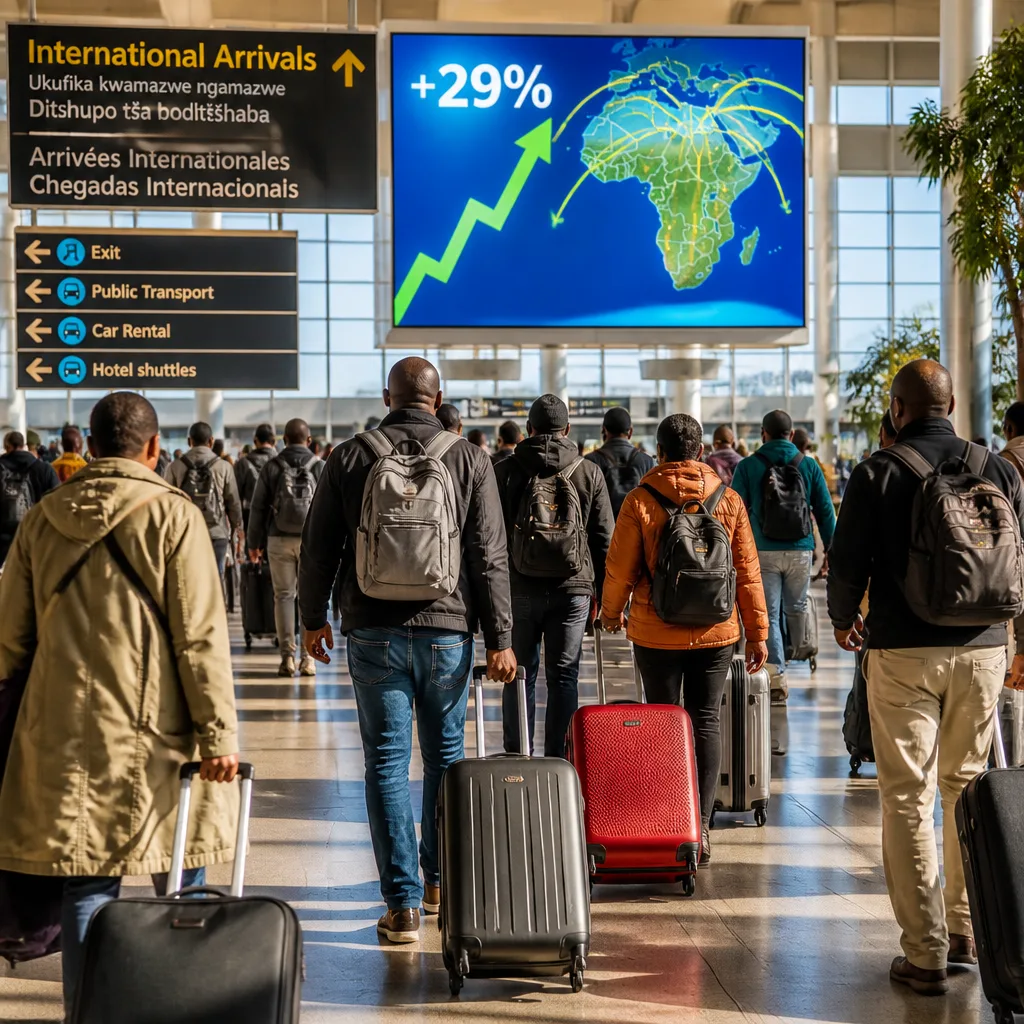
South Africa recorded a significant recovery in international travel during the first half of 2026, welcoming 5,584,473 international travellers — a 12.3% increase on the same period in 2025, Statistics South Africa (Stats SA) reported. The growth was fuelled mainly by stronger flows from the rest of the African continent, alongside steady gains from overseas source markets.
Regional markets lead growth
The H1 rise reflected a 14.3% increase in arrivals from other African countries, while overseas arrivals grew by 5.6%. In June alone, South Africa’s ports of entry and exit processed 2,788,901 travellers. Of those, foreign arrivals totalled 1,085,557, with 1,056,076 recorded as visitors and 29,481 classified as non-visitors.
Stats SA figures show that among visitors in June, 232,711 were same‑day visitors and 823,365 were overnight tourists, representing an overall year‑on‑year increase in tourist arrivals for the month of 9.8%.
Source markets and policy aims
Southern Africa Development Community (SADC) countries accounted for the bulk of regional arrivals in June, with 668,770 travellers, while travellers from other African countries numbered 12,007. Overseas markets contributed 141,796 arrivals that month. The United States remained the top overseas market for the second consecutive month, providing 40,566 arrivals in June.
Tourism Minister Patricia de Lille highlighted the role of targeted market development and partnerships between government and industry in the improved performance. She pointed to efforts to diversify tourism products and expand air connectivity as central to sustaining the recovery.
“Once again, the deliberate decision to diversify our tourism products is yielding positive results. The sustained growth in both regional and overseas arrivals reflects the resilience of our tourism sector and the effectiveness of the partnerships we have built with industry and our international markets,”
She said the government would continue to strengthen relationships through joint marketing across the continent and broaden reach into strategic overseas markets.
Why this matters
The rebound in visitor numbers has several implications for South Africa’s economy. Tourism supports a wide range of jobs in accommodation, transport, hospitality and cultural sectors, many of them in small‑ and medium‑sized enterprises. Increased international arrivals also contribute foreign exchange earnings and can bolster municipal revenues in major gateways.
Policy actions that can sustain momentum include improving visa facilitation, expanding direct air routes, investing in destination marketing, and maintaining competitive tourism infrastructure. The concentration of growth in regional markets underscores the importance of cross‑border transport links and regional cooperation.
However, challenges remain. Global economic volatility, competition from other destinations, and domestic constraints such as energy supply and safety perceptions can dampen tourism growth. Maintaining the diversification strategy that the Minister described will require continued coordination between state and private sector actors.
- Total H1 2026 arrivals: 5,584,473 (up 12.3% year‑on‑year)
- Regional (Africa) growth: up 14.3%
- Overseas growth: up 5.6%
| Metric | Number |
|---|---|
| June 2026 - total travellers through ports | 2,788,901 |
| June 2026 - foreign arrivals | 1,085,557 |
| June 2026 - overnight tourists | 823,365 |
| June 2026 - same‑day visitors | 232,711 |
For policymakers, the Stats SA release provides an evidence base to justify continued investment in air services and marketing, and to target relief and support where tourism-dependent communities still struggle to recover. For industry, the figures point to opportunities in regional routes and niche product development that appeal to both African and overseas travellers.
Looking ahead, sustaining this recovery will depend on preserving South Africa’s appeal against international competition while addressing domestic constraints that affect visitor experience. The coming months will show whether the gains recorded in H1 can be translated into a durable upswing for the remainder of 2026.