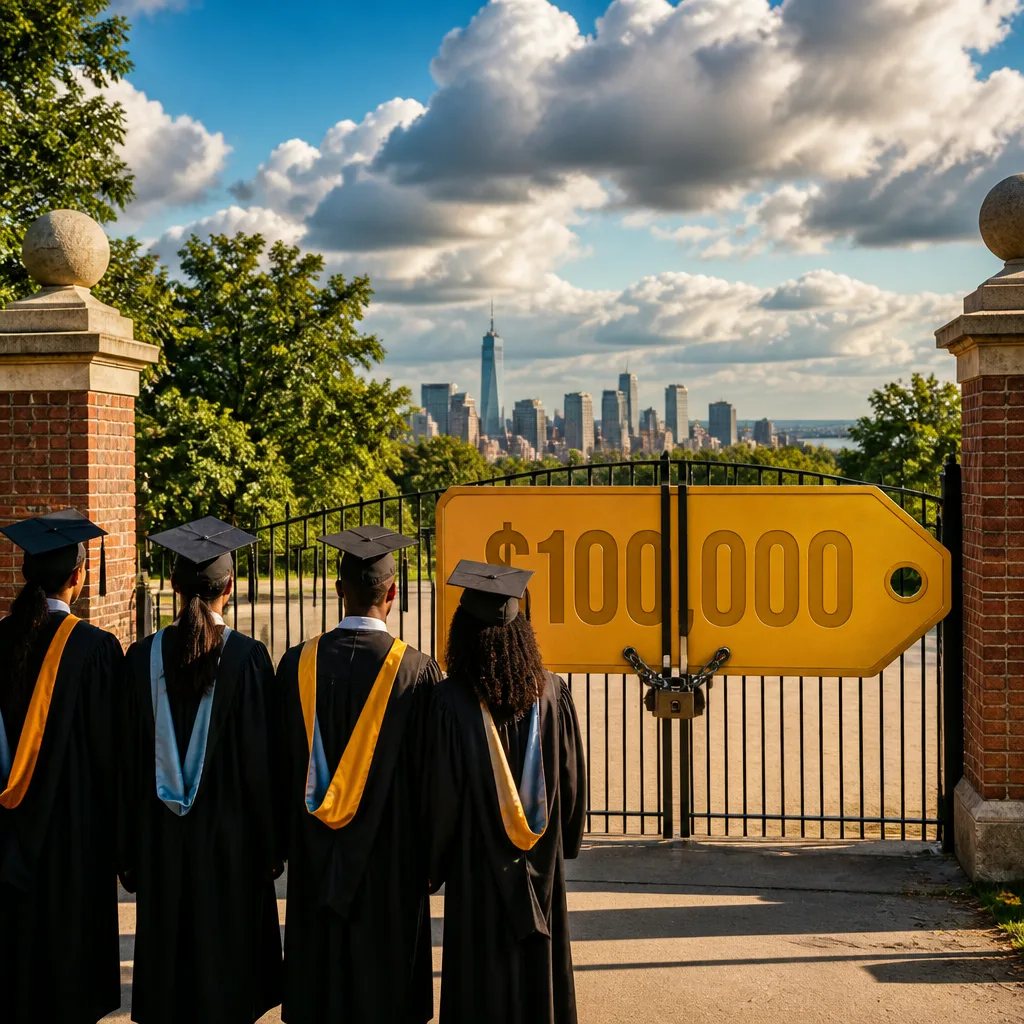
The US Department of Homeland Security (DHS) is reportedly considering a US$100,000 fee on international university graduates who seek to work in the United States under the Optional Practical Training (OPT) programme, according to reporting in the Wall Street Journal. OPT allows international students to work in the US on their student visas for between one and three years after completing their degrees.
What the proposal would do
Under the reported proposal, graduates using OPT would face a one-time charge of US$100,000. It is not yet clear who would be held responsible for payment — the international students themselves, the universities that train them, or the US employers that hire them. The idea remains under internal discussion at DHS and has not been adopted as policy.
“No policy should be treated as final until it is formally announced,” a DHS spokeswoman said, according to the report.
The plan would largely replicate the effect the administration originally sought with a similar US$100,000 fee on H-1B visas. That H-1B proposal prompted strong opposition from large technology and finance firms and was later narrowed to apply mainly to new hires from abroad after legal pushback. A federal appeals court in Boston also blocked collection of aspects of the earlier fee amid ongoing litigation, the reporting said.
Scale and immediate consequences
Data cited in the report show the scale of OPT use: roughly 419,000 people were working under OPT in 2024, the most recent full-year figure available, while an Institute of International Education (IIE) count placed the fall 2024 cohort at close to 300,000 — about a quarter of the international student population in the US.
Because many large US technology and finance firms recruit directly from American universities and later convert those hires from student visas to H-1B status, a fee on OPT would target the recruitment pipeline more directly than the earlier H-1B fee. That means employers who hire graduates already in the US could face higher costs or reduce graduate hiring, the report suggests.
- Approximate number on OPT (2024): 419,000
- IIE fall 2024 estimate of OPT participants: ~300,000
- Proposed fee under discussion: US$100,000
Why it matters from South Africa's perspective
South Africa sends a sizeable number of students to US universities and competes in global labour markets for skilled graduates. A substantial fee on OPT could reshape where international students choose to study and where employers recruit early-career talent. It could reduce the attractiveness of US postgraduate study for those intending to gain work experience in the US, diverting some flows to other destinations or encouraging students to remain in their home countries.
For employers and universities, the policy would increase compliance and financial uncertainty. The proposal's treatment of who pays the charge is key: if universities or employers were obliged to pay, institutional recruitment practices and labour costs could change. If students were required to pay, the fee would present a direct economic barrier to access for graduates from lower-income countries, including many in Africa.
Policy context and next steps
Officials in the White House and DHS have said no change is imminent but did not deny internal discussion of the idea. The proposed OPT fee forms part of a broader set of administration measures aimed at altering immigration incentives and revenue streams, the report notes.
| Item | Reported figure |
|---|---|
| Proposed fee | US$100,000 |
| People on OPT (2024) | 419,000 |
| IIE fall 2024 OPT estimate | ~300,000 |
The idea faces potential legal and industry resistance similar to what followed the earlier H-1B fee proposal. Any formal announcement would trigger scrutiny from universities, employers, courts and foreign governments. For South Africa, policy shifts in major destination countries for graduates merit close attention: they affect study choices, bilateral talent flows and the economic prospects of early-career professionals.