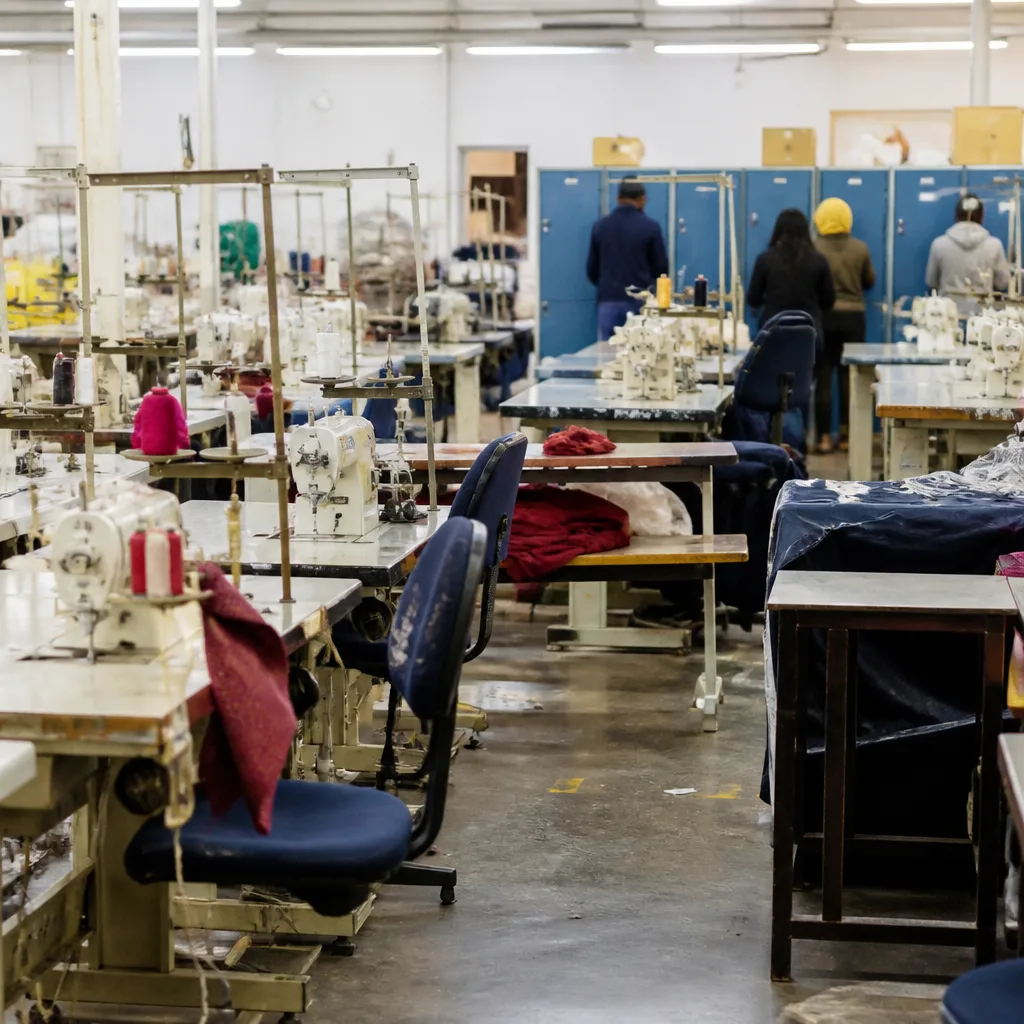
Clothing factories in Newcastle, KwaZulu‑Natal, have reported staff shortages after thousands of migrant workers fled following recent xenophobic protests, Reuters reported. Owners said rows of sewing machines stood idle as factories struggled to replace experienced workers who left during months of anti‑immigrant marches that culminated in a June 30 deadline declared by the group March and March.
Skilled posts left vacant
Factory owners visited by Reuters said they had lost between 12% and 19% of their workforce during the protests. Some of the departing employees were skilled machine operators whose experience is not easily replaced locally, the owners said, while few South Africans were willing to take the low‑paying jobs on offer.
"People don't want to work in factories," said Mpho Nkosi, a 29‑year‑old South African administrator at one of the firms, according to Reuters.
Owners described efforts to train local staff but said financial constraints and the limited pool of willing applicants hampered those programmes. One employer, Ronghua Yan, started a training course for seven local workers after losing about 40 foreign employees in June; another, Alex Liu, told Reuters that the skills gap among departing workers could not be filled immediately by local applicants.
Scale and local effects
The Southern African Clothing and Textile Workers' Union (SACTWU) has estimated notable impacts in Newcastle’s textile sector; Reuters reported the union put losses at around 15% of the town's textile workforce, though the full sentence in the report was incomplete. Owners also said there were reports of labour shortages in other sectors, including sugarcane harvesting.
A spokesperson for the Department of Employment and Labour told Reuters they were not aware of widespread worker shortages and urged employers to seek assistance from the department for recruitment.
Context and competing claims
The campaign by March and March targeted undocumented migrants and blamed them for South Africa's high unemployment rate, seeking to free up jobs for South Africans. Researchers have disputed the claim that migrants are a principal cause of high unemployment. Factory owners, meanwhile, said they predominantly employ South Africans but rely on some workers from neighbouring countries, including Eswatini and Lesotho, for specific garment‑sector experience.
Industrial relations and economic analysts have for years pointed to a mismatch between the types of jobs available in manufacturing and the preferences or skills of the local labour force. Employers in labour‑intensive sectors have often cited low wages and difficult working conditions as reasons locals avoid particular roles that migrants fill.
What employers say
- Several factory owners reported workforce losses between 12% and 19%.
- One owner said he lost about 40 foreign workers and started a small training course for local hires.
- The Department of Employment and Labour said it was unaware of a widespread shortage and offered recruitment help to employers.
| Reported figure | Source |
|---|---|
| 12%–19% | Factory owners (Reuters) |
| About 40 workers | Ronghua Yan, factory owner (Reuters) |
| 15% (estimate) | Southern African Clothing and Textile Workers' Union (reported by Reuters) |
The developments raise questions about the immediate capacity of affected manufacturers to meet production targets and about the wider economic impact if skilled labour remains scarce. Clothing and textile factories can be sensitive to interruptions in labour supply because experienced sewing‑machine operators and line managers are not quickly replaced.
Policy implications touch on enforcement and humanitarian aspects as well as labour market interventions. Employers have an option to work with the Department of Employment and Labour on recruitment drives, training subsidies or targeted skills development, but owners in Newcastle reported limited ability to fund larger training programmes themselves.
Longer term, the situation highlights persistent challenges in reconciling local employment pressures with the realities of an economy that depends in parts on migrant labour for specific skills and for filling undesirable or low‑paid roles. The balance between social stability, protection of vulnerable migrant workers and the needs of industry will shape local labour markets as South Africa continues to confront its high unemployment rate.