
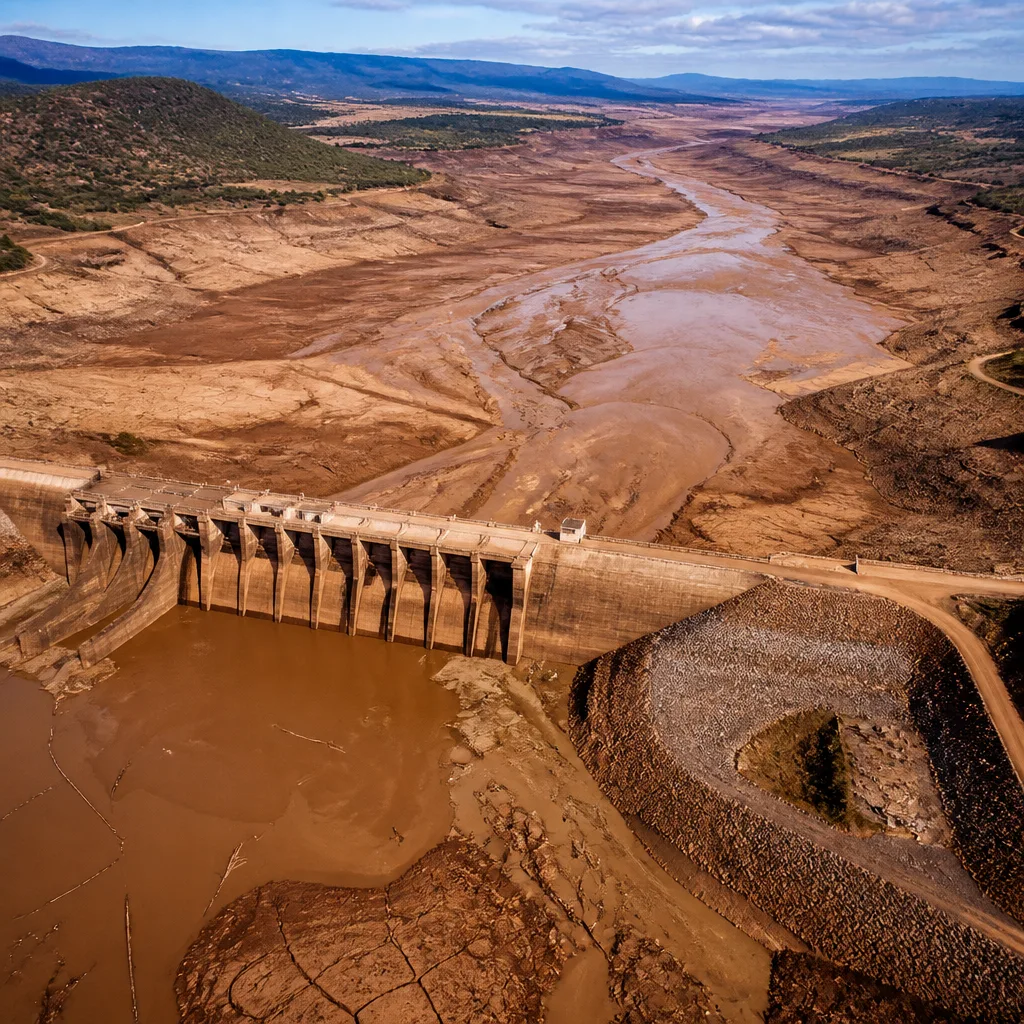
A global analysis of reservoir sedimentation warns that rising volumes of soil, silt and rock washing into reservoirs could leave up to 50% of the world's reservoirs functionally inoperable by 2060. The study, reported by Livescience, finds that about one in five reservoirs are currently at high risk of filling with sediment, creating mounting pressure on water storage and dam safety.
How sediment undermines reservoirs
Reservoirs are designed to hold water, not accumulate vast amounts of sediment. When rivers deposit soil, sand and gravel behind dams, the effective storage volume for water declines. That loss of capacity reduces the reservoir’s ability to provide drinking water, irrigation and hydropower, and it increases stress on dam structures that were not built to contain large, persistent deposits of sediment.
The study highlights several consequences of progressive infilling:
- Reduced water supply reliability — less usable storage means smaller buffers against drought.
- Greater flood and safety risk — sediment alters flow routing and can raise pressures on ageing infrastructure.
- Decline in hydropower output — turbines and intakes become less effective as water availability and flow patterns change.
Hotspots and drivers
Investigators identified the American West as a major hotspot, where erosion and sediment loads have already compromised many reservoirs. The report also links the problem to changing climate and land‑use patterns: more intense storms and altered runoff regimes can increase erosion in catchments, while deforestation, poor land management and wildfires expose soils to being carried into rivers.
“A ticking time bomb,” the Livescience report summarised, describing the continual buildup of sediment behind dams.
Climate change is expected to exacerbate the issue in many regions. More extreme rainfall events tend to mobilise larger quantities of sediment, while extended dry spells reduce vegetation cover and make catchments more vulnerable to erosion when storms do occur.
What this means for South Africa
While the study is global in scope, its findings are directly relevant to South Africa, where dams are central to urban and rural water supply, irrigation and hydropower. The country’s historical experience with soil erosion, catchment degradation and episodic intense rainfall underlines the risk that sediment could reduce reservoir performance and increase maintenance costs. The research adds urgency to efforts to protect catchments, maintain storage through sediment management and factor sedimentation into long‑term water resource planning.
Options to address sediment impacts include upstream land‑management measures (reforestation, erosion control, better burn management), engineered sediment traps and periodic dredging or flushing of reservoirs. Each approach has trade‑offs in cost, feasibility and environmental impact; the study underscores that sedimentation should be treated as a systemic problem requiring coordinated basin‑scale solutions.
| Current high‑risk reservoirs | Projected by 2060 |
|---|---|
| ~20% of global reservoirs | ~50% functionally inoperable |
The report serves as a warning to water managers and policy makers that the lifespan and performance of dam infrastructure cannot be taken for granted. Integrating sediment forecasts into reservoir operation rules, prioritising catchment rehabilitation and budgeting for increased maintenance and adaptation will be essential steps to safeguard water security.
Given the potential scale of the problem, the study calls for greater monitoring of sediment loads, more frequent surveys of reservoir storage capacity and improved models that can predict how climate and land‑use changes will affect sediment dynamics over coming decades.
Without such action, the combination of trapped sediment and changing hydrology could substantially weaken the services reservoirs provide — from drinking water and food production to electricity and flood control — with consequences for communities and economies worldwide.