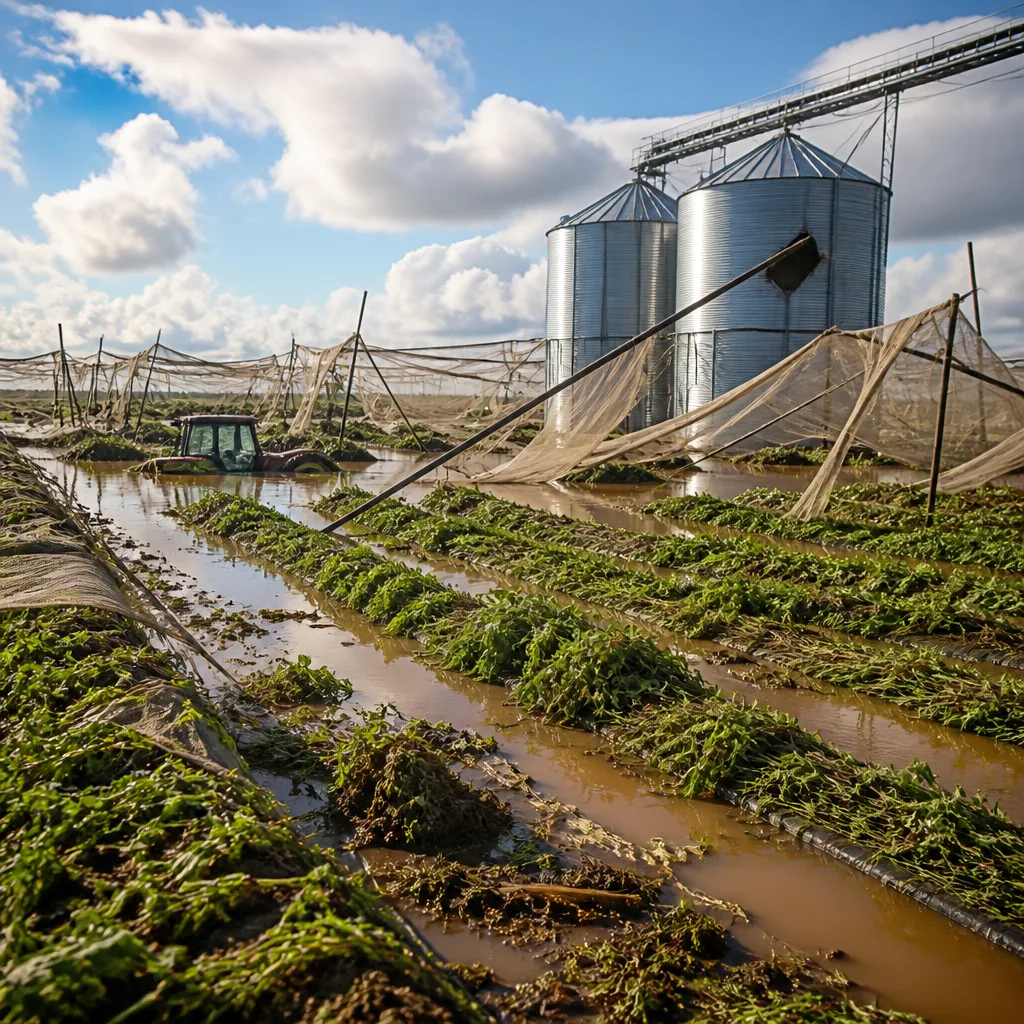
What farmers should do today: review insurance cover, secure irrigation and storage infrastructure, inspect hail nets and drainage, and factor more frequent severe-weather events into short-term production and logistics planning.
Escalating losses: not just hail any more
Severe weather in South Africa is becoming more varied and costly, with multiple hazards now striking during the same production cycle. Insurer Santam reported that insured crop losses for the 2025/26 season exceeded R1 billion, underlining a claims environment among the most active in over a decade. The previous season saw hail-only claims of about R170 million, showing both the persistence of hail damage and the growing impact of combined hazards.
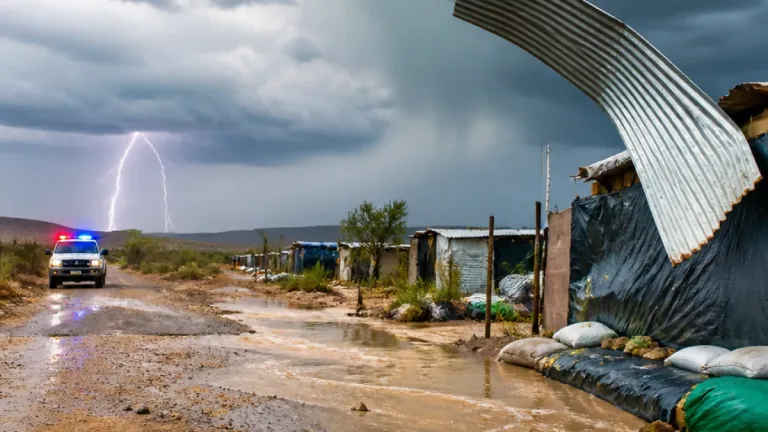
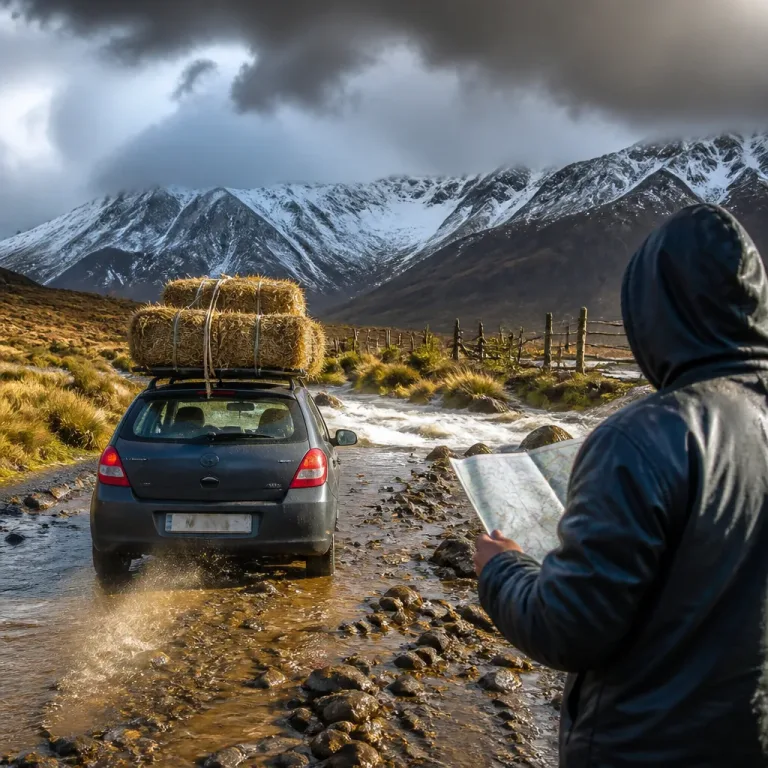
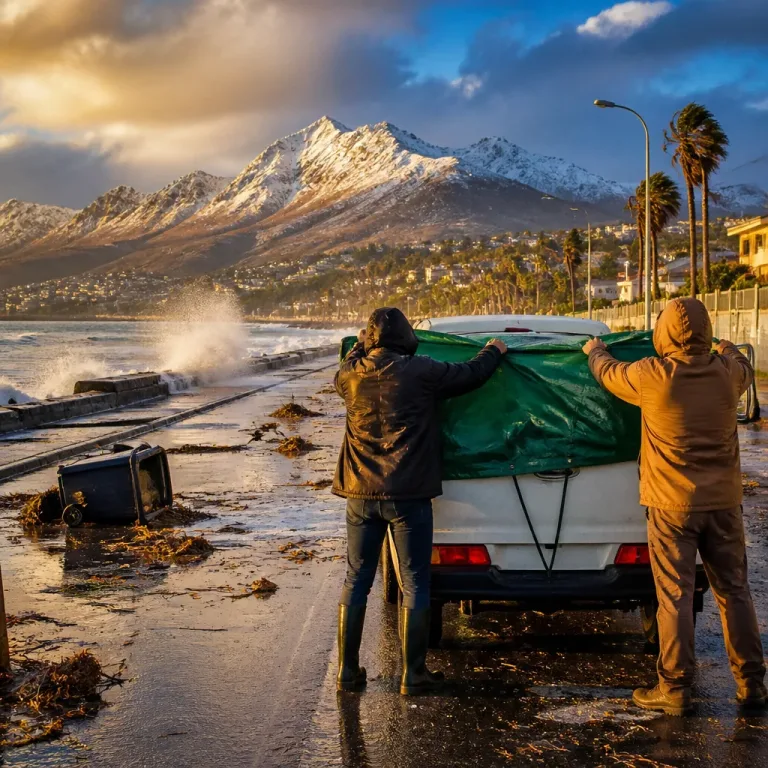
Farmers are no longer dealing only with isolated hailstorms. Strong winds, heavy rain, localised flooding and unseasonal conditions are increasingly happening together, making losses both more frequent and more complex to manage. That unpredictability is shifting how producers must operate: climate risk has moved from a seasonal issue to an everyday business consideration.
Wide-ranging consequences across the value chain
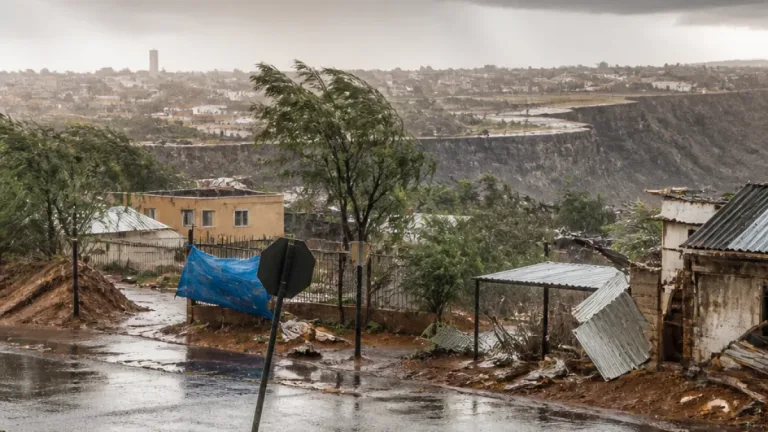
Damage goes beyond lost yields. Irrigation systems, netting, packhouses and access roads all face increased exposure, and even minor cosmetic damage in high-value horticulture can lower market value and export receipts. Reduced volumes and damaged infrastructure can leave packhouses running below capacity, affect employment and reduce logistical efficiency, feeding into price volatility and potential food-security pressures — especially for lower-income households.
- Immediate operational impacts: delayed harvesting, disrupted distribution and extended downtime in processing facilities.
- Financial impacts: higher insurance claims, increased repair and replacement costs, and lost market value for downgraded produce.
- Broader effects: supply-chain strain that can push up consumer prices and reduce availability for vulnerable communities.
Insurers, producers and planners must adapt
As weather patterns become less reliable, farmers, insurers and policy-makers face a shared challenge. Insurers are already seeing a heavier claims burden, which could influence premiums, cover terms and the availability of specialised agricultural products. Farmers will need to reassess risk management strategies, including physical measures to protect crops and infrastructure as well as financial arrangements such as insurance and contractual safeguards with buyers and packhouses.
| Season | Reported insured losses |
|---|---|
| 2025/26 | More than R1 billion |
| Previous season (hail only) | Approximately R170 million |
Those figures illustrate both the scale of recent losses and the changing nature of risk. When multiple hazards overlap in timing and geography, damage assessments, claims processing and recovery efforts become more complicated and costly.
Practical steps for producers and local authorities
Based on the changing risk profile, immediate actions include:
- Confirm that insurance policies cover multiple hazard types and understand exclusions and excesses.
- Inspect and reinforce irrigation, packing and storage infrastructure before high-risk periods.
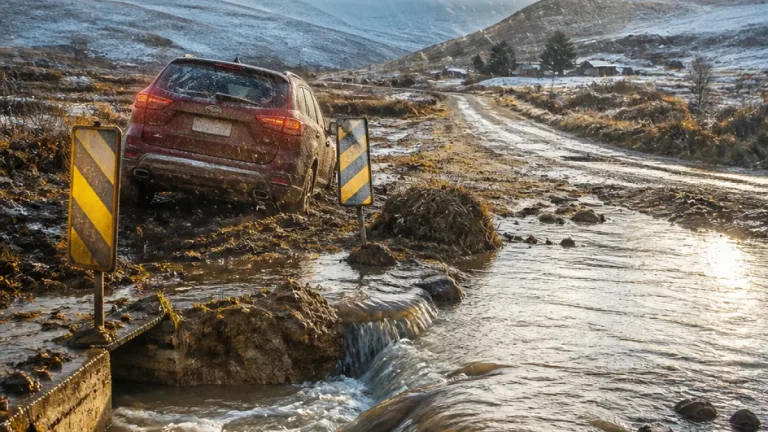
- Improve on-farm drainage and road access to reduce flood-related isolation during heavy rains.
- Coordinate with packhouses and transport providers to prepare contingency plans for reduced volumes and delays.
Longer term, adaptation will require investments in resilient infrastructure, updated production planning that accounts for shifting seasonal windows, and stronger collaboration between the agricultural sector, insurers and government agencies to protect supply chains and livelihoods.
Those working across the agricultural value chain should treat severe weather not as an episodic hazard but as a constant operational factor. Immediate preparedness will reduce harm in the short term; strategic adaptation will limit costs and stabilise food supplies over the longer term.