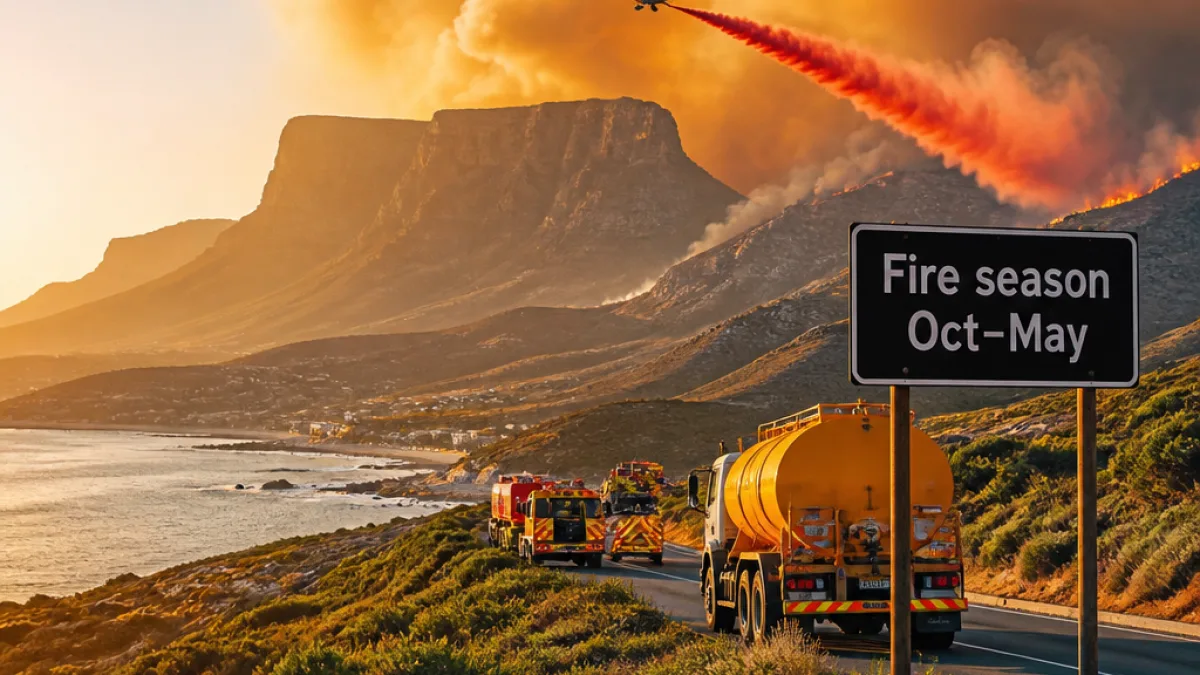
The Western Cape is preparing for a markedly longer and earlier fire season after officials moved provincial planning from a typical four‑month window to an October–May period, saying the shift is driven by the effects of the El Niño Southern Oscillation.
Government planners and emergency services warn that hotter temperatures, changes in rainfall patterns and mounting pressure on water supplies will combine to raise the province’s wildfire risk for a longer portion of the year.
What the authorities say
Local Government, Environmental Affairs and Development Planning MEC Anton Bredell told reporters the province is now planning around an eight‑month season because of changing climatic conditions and scientific projections linked to climate change. He said preparations are being broadened beyond traditional firefighting efforts.
“This is a call to action.” — Premier Alan Winde
Premier Alan Winde described the extended season as a warning residents cannot afford to ignore. The province has allocated around R12 million towards wildfire response this summer, according to officials.
Early signs and local incidents
Authorities point to recent incidents as evidence of the shift: fire crews in the Cape Winelands were called to a large wildland fire in the Kogmanskloof area outside Montagu this week — an occurrence local leaders said would normally appear later in the season.
Cape Winelands Mayor Elna von Schlicht described the timing of the Kogmanskloof fire as unusually early and warned that an earlier start to dangerous conditions means resources must remain on alert for longer.
Lessons from last season
Officials said the expansion of planning is informed by the damage of the previous season. According to the provincial statement, some 215,000 hectares were lost in December 2025, making it the worst season since 1997. That experience has prompted a more cautious posture this year.
| Item | Detail |
|---|---|
| Planned fire‑season window | October–May (eight months) |
| Budget allocation | R12 million for wildfire response |
| Area lost (Dec 2025) | 215,000 hectares |
Implications for communities, farmers and services
An earlier and longer season increases the time that farmland, natural areas and communities are exposed to fire danger and places sustained demand on firefighting crews. Officials say it will also heighten pressure on already strained water supplies.
Bredell said that preparations will include measures beyond direct firefighting — a reference to prevention, early warning and interagency planning — although he did not provide a detailed breakdown in the initial briefing.
- Expect an extended period of elevated fire risk from October through May.
- Authorities have earmarked R12 million to bolster response capacity this summer.
- Residents and landowners should heed local warnings and prepare for a longer window of risk.
Fire services face the practical challenge of keeping crews, equipment and volunteers operational for longer. That has knock‑on effects for municipal budgets and logistical planning, including access to water sources during peak demand.
What residents should know
Health and safety officials have urged people living near fynbos and agricultural interfaces to be vigilant as conditions change. While specific preparedness advice was not included in the provincial summary, the extended planning timeline signals a need for earlier clearance of firebreaks, review of evacuation plans and readiness to follow official instructions when alerts are issued.
Provincial leaders said discussions are under way with a range of organisations to broaden resilience measures this season. Those talks are expected to cover prevention, detection and co‑ordination between municipal fire units, conservation agencies and farmers’ associations.
The extended seasonal planning is an acknowledgment by the Western Cape government that climate variability linked to El Niño is already affecting the timing and intensity of wildfire risk. For communities along the province’s fire‑prone interfaces, the message from provincial government is clear: this season starts sooner and will last longer, and planning and vigilance must follow suit.
(Reporting from Western Cape official briefings and local incidents.)