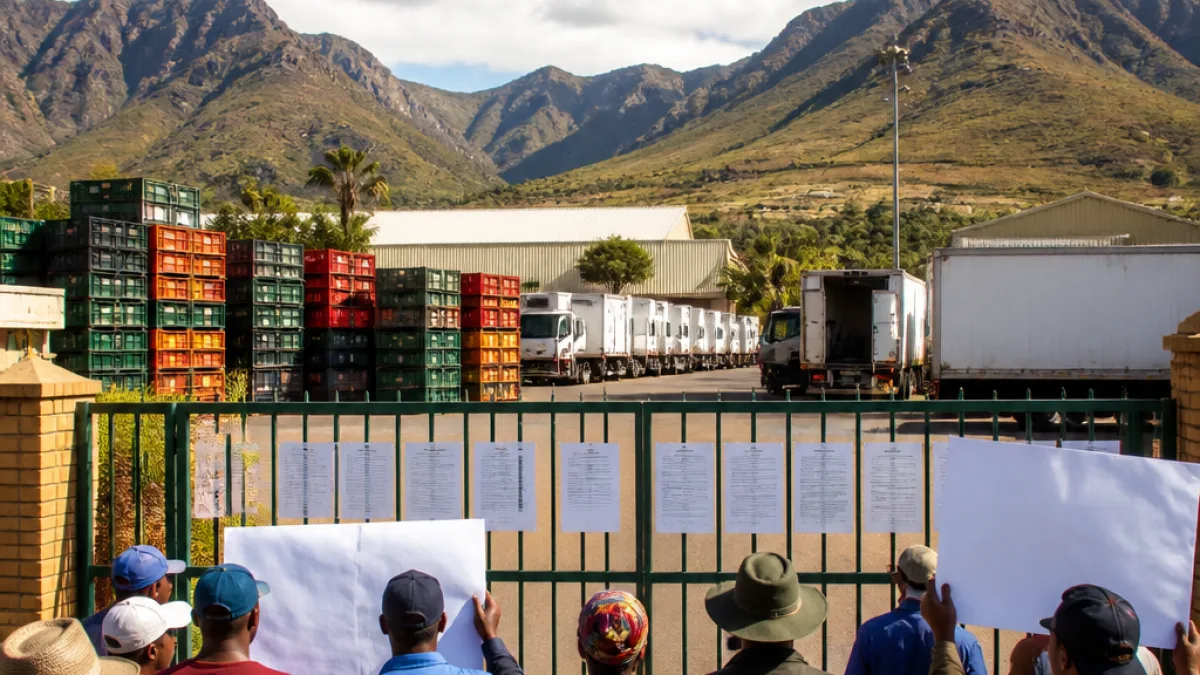
The Congress of South African Trade Unions (COSATU) in the Western Cape has warned that the proposed closure of Premier Foods’ Fruit Products Western Cape plant in Tulbagh places the livelihoods of about 5,700 workers and fruit producers at risk. The company has confirmed it has entered retrenchment consultations, saying the plant is no longer economically sustainable.
Workers, suppliers and a community at stake
COSATU said the proposed shutdown would not only affect employees on the factory floor but also leave growers who supply the factory exposed. The union claims Premier Foods indicated it would not honour existing three‑year supply contracts, which could leave producers with fruit for the coming season and no ready market.
In a strongly worded statement, COSATU Western Cape’s Malvern de Bruyn criticised what he described as a prioritisation of executive wealth over the survival of the Tulbagh economy. The union has threatened to oppose the decision through mass protest action and to seek an urgent court interdict if necessary.
"It is an absolute disgrace that Premier Foods can reward its CEO with a R17.4 million bonus while simultaneously throwing thousands of workers and their families on the street," said Malvern de Bruyn, according to COSATU.
Company response and the wider picture
Premier Foods confirmed that it has begun formal consultations with affected employees but characterised the move as part of a response to broader industry challenges. The company said it remains hopeful of a positive outcome for the wider value chain. Premier Foods has not commented publicly on reports that its chief executive, Kobus Gertenbach, is due a multi‑million rand bonus.
The situation in Tulbagh highlights the fragility of agro‑processing jobs in the Western Cape when processing units are deemed unsustainable. For rural towns such as Tulbagh, a large processing facility often supports not only direct employees but also transport operators, packaging firms and seasonal workers.
What is at risk
- Direct employees: about 5,700 workers reported by COSATU to be threatened by the closure.
- Growers and suppliers: existing multi‑year contracts reportedly at risk, potentially leaving fruit unsold.
- Local economy: secondary jobs and services dependent on the plant’s operation face reduced demand.
| Item | Figure |
|---|---|
| Workers and producers at risk | About 5,700 |
| Reported CEO bonus | R17.4 million (alleged) |
Next steps and what to watch for
Under South African labour law, formal consultation is the first step in a retrenchment process. If a closure becomes unavoidable, the company must follow procedural and substantive requirements, including meaningful consultation, consideration of alternatives and, where applicable, severance arrangements. COSATU has indicated it may seek an urgent interdict to halt any closure while it pursues legal challenge or negotiation.
For affected workers and suppliers in Tulbagh, immediate priorities will include clarity on timelines, the scope of any proposed retrenchments, and whether alternative employment or relocation within the Premier Foods group is possible. Local government and provincial labour departments may also be drawn into discussions to explore interventions.
The developing dispute will be closely watched by labour unions, grower associations and local authorities in the Western Cape. Any decision will have ripple effects through the fruit value chain at a time when the agro‑processing sector faces competitive and cost pressures.
Further statements from Premier Foods or formal notices to employees and suppliers will provide a fuller picture of the company’s assessment and the remedies it proposes. COSATU has made clear it will resist a closure that it says will devastate livelihoods in and around Tulbagh.
This report will be updated as Premier Foods, labour representatives or provincial officials provide additional information.