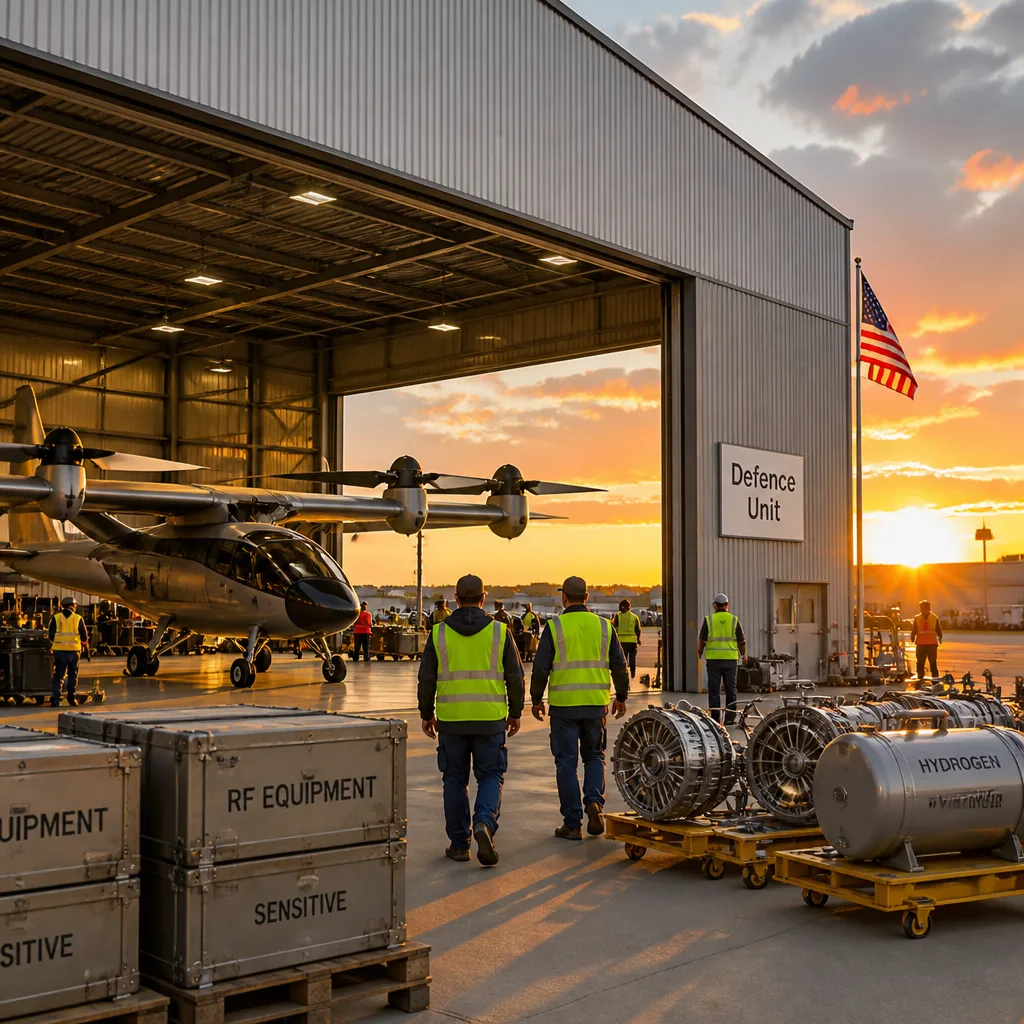
Joby Aviation, a US electric aircraft start-up best known for its proposed all-electric air taxi, has agreed to buy military-technology firm Resonant Sciences for $500 million, the companies announced on 11 August.
Transaction details and structure
The purchase price consists of roughly $450 million in cash and $50 million in Joby common stock. The transaction is expected to close in the first half of 2027, subject to regulatory approvals, the joint press release said.
| Item | Amount |
|---|---|
| Cash | $450 million |
| Stock | $50 million |
| Total purchase price | $500 million |
After the deal closes, Resonant — which manufactures radio-frequency (RF) and mission systems and is based in Dayton, Ohio — will continue to operate under its existing name as Joby’s defence unit, led by Resonant co‑founder and CEO J. Micah North, the release said.
Strategic shift: defence focus and dual-use technology
Joby said it will consolidate its military activities under the new defence arm and intends to concentrate on developing autonomous technologies and “dual-use turbine‑electric and hydrogen‑electric aircraft”. The company’s commercial work will remain focused on its all‑electric S4 air taxi for civil markets.
“Resonant has built an exceptional business that combines advanced technology, vertically integrated production capabilities and deep customer trust,” Joby founder and CEO JoeBen Bevirt said in the release.
The acquisition reflects what Joby described as a broader shift in defence priorities toward lower-cost autonomous aircraft equipped with resilient communications, sensing and electronic countermeasures.
Context: why Joby is moving into defence
Joby has previously pitched all‑electric aircraft to military customers, but testing with the US Air Force showed that fully electric designs lacked the range required for some defence missions, the release noted. By acquiring Resonant, Joby seeks to pair its propulsion technology with established RF, sensing and mission systems to pursue defence contracts that demand endurance, communications resilience and countermeasures.
- Resonant’s capabilities: RF and mission systems, vertically integrated production.
- Joby’s assets: propulsion technologies and its S4 all‑electric air taxi programme.
- New focus: autonomous systems and dual‑use turbine‑electric and hydrogen‑electric platforms.
The firms intend to combine their respective military work under Joby’s new defence arm. The move positions Joby to compete for Pentagon work that increasingly values autonomy, fuel flexibility and hardened communications over purely electric propulsion.
Implications for the aerospace and defence sectors
For the aerospace industry, the deal signals continued convergence between commercial urban air mobility ambitions and defence requirements. Start-ups that once focused solely on urban air taxi services are now diversifying into military markets where mission profiles demand greater range, redundancy and electronic warfare resilience.
Regulatory approval remains a condition of closing. If completed in the stated timeframe, the deal would give Joby an in‑house supplier of RF and mission systems and a defence‑focused leadership team, while allowing its commercial business to concentrate on electric vertical take‑off and landing (eVTOL) aircraft for urban transport.
While the announcement is framed as a strategic realignment rather than a retreat from commercial ambitions, it highlights the technical and operational trade‑offs between all‑electric aircraft and the endurance requirements of many defence missions — a constraint that has steered Joby toward hybrid and hydrogen options for dual‑use platforms.
The transaction may also influence procurement and innovation patterns: defence programmes that prioritise autonomous, resilient systems could become more accessible to companies that combine propulsion expertise with mission‑system suppliers.