CAPE TOWN — The City of Cape Town has formally declared an intergovernmental dispute with Acting Police Minister Firoz Cachalia, escalating a long‑running contest over the legal powers of Metro Police officers to investigate serious crime.
What the dispute is about
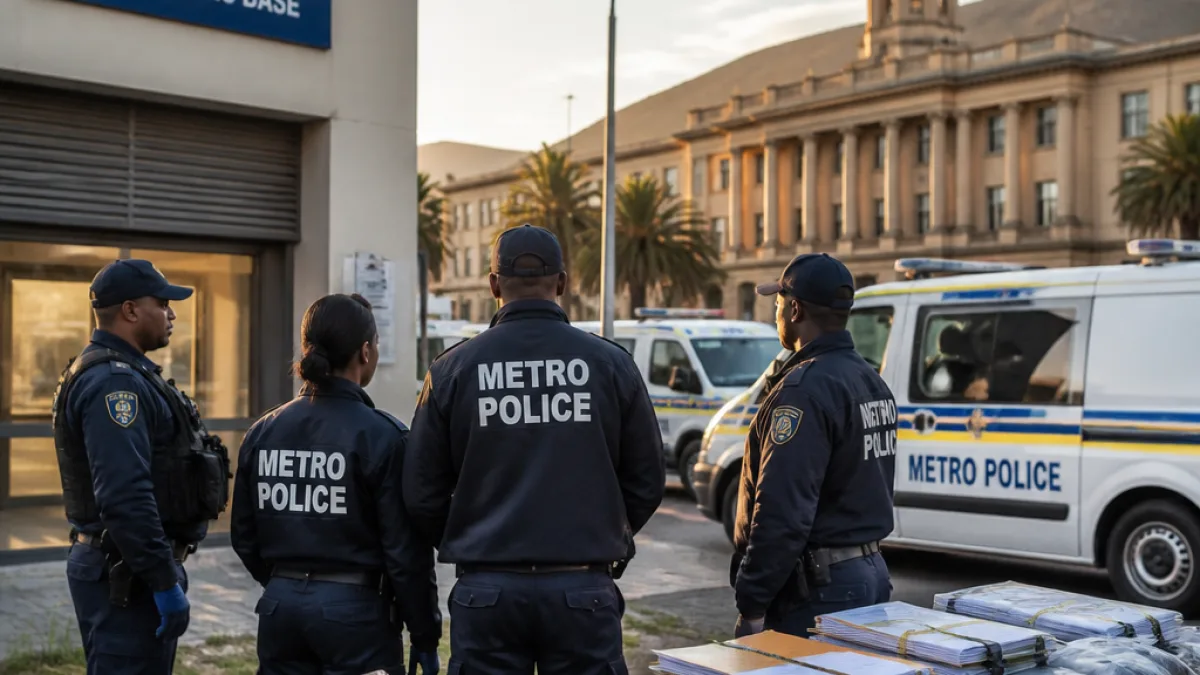
The dispute, lodged under the Intergovernmental Relations Framework Act, was announced at the City’s Law Enforcement Advancement Plan (LEAP) base in Bishop Lavis on Monday. Mayor Geordin Hill‑Lewis made the announcement in the company of Mayco member for Safety and Security JP Smith.
The City wants Metro Police officers to be authorised not only to arrest and confiscate illegal firearms, but also to gather evidence, interview witnesses and compile complete case dockets that can be handed directly to prosecutors.
“We refuse to accept that communities must live in daily fear of gang, gun and drug crime,” the mayor said.
Why the City says change is needed
City officials told reporters they have repeatedly sought expanded powers from national government and successive police ministers without success. They argue that the current arrangement — where Metro Police take action on the scene but must hand over investigations to the South African Police Service (SAPS) — frequently results in cases collapsing before they reach court.
According to the City, Metro officers remove about 400 illegal firearms from Cape Town streets each year, yet only roughly 5% of those matters lead to convictions. The City says this low conversion rate demonstrates the need for Metro Police to be able to prepare full case dockets and help build stronger prosecutions.
City’s stated approach and limits
Hill‑Lewis was at pains to stress that the City is not seeking to replace SAPS. Instead, he said, the intention is to strengthen overall crime‑fighting capacity by providing additional investigative resources focused on firearms, gangs and drug networks. The mayor criticised the recently tabled SAPS Amendment Bill, saying it missed an opportunity to address the investigative gap.
The declaration of an intergovernmental dispute requires the City and the acting minister to enter mediation to try to resolve the matter without litigation. If mediation fails, the process could proceed to court. The move marks a formal intensification of what the City says has been nearly a decade of efforts to amend the legal framework.
- Legal route: Intergovernmental dispute declared under the Intergovernmental Relations Framework Act.
- Focus areas: Illegal firearms, gang violence and drugs.
- Desired powers: Evidence gathering, witness interviews and compiling prosecutable dockets.
Local consequences and context
For neighbourhoods already under pressure from gang and gun violence, the dispute can affect how quickly and effectively incidents are followed up. Metro Police are visible in community policing and public order duties; allowing them to pursue investigative work would alter workflows with SAPS and the National Prosecuting Authority (NPA).
Operational questions will need to be resolved in mediation if the proposal advances: training and certification standards for investigative work, the ownership of case dockets, oversight and accountability if Metro officers take on expanded functions, and funding for any additional workload. The details will determine whether expanded powers will materially change conviction rates, or simply add administrative overlap.
| Current Metro Police role | Powers sought by City |
|---|---|
| Arrest, confiscate illegal firearms, secure scenes | Gather evidence, interview witnesses, compile prosecutable dockets |
Nationally, the policing landscape is politically sensitive: policing is a national competency and SAPS leadership has resisted decentralising investigative authority. The City’s move is likely to prompt legal and political debate about constitutional responsibilities, service delivery, and the best route to reduce violent crime in the Western Cape.
As mediation begins, residents and policing stakeholders will be watching for concrete proposals on operational oversight, resourcing and how new powers — if granted — will interface with SAPS and the NPA. The process could set a precedent for other metros seeking greater local roles in addressing serious crime.