Investment jump driven by homes and mixed‑use projects in the inner city
The value of property developments in Cape Town's central business district increased by 41% in 2025/26, the Cape Town Central City Improvement District (CCID) reports. The CCID's State of Cape Town Central City Report 2025 estimates the pipeline of developments rose from R9‑billion the previous year to R12.8‑billion.
The CCID, a body made up largely of commercial and residential property owners active in the downtown precinct, says the 29 developments currently on the map are spread across its 1.74 km² footprint. The projects include completed, under construction, planned and proposed schemes.
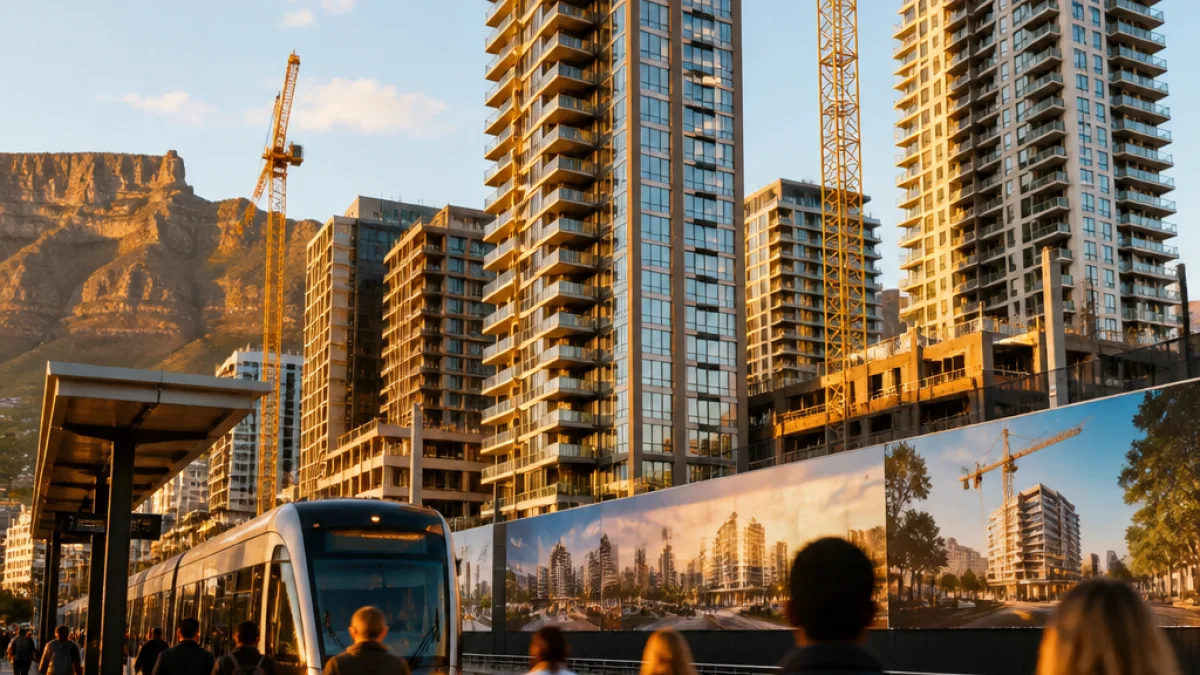
"Ground‑breaking developments changing the CBD’s skyline include a clutch of innovative and ambitious commercial and mixed‑use billion‑rand properties. Collectively, they are set to dramatically enhance the CBD," the report says.
For the second year running, residential and mixed‑use schemes with large residential components dominated the development pipeline. Over the five‑year period from 2021 to 2025 the CCID records:
- 22 predominantly residential builds completed or brought to market;
- These projects are valued at R5.1‑billion in total;
- Roughly 3 260 new residential units were added to the CBD's apartment pool.
Alongside the housing surge, the report highlights that the commercial sector remains resilient. Cape Town again had the country's lowest office vacancy rate in the second quarter, at 6.2%, according to the South African Property Owners Association figures cited by the CCID.
| Metric | 2024/25 | 2025/26 |
|---|---|---|
| Estimated development value | R9‑billion | R12.8‑billion |
| Number of developments in pipeline | 29 (completed, under construction, planned or proposed) | |
| New residential units (2021–2025) | ~3 260 units (22 residential builds, R5.1‑billion) | |
| Office vacancy rate (Q2) | 6.2% |
The concentration of new development within the compact CCID area underlines a longer‑term shift towards greater residential density in the city centre. The CCID frames this as beneficial for urban life, arguing more homes and mixed uses will bring greater footfall and economic activity that supports shops, restaurants, hotels and services.
Street‑level traders and small hospitality operators in the CBD have in recent years said sustained daytime and evening populations are essential to keep businesses viable, particularly outside the traditional nine‑to‑five office cycle. Increased residential supply can also ease pressure on commuting and support a more walkable inner city.
But the scale and speed of development raise policy questions for the municipality. Intensification in a compact area needs coordinated municipal planning for transport, public safety, waste collection and infrastructure capacity. The CCID's role as an improvement district means it focuses on cleanliness, safety and place‑making, but municipal coordination will be required on bulk services and longer‑term spatial planning.
For residents and investors, the message from the report is clear: central Cape Town remains an attractive location for capital and for people choosing to live in the inner city. Whether the benefits of this investment are spread widely — through affordable units, local job creation and improved public amenity — will depend on how developers, the City of Cape Town and community stakeholders align in the next phase of delivery.
The CCID's report presents a snapshot of momentum inside the CBD, showing that a combination of residential delivery and resilient commercial demand is reshaping the city's core.