South Africans are already paying the price of renewed conflict in the Middle East as fuel costs climb, with broader implications for food and transport inflation and the fate of households under pressure, experts and officials say.
Oil shocks, local pain
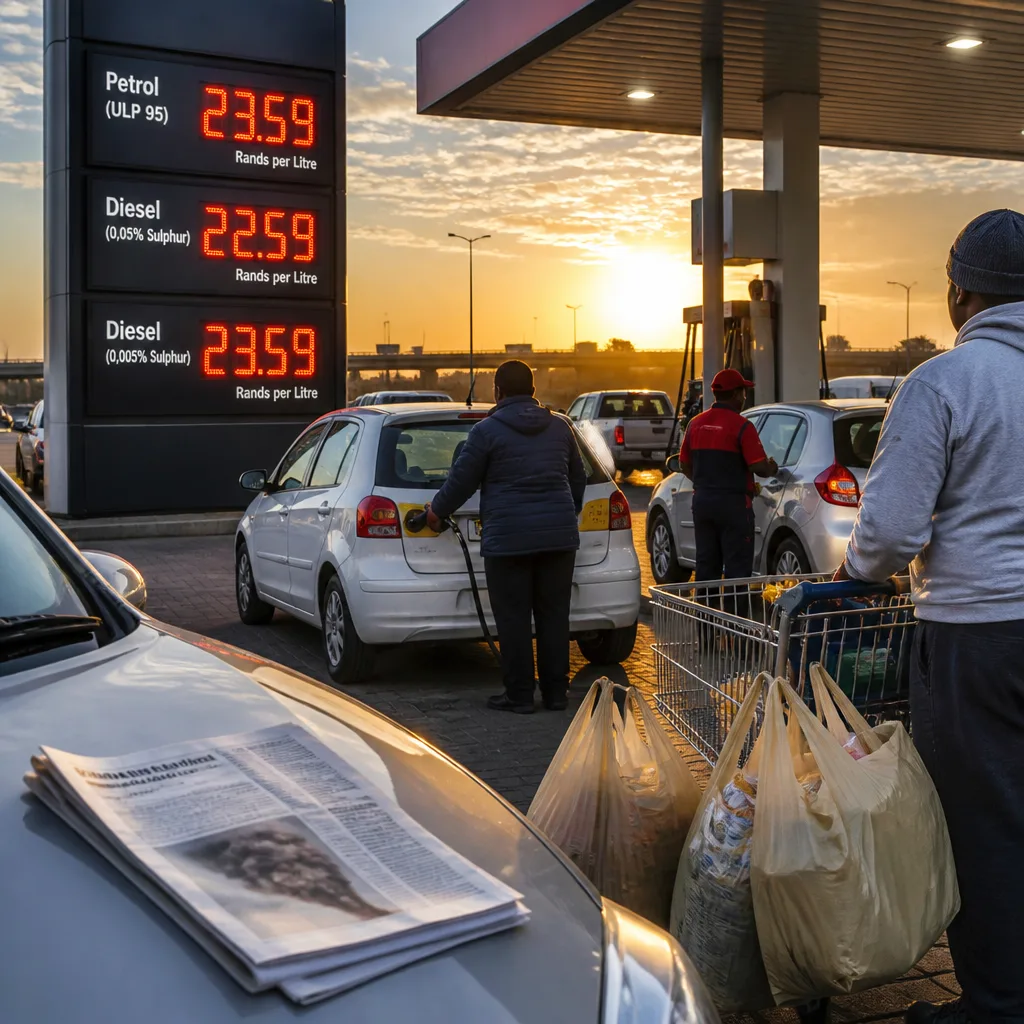
Data from the Central Energy Fund show a cumulative increase of R4.74 a litre for petrol and R6.48 a litre for diesel in recent months. The rise followed intensified military action involving the United States and Israel against Iran that began on 28 February 2026, which pushed Brent crude to around $100 a barrel, according to reporting by Sunday World.
Mineral and Petroleum Resources Minister Gwede Mantashe attributed the volatility to disruption around the Strait of Hormuz and the renewed tensions between the US and Iran, a development that has tightened global energy markets and fed through to South African pump prices.
“Renewed tensions between the US and Iran pushed Brent crude to $100 a barrel,” the reporting cited Minister Mantashe as saying.
Transmission to the economy
Higher fuel prices affect more than motorists. Transport costs feed directly into the price of moving goods, exerting upward pressure on food and retail prices. Agricultural inputs such as fertiliser, and commodities including wheat and maize, are also vulnerable to supply-chain disruption and higher shipping costs.
For households already coping with constrained budgets, even modest fuel increases can reduce disposable income and raise the cost of basic goods. Analysts say this also complicates the South African Reserve Bank’s inflation outlook, restricting policy room to support growth without stoking price rises.
Geopolitics and Pretoria’s posture
Sunday World’s analysis connects the spike in energy costs to a broader diplomatic backdrop. Pretoria has pursued an independent foreign policy, taking positions on conflicts and maintaining relationships with Russia, China and Iran — choices that have at times placed it at odds with Washington.
Those tensions have surfaced in a number of concrete measures and disputes, the reporting states, including:
- tariffs imposed on certain South African exports;
- disagreements relating to the Expropriation Act;
- cuts to US health funding;
- diplomatic shifts such as Colombia closing its embassy in Pretoria; and
- international strains over migration handling in Spain.
While these developments stem from different causes and cannot automatically be combined into a single coordinated strategy, they contribute to debate inside government and among analysts about the cost of an independent foreign policy and how Pretoria should balance principle with economic risk.
Short-term choices and longer-term trade-offs
The immediate policy question for South African authorities is how to shield households from the pass-through of higher international oil prices while maintaining fiscal and monetary stability. Any targeted subsidy or relief will have to be weighed against existing budget constraints and competing social priorities.
Longer term, the episode highlights structural vulnerabilities: a heavy reliance on imported refined product and exposure to global shipping and commodity markets. Energy diversification, increased local refining capacity and more resilient supply chains are recurring policy prescriptions, but they require sustained investment and time.
| Indicator | Change |
|---|---|
| Petrol (per litre) | +R4.74 |
| Diesel (per litre) | +R6.48 |
| Brent crude | ~$100 a barrel |
The government faces a dual challenge: respond to short-term cost shocks that squeeze households and firms, and pursue policies that reduce exposure to geopolitical energy risks. How Pretoria navigates its international relations will remain part of that calculus, particularly as economic consequences become visible at home.
Reporting by Sunday World provided the background and figures cited in this article.