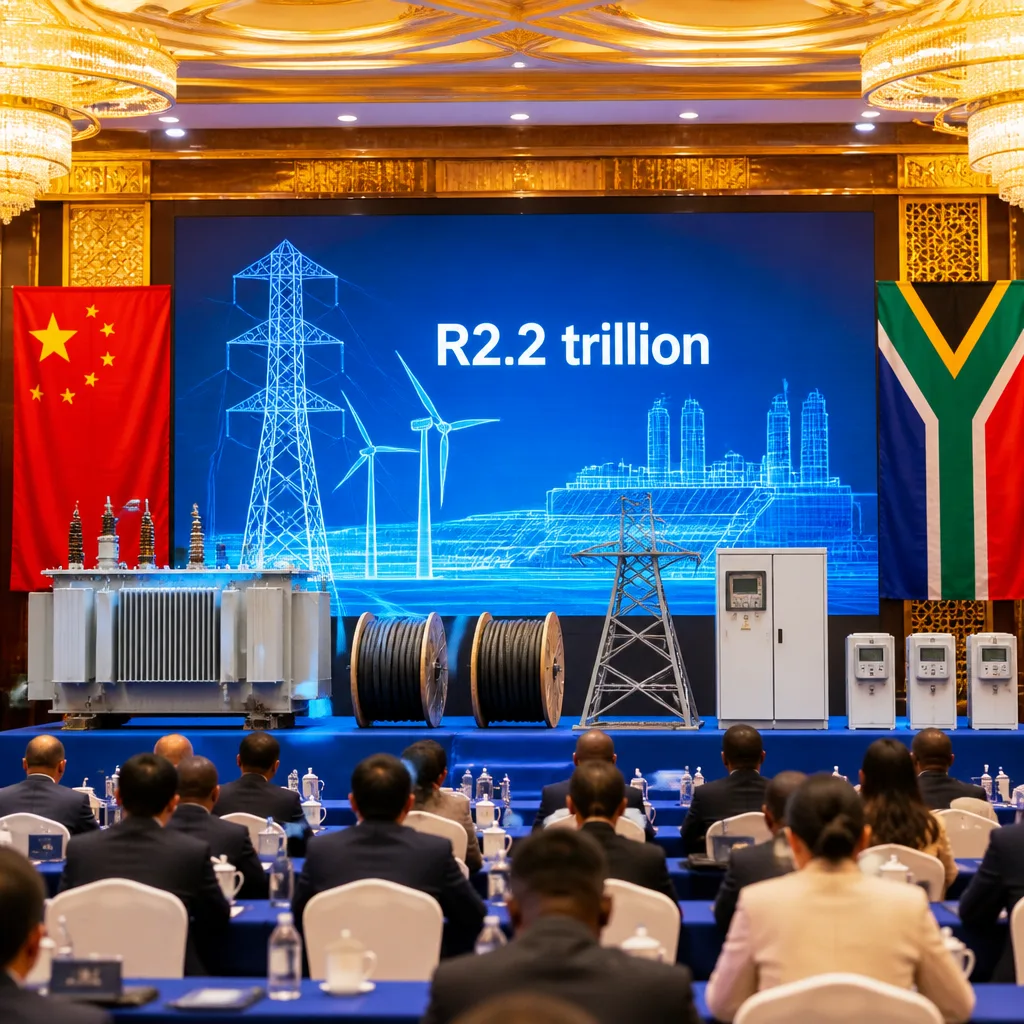
South Africa showcased a R2.2 trillion package of energy investment opportunities through 2039 at a conference in Beijing, where Chinese equipment manufacturers and financiers signalled interest in backing projects ranging from new generation capacity to transmission infrastructure, delegates at the conference said.
Major figures and proposals
The programme presented by the South African delegation, led by Electricity and Energy Minister Dr Kgosientsho Ramokgopa, includes plans for about 105 GW of additional mixed generation capacity and the construction of 14,500 km of new transmission lines. The transmission programme alone carries an estimated price tag of R440 billion, according to the material shared in Beijing.
| Item | Figure |
|---|---|
| Presented investment opportunities (2039) | R2.2 trillion |
| Additional generation capacity proposed | 105 GW |
| New transmission infrastructure | 14,500 km |
| Transmission cost estimate | R440 billion |
Manufacturing and technology cooperation
Delegates said six Chinese original equipment manufacturers expressed strong interest in establishing local production facilities in South Africa. The proposed plants would produce equipment such as transformers, cables, transmission towers, inverters and smart meters — items seen as critical to strengthening the domestic energy value chain and reducing import dependence.
- Six Chinese manufacturers reportedly signalled interest in local manufacturing.
- Planned local output would focus on transformers, cables, towers, inverters and smart meters.
- No commitments on local solar-panel manufacturing were announced.
Conference reporting noted an absence of binding commitments from major Chinese solar-panel producers. That gap was attributed to current global market conditions, where oversupply and losses among several Chinese panel manufacturers have weighed on new capacity decisions.
Finance, hydrogen and nuclear waste cooperation
Delegates and officials at the conference discussed blended finance structures and other funding models intended to accelerate grid modernisation and renewable rollout without placing the entire burden on the national budget.
Talks also reportedly covered cooperation on green hydrogen and nuclear waste management. Minister Ramokgopa held discussions with Mr Qiao Xubin, chairman of China Energy International Group Co Ltd, as part of the engagement in Beijing.
Officials framed the outreach as an effort to convert South Africa’s Integrated Resource Plan 2025 into a pipeline of investable projects spanning generation, transmission, energy storage and industrial development.
Implications and next steps
If realised, the manufacturing commitments could help create a local supply chain for critical grid and renewable components and support domestic industrial development. The transmission investment is intended to unlock the proposed 105 GW of mixed generation capacity by delivering the network capacity required to move electricity from new plants to demand centres.
However, the proposals remain at the stage of investor interest and dialogue. Details on timetables, financing agreements and binding investments were not disclosed in the conference material reported from Beijing. The practical effects on South Africa’s energy security, employment and public finances will depend on the form and scale of follow-up agreements, the conditions attached to any foreign finance and the extent to which local content requirements are enforced.
South Africa’s government now faces the task of converting interest into executable contracts that align with the country’s energy transition goals, procurement rules and industrial policy. The emphasis on blended finance signals a desire to limit direct calls on the national fiscus, but it also means project feasibility will hinge on private-sector risk appetites and the terms offered by international financiers.
Further announcements are likely to follow as negotiations progress between South African departments, state entities and prospective Chinese manufacturers and financiers.