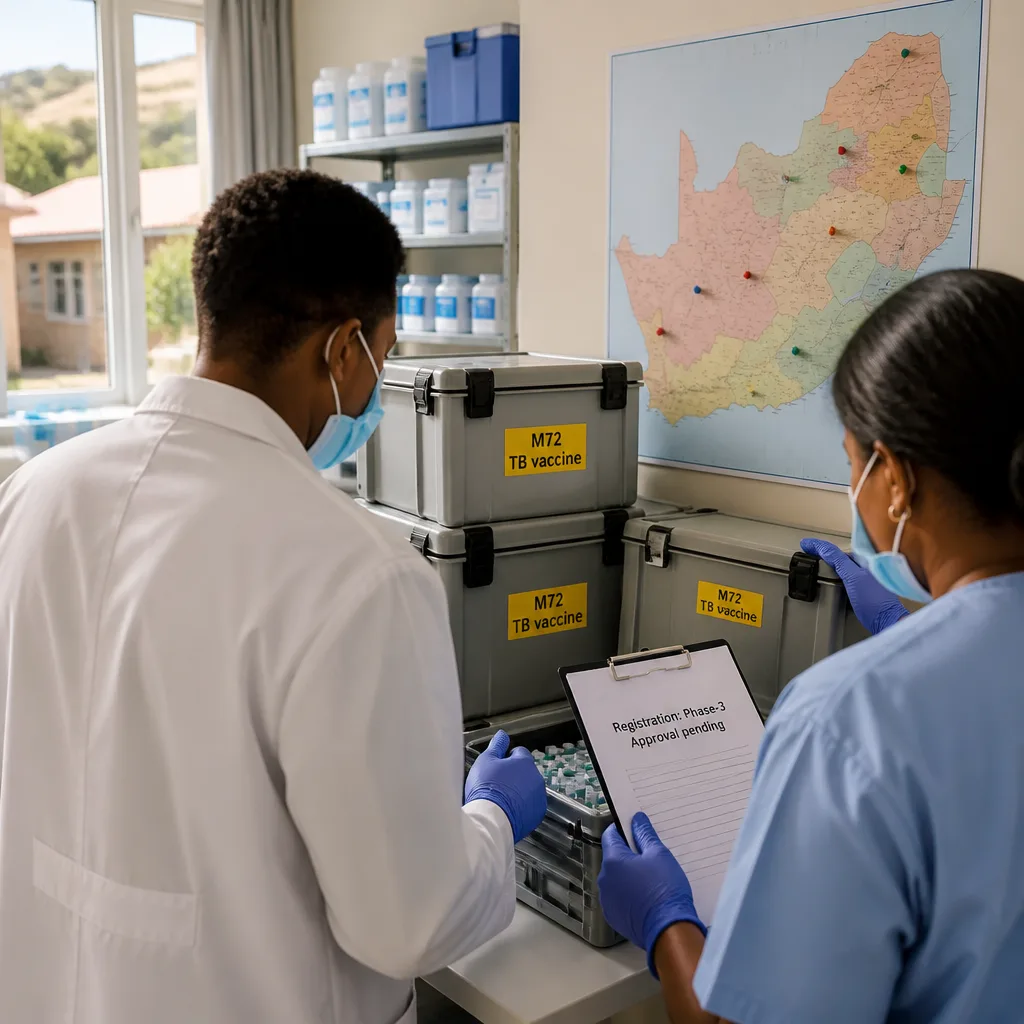
The Department of Health says it is making preparations for the possible introduction of the experimental M72 tuberculosis (TB) vaccine following encouraging results from early trials and ongoing phase‑three studies that include South Africa.
Plans for expedited roll‑out
National health spokesperson Foster Mohale said the department has drawn up plans to support a fast-tracked roll‑out should the vaccine be registered by the South African Health Products Regulatory Authority (SAHPRA).
“This is arguably a major step toward a new TB vaccine…the Department of Health welcomes this important agreement and stands ready to support the production and introduction of the M72/Aso1e vaccine in South Africa once the trial results are known and the vaccine has been registered by SAHPRA,” the department said.
The M72 vaccine is currently in phase‑three clinical trials across five countries, one of which is South Africa. Early stage studies — phases one and two — found the candidate vaccine protected against active pulmonary TB disease with limited safety concerns, according to the department.
Why the vaccine matters
If the phase‑three trials confirm earlier findings and regulators approve the product, the department said the vaccine could be a "game‑changer" and a significant advance since the BCG vaccine, which has been in use for over a century and offers partial protection primarily to young children.
TB remains a major public‑health challenge in South Africa. An effective adult vaccine would alter prevention strategies, potentially reducing incidence and easing pressure on diagnosis and treatment services. The department’s statement frames the M72 candidate as a pivotal development in the country’s efforts to eliminate TB as a public‑health threat by 2030.
Regulatory and production steps
Mohale’s statement makes clear that the department is preparing not only for introduction but also for production support. Any national programme would depend on:
- SAHPRA registration of the vaccine;
- clarity from phase‑three trial results on safety and effectiveness;
- agreements on manufacturing and supply to ensure availability for South African population groups identified for early vaccination.
| Trial stage | Status (as reported) |
|---|---|
| Phase 1–2 | Showed promise; protected against active pulmonary TB with limited safety concerns |
| Phase 3 | Under way in five countries, including South Africa |
The department did not publish a timetable for potential registration or a national introduction strategy linked to different trial outcomes. It also did not provide details about target groups, projected costs or funding sources for procurement and distribution.
Context and consequences
An effective vaccine for adolescents and adults would be the first substantial improvement on BCG in more than 100 years. Programme planners would face operational challenges including cold‑chain capacity, prioritisation of high‑risk groups, integration with existing TB screening and treatment services, and budgeting for procurement and delivery.
Success in phase‑three trials would also require policy decisions about who should receive the vaccine first — health‑care workers, household contacts of people with TB, people living with HIV, or broader age cohorts — and how vaccination would be financed alongside other TB control measures.
The department’s preparedness statement indicates an intention to move swiftly if the scientific and regulatory milestones are met. South Africa’s role in the phase‑three trial leaves the country positioned to be an early adopter, subject to SAHPRA’s assessment.
Further details are expected once trial investigators publish final results and SAHPRA publishes its regulatory decision.