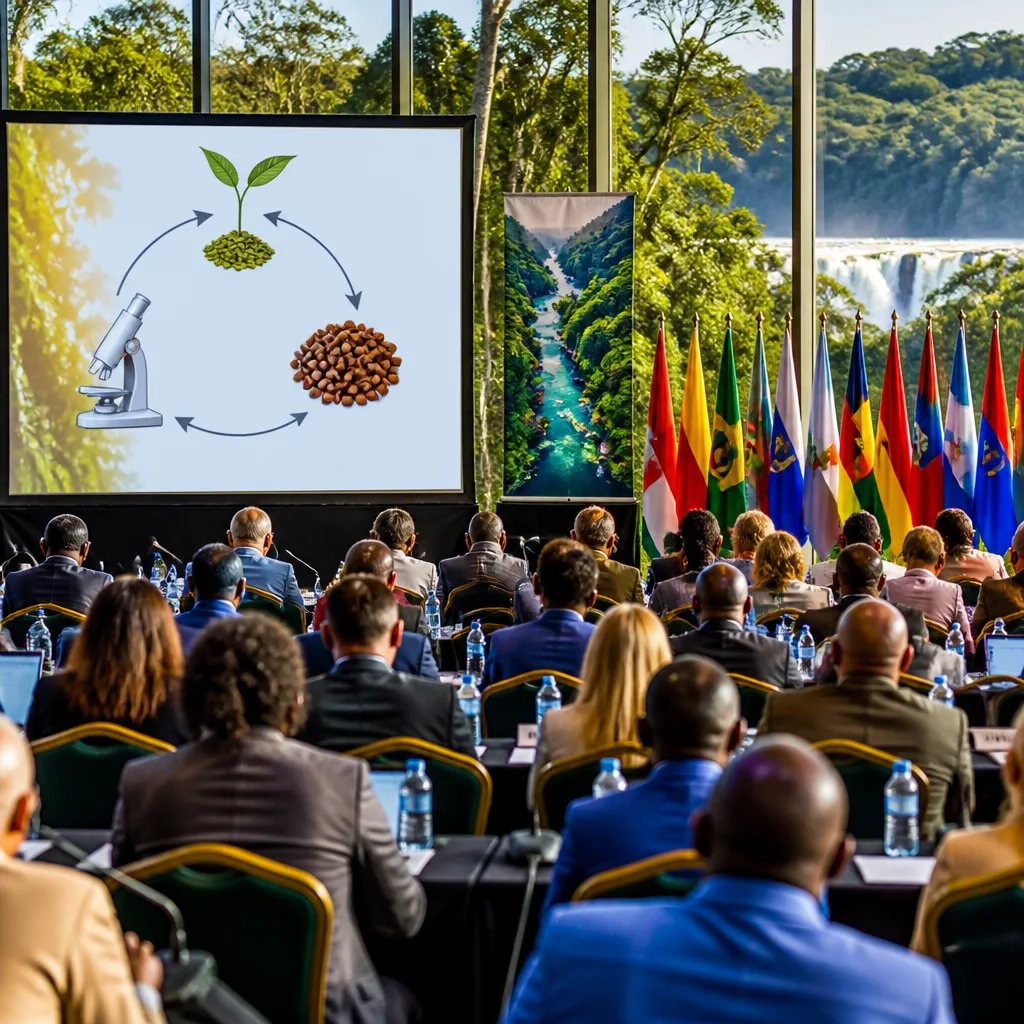
More than 80 regulators, industry representatives and international experts from upwards of 25 countries gathered in Foz do Iguaçu, Brazil, from 30–31 July for the 19th International Feed Regulators Meeting (IFRM). The two‑day meeting, jointly organised by the Food and Agriculture Organization of the United Nations (FAO) and the International Feed Industry Federation (IFIF), centred on strengthening cooperation to support safe, sustainable and resilient feed systems.
Focus on science-based regulation and convergence
Delegates exchanged experiences on the use of scientific evidence to underpin regulatory frameworks and discussed path‑ways for regulatory convergence across jurisdictions. Around one‑third of participants represented government regulatory authorities, a composition that organisers say reinforced the meeting’s role as a platform for public‑private regulatory dialogue.
Key topics on the agenda included:
- International feed standards and how to harmonise regulatory approaches;
- Nutritional innovations that can improve animal productivity and feed efficiency;
- Antimicrobial resistance (AMR) and the regulatory challenges it raises for feed and animal production;
- Circular feed sources, including alternative and by‑product streams intended to reduce environmental impact;
- Emerging regulatory priorities from different regions of the world.
“For nearly two decades, the IFRM has served as the world’s premier forum where feed regulators and the global feed sector come together to exchange experiences, build trust and advance practical solutions to shared challenges. This year’s discussions on regulatory convergence, nutritional innovation and circular feed systems once again underscored that international collaboration is essential to advancing innovation, ensuring feed safety and supporting resilient, sustainable animal agriculture,” said Constance Cullman, Chair of IFIF.
Implications for policy and industry
The meeting emphasised practical cooperation between government and industry to manage risks while enabling technologies that could make feed production more sustainable. Discussion of regulatory convergence reflects longstanding interests in reducing trade barriers and aligning safety assessments so that innovations can be adopted without unnecessary duplication of regulatory processes.
Delegates also exchanged approaches to tackling antimicrobial resistance through feed‑related measures, and examined circular feed systems that repurpose organic wastes or industrial by‑products as inputs, an area attracting regulatory attention because it raises both sustainability opportunities and safety questions.
| Meeting | When | Where | Organisers |
|---|---|---|---|
| 19th International Feed Regulators Meeting (IFRM) | 30–31 July | Foz do Iguaçu, Brazil | FAO and IFIF |
While the IFRM is an international forum, outcomes may inform national policy reviews and guidance. For countries reliant on livestock and aquaculture — including South Africa — decisions about feed safety, import standards and the acceptance of novel or circular feed ingredients can affect farm costs, animal health and market access.
Participants described the meeting as a continued effort to align regulatory practice with evolving science and industry innovation. By sharing experiences and building trust between public and private actors, regulators and industry representatives aimed to develop pragmatic tools that balance safety, sustainability and innovation in animal feed.
Organisers said the IFRM remains a recurring opportunity for countries to take stock of emerging feed‑related risks and to identify areas where international cooperation can reduce duplication and improve policy coherence.