Fidji Simo, who recently announced she would not return to her post as the No. 2 executive at OpenAI because of fragile health, is directing her energies at a nascent biotech venture, ChronicleBio, that aims to improve how clinical trials are run for complex chronic diseases such as postural orthostatic tachycardia syndrome (POTS).
Targeting trial failure by splitting conditions into biologically similar groups
ChronicleBio is addressing a specific obstacle in clinical research: many chronic conditions present as a set of similar symptoms but are driven by different underlying biological mechanisms. That heterogeneity means a drug that works for one biological subgroup can appear ineffective for the broader trial population and lead to trial failure. ChronicleBio’s approach is to identify patients with shared biological signatures, group them into more uniform cohorts and then test therapies on those subgroups to increase the likelihood of detecting an effective treatment.
- Data collection so far: 890 blood draws from 709 patients.
- Biobank size: more than 3,500 tubes of blood.
- Data extracted: 153 terabytes.
- Funding raised to date: USD15 million (reported).
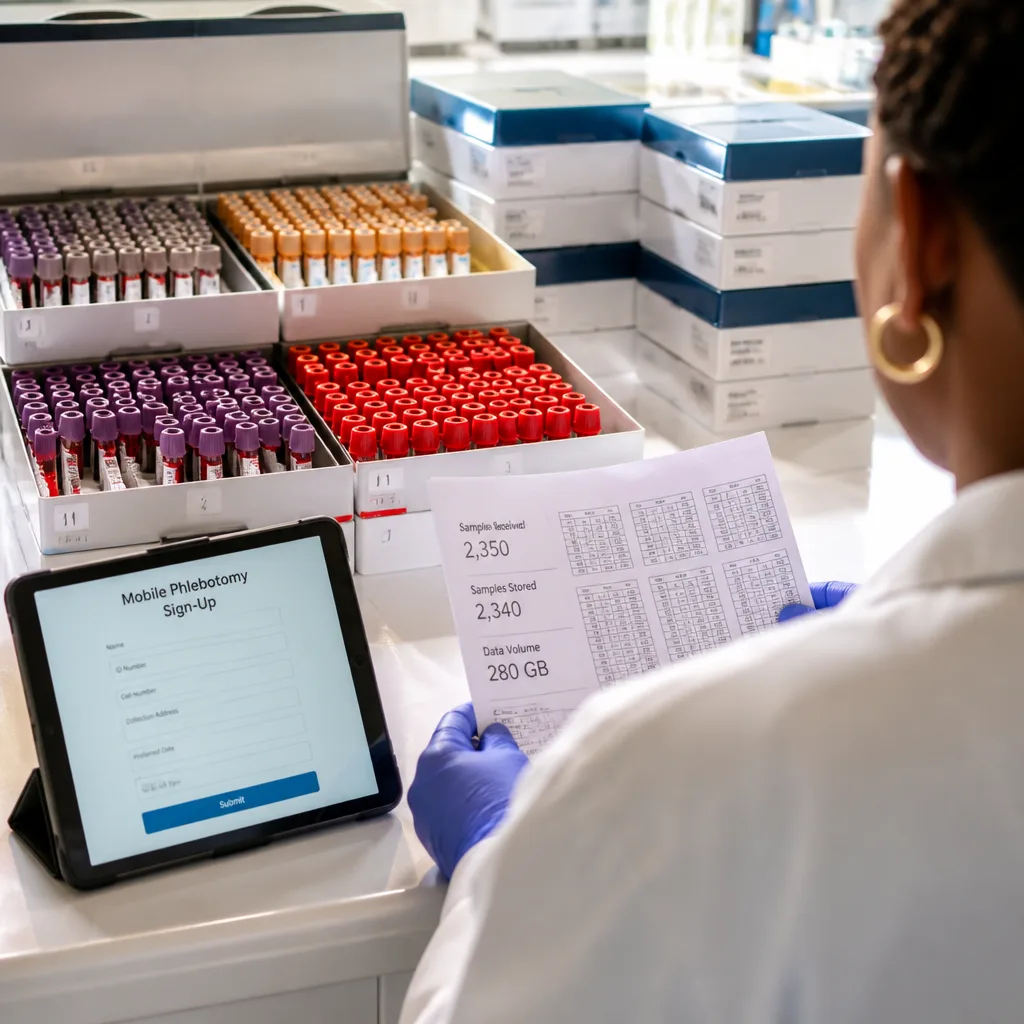
The project has collected samples from patients in Utah, Arizona, Texas and India, according to reporting by Fortune. In a further push to expand recruitment and make participation easier, ChronicleBio is launching a sign‑up link for mobile phlebotomy trucks that will visit patients’ homes. The company said the first 250 participants will receive a detailed report on their condition free of charge in exchange for contributing biological data.
"It’s physically the worst [it’s] ever been," Simo told Fortune, describing her own health at the time she left OpenAI.
Why the model matters
The conventional model of running large, heterogenous trials can penalise promising therapies when patient populations are biologically diverse. By contrast, a precision‑cohort approach — grouping people who share molecular or other objective commonalities — can increase statistical power and preserve trials that might otherwise be halted. ChronicleBio’s initial activity — large numbers of blood draws, a growing biobank and substantial data extraction — shows the company is building the infrastructure needed to identify such subgroups.
That matters for conditions that are disabling yet underfunded. Fortune’s report notes that many illnesses that predominantly affect women, such as POTS, receive limited research investment because they do not typically cause death and thus attract less attention and fewer resources. ChronicleBio’s model seeks to bridge that gap by creating datasets and patient cohorts that make it easier to test drugs effectively.
Business and clinical implications
ChronicleBio has raised USD15 million so far — an amount that suggests early investor confidence in the strategy, but that is modest by standards of large clinical programmes. Building a scalable platform for patient identification, mobile sampling, data processing and biobanking remains capital‑intensive. The company’s early metrics — hundreds of patients and terabytes of extracted data — indicate progress on the technical front, yet translating that into successful, regulatory‑grade trials will require further funding, partnerships with drug developers and careful validation of subgroup definitions.
For patients, the mobile phlebotomy model lowers barriers to participation and can broaden the geographic and socio‑economic mix of samples, which is important for producing findings that generalise beyond a narrow population. The first 250 participants receiving an in‑depth report may also help individuals better understand their condition while contributing to research.
Simo’s personal motivation for the venture is clear in the reporting: she is living with POTS and has described its impact on her life. That lived experience is informing an experimental but pragmatic model that seeks to change how trials are run for conditions that have historically been difficult to classify and treat.
| Metric | Figure |
|---|---|
| Blood draws | 890 |
| Patients sampled | 709 |
| Tubes in biobank | 3,500+ |
| Data extracted | 153 TB |
| Funding raised | USD15 million |
ChronicleBio’s work will be watched by patients, researchers and investors alike as an example of how precision grouping might rescue therapies that otherwise fail in broad, mixed cohorts. If successful, the model could change how sponsors design and power trials for a range of chronic, heterogeneous conditions.