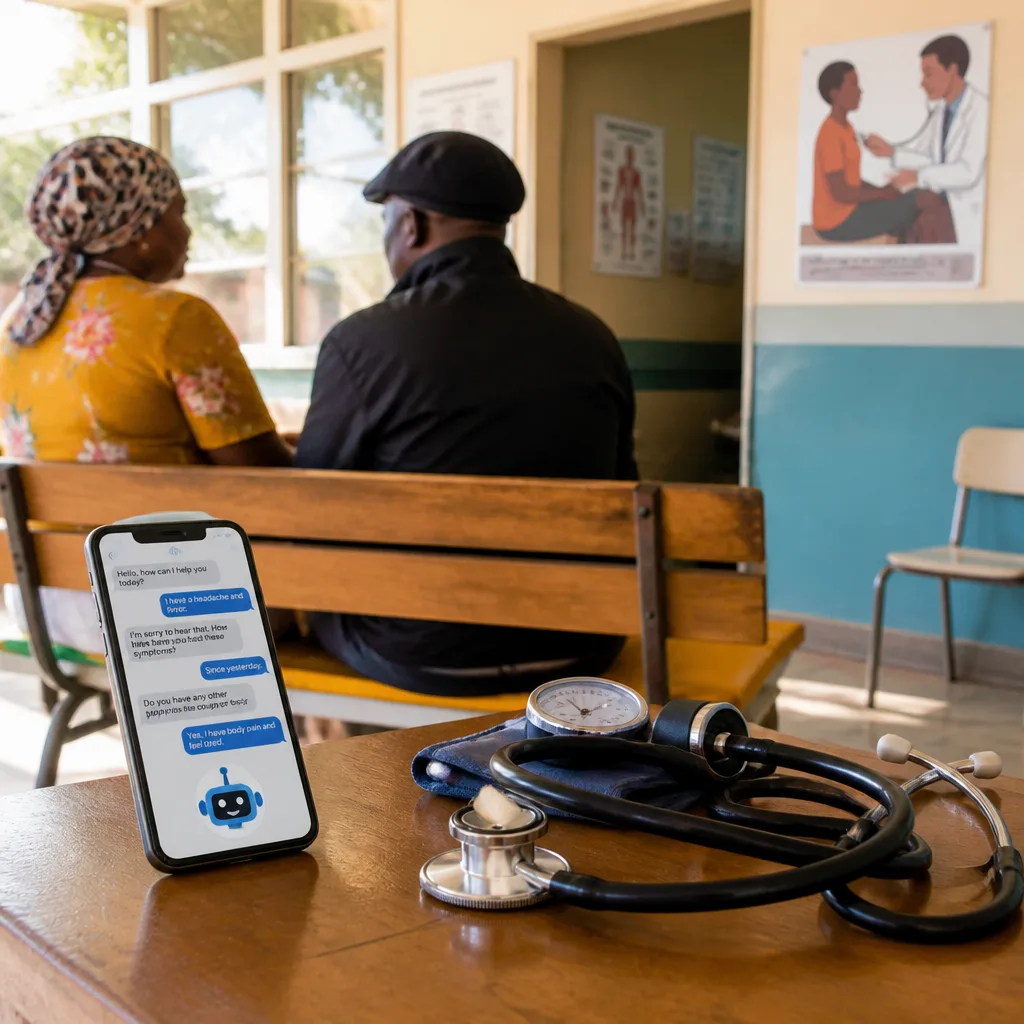
South Africans increasingly consult artificial intelligence chatbots for health questions, but medical professionals warn these tools should be treated as a first step — not a substitute — for clinical care. While AI can provide quick explanations of medical terminology and common conditions, it lacks the capacity to make a definitive diagnosis or reproduce the nuanced judgement of a clinician.
AI as a guide, not a diagnostician
According to reporting based on clinical comment, tools such as ChatGPT can be useful for clarifying medical terms, summarising general information and helping people prepare for consultations. However, technology developers themselves caution that chatbot responses may be inaccurate or incomplete, particularly when applied to personalised health concerns.
General practitioners emphasise that arriving at a correct diagnosis requires more than listed symptoms. A thorough assessment includes the individual’s medical history, a physical examination, appropriate diagnostic tests and clinical judgement — elements an AI cannot fully replicate.
"By the time symptoms such as chest pain, blurred vision or anxiety appear, a person may already be experiencing a hypertensive crisis,"
That warning, reported from a practising GP, underlines the danger of relying on AI for conditions that often present without obvious early symptoms. Hypertension, sometimes called the "silent killer", frequently shows no signs until it reaches an advanced or dangerous stage.
Risks of false reassurance and delayed care
Clinicians say the primary concern is not only inaccurate information but the false reassurance AI can provide. If people receive an overly comforting assessment from a chatbot, they may postpone seeking professional care — potentially missing a window for early intervention where outcomes are better.
Health workers also note that AI does not reliably integrate longitudinal data such as blood pressure trends, lipid profiles or glycaemic markers. These patterns, together with personal risk factors and comorbidities, are essential to assess risks such as cardiovascular disease or prediabetes.
Practical consequences include delayed diagnosis, worse disease progression and greater strain on primary care when patients eventually present with advanced illness. Medical professionals urge users to consider AI results as preparatory rather than definitive, and to follow up with an appropriate healthcare provider when in doubt.
- AI can: explain medical terms, provide general information, help with triage for non-urgent concerns.
- AI cannot: perform physical examinations, order or interpret tests in context, or replace clinical judgement.
- When to see a clinician: persistent or worsening symptoms, abnormal vital signs, or concerns about silent conditions such as hypertension.
| Common question | Why AI falls short |
|---|---|
| Do I have high blood pressure? | Requires measured readings and trend analysis, which chatbots cannot obtain. |
| Are my blood tests normal? | Results must be interpreted in the context of history, medications and symptoms. |
| Should I worry about this symptom? | Risk depends on duration, severity, examination findings and other clinical data. |
Health professionals recommend using AI to gather background information before a consultation — for example, to learn definitions or prepare questions — but not to delay medical assessment. If a chatbot suggests urgent care or the user feels unwell, prompt professional evaluation remains essential.
As AI becomes more accessible, public education on its appropriate use will be important. Clinicians, health services and technology providers share responsibility for ensuring the public understands the limits of current tools and the continued value of face-to-face clinical assessment.
The balance for patients is simple: take advantage of the convenience and speed of AI for general guidance, but prioritise a clinical appointment when symptoms are new, severe or persistent, or when test results and personal risk factors require professional interpretation.