The US National Highway Traffic Safety Administration (NHTSA) has authorised limited commercial deployment of Amazon‑owned Zoox’s steering‑wheel‑free robotaxis, clearing a regulatory hurdle for vehicles that dispense with conventional human controls.
Federal exemption lets Zoox charge for rides, but rollout will be staged
Under the decision, Zoox may begin collecting fares once it secures the necessary permissions from state and local authorities. The NHTSA granted the company an exemption from federal rules that require vehicles to carry human driving controls such as a steering wheel, pedals or a designated driver’s seat. The agency said the approval permits Zoox to commercially deploy up to 2,500 vehicles in each of the next two years, subject to additional oversight and reporting.
“We can say pretty clearly that the systems in place on the Zoox exceed the equivalent performance requirements of a compliant vehicle,” NHTSA administrator Jonathan Morrison said. “But we still want to make sure that the automated driving system will operate appropriately.”
The regulator signalled a cautious approach. Deployment will be staggered rather than immediate, and Zoox faces enhanced reporting obligations covering incidents such as crashes or inappropriate stopping on roadways. The NHTSA said it remains focused on ensuring the automated driving system functions safely in public operations.
Vehicle design and early service
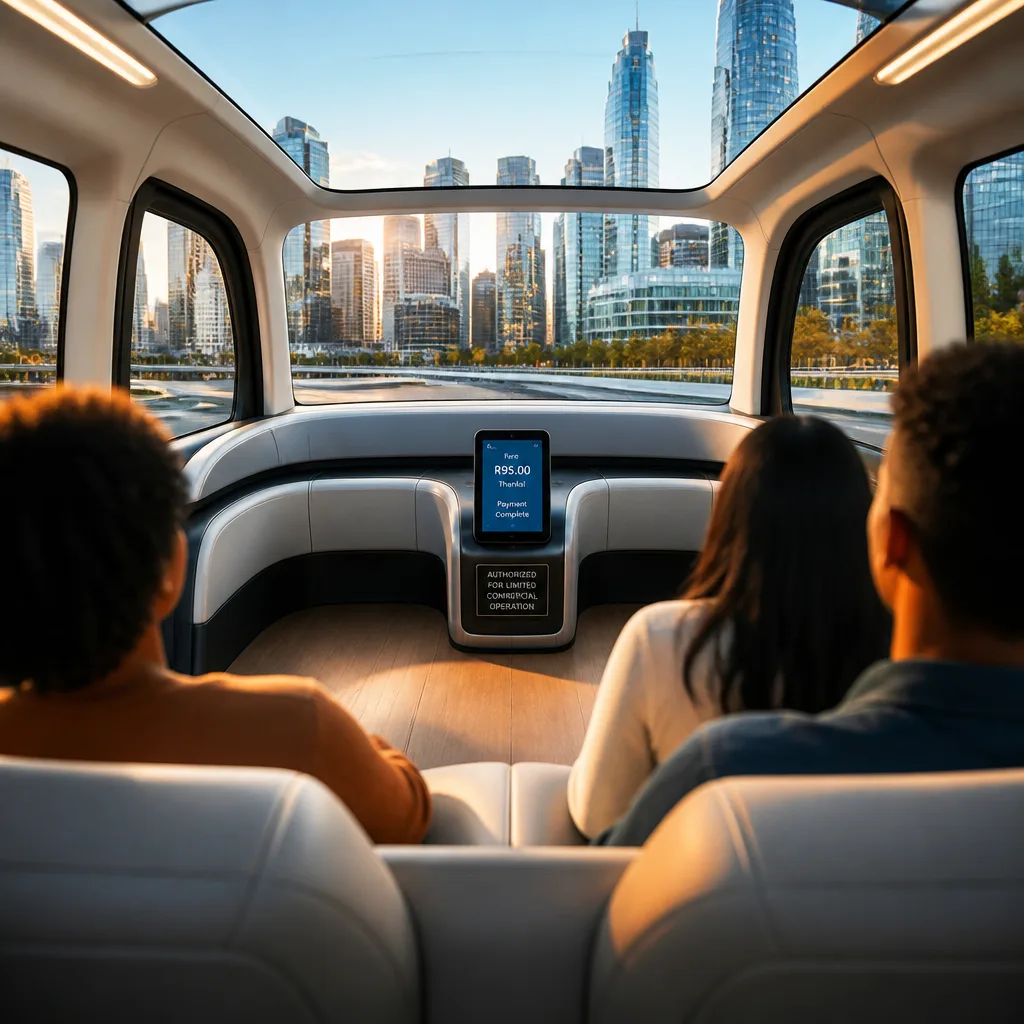
Zoox’s vehicles depart from traditional car architecture. They are described as rectangular, carriage‑style vehicles with passenger seats arranged to face one another, rather than forward‑facing rows. The cars are capable of travelling at speeds of up to 120km/h (75 miles per hour) and lack a steering wheel, pedals and a driver’s seat.
The company has already been offering free passenger rides in Las Vegas and San Francisco during prior trials. According to the NHTSA decision, Zoox plans to begin charging for rides first in Las Vegas, with other markets to follow once local regulatory requirements are satisfied.
- Exemption granted: Allows operation without conventional human controls.
- Deployment cap: Up to 2,500 vehicles per year for two years.
- Conditions: Staggered rollout and mandatory reporting on safety events.
| Feature | Detail |
|---|---|
| Maximum speed | 120km/h |
| Initial paid service location | Las Vegas |
| Regulatory cap | 2,500 vehicles per year (for two years) |
Why the decision matters
The NHTSA’s exemption marks a notable precedent for vehicles that do not conform to the historical architecture of motor cars. For developers of autonomous transport systems, regulatory clearance to operate without human controls removes a significant barrier to scaling up services that rely entirely on automated driving systems. At the same time, the agency’s insistence on phased deployment and enhanced reporting underscores continuing safety concerns and the need for close monitoring as these systems enter public roads.
For cities and regulators, the approval raises immediate questions about integration with existing traffic management, emergency response protocols and local licensing regimes. The staged approach gives state and local authorities time to evaluate operational impacts and to set conditions before broader rollouts.
Zoox’s carriage‑style vehicles represent a departure from retrofitting conventional cars with driverless technology; their design assumes the absence of a human operator. That architecture complicates conventional notions of liability, occupant protection expectations and regulatory standards developed around traditional controls.
While the NHTSA statement affirms that Zoox’s systems meet or surpass performance benchmarks used for compliant vehicles, the agency’s additional reporting requirements signal that empirical data from commercial operations will inform future regulatory decisions.
The approval is likely to accelerate industry debate about safety, oversight and urban planning for autonomous fleets. For now, the decision allows Zoox to move from demonstration to paid service in defined locations, under federal conditions and pending state and municipal permissions.