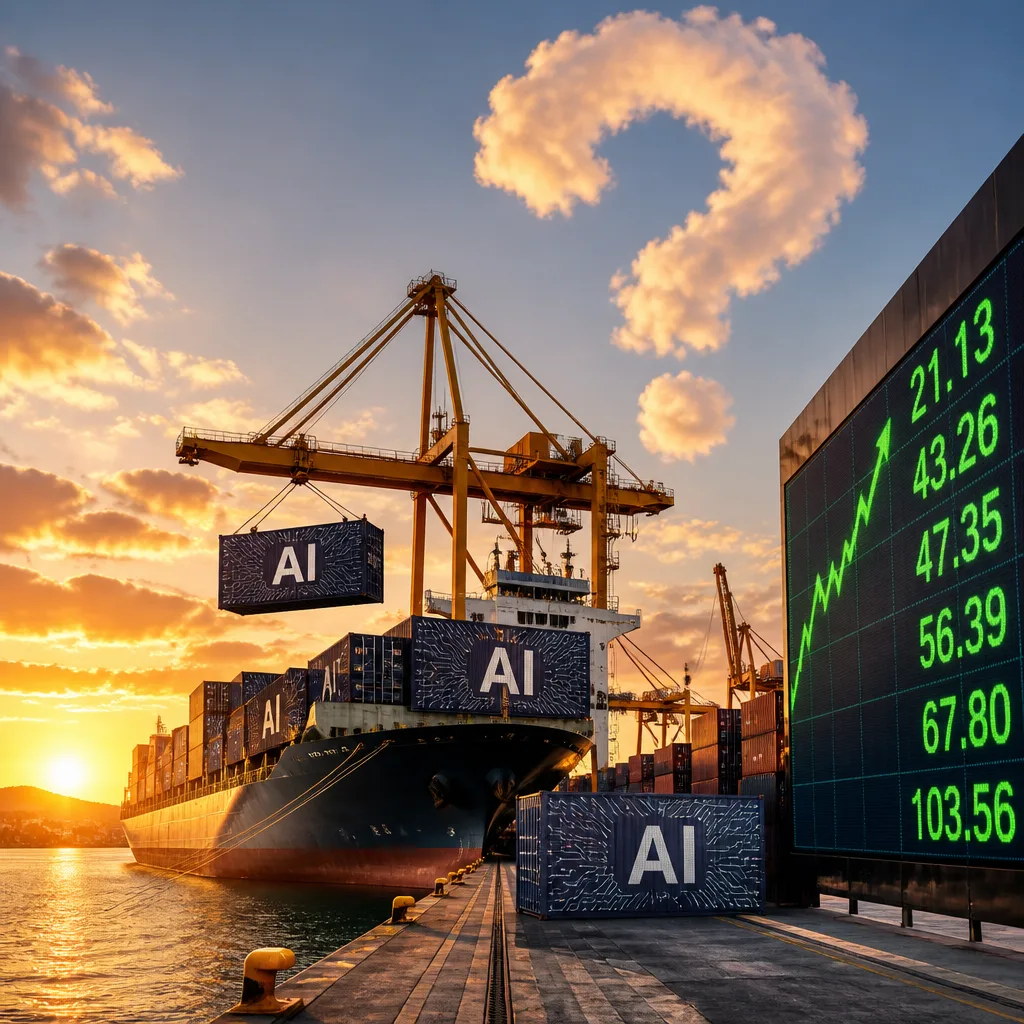
Taiwan’s economy has posted striking growth this year as global demand for artificial intelligence (AI) hardware and related technology exports pushed the island’s markets into the international spotlight.
Rapid expansion on trade and markets
Government and market data show Taiwan’s gross domestic product grew by 8.63% in 2025, with the momentum accelerating into the first quarter of 2026 when GDP expanded by 13.69%. The surge in technology exports also helped Taiwan’s stock exchange climb to become the fifth largest in the world by market capitalisation, overtaking the United Kingdom, Canada and India.
Much of that export strength stems from shipments to the United States. Last year the US imported $201bn worth of goods from Taiwan, nearly double the $116bn recorded in 2024. In May, Taiwan surpassed China as the third‑largest source of US imports, after Mexico and Canada.
Why AI matters
Analysts attribute the rapid gains to Taiwan’s pivotal role in the manufacturing of semiconductors and other components essential to AI systems. Those industries have seen a surge in demand as AI adoption accelerates across cloud providers, data centres and consumer devices.
“Artificial intelligence helps explain the rising importance of Taiwan,” said Chad Bown, a senior fellow at the Peterson Institute for International Economics.
The concentration of advanced chip manufacturing and specialised supply‑chain capabilities has created a powerful export cycle: higher demand leads to larger production runs and investment, which in turn lifts corporate earnings and market capitalisation.
Growth now, but limits ahead
Despite the strong figures, some observers caution that the current expansion may be cyclical rather than structural. Demographic headwinds, geopolitical tensions and the concentrated nature of the tech sector could complicate Taiwan’s long‑term outlook.
“It seems to be a win‑win for now,” said Reza Hasmath, an academic faculty adviser at The China Institute at the University of Alberta. “But Taiwan is just postponing a reality that’s not sustainable.”
Those comments reflect two recurring concerns. First, Taiwan’s economic performance is heavily weighted towards a small number of high‑value industries, raising questions about diversification. Second, the island’s geopolitical position — particularly as US demand rises and cross‑Taiwan Strait tensions persist — adds a layer of risk that could affect investment and trade flows.
What this means for global markets
For international business and policymakers, Taiwan’s rebound has immediate and practical consequences:
- Supply‑chain concentration: The world remains highly reliant on Taiwanese manufacturing for advanced semiconductors and related components.
- Trade rebalancing: The shift in US import sources, with Taiwan overtaking China in some categories, affects trade relationships and sourcing strategies.
- Market volatility: Heavy exposure to a single sector can amplify stock‑market moves when demand for that sector shifts.
Those dynamics matter to exporters and importers worldwide, from multinational technology firms to downstream manufacturers. For investors, the rapid rise in market capitalisation invites scrutiny over valuation and the durability of earnings growth tied to AI demand.
| Indicator | Reported figure |
|---|---|
| GDP growth (2025) | 8.63% |
| GDP growth (Q1 2026) | 13.69% |
| US imports from Taiwan (2025) | $201bn |
| US imports from Taiwan (2024) | $116bn |
For South African businesses and investors, the Taiwan story is a reminder that technological specialisation can re‑shape trade patterns quickly. While the direct trade link between South Africa and Taiwan is smaller than between Taiwan and major economies, shifts in global supply chains can ripple into costs, sourcing options and investment flows for companies operating in technology value chains.
Policymakers and corporate strategists globally will be watching whether Taiwan can translate its current AI‑driven windfall into broader, more sustainable growth — or whether a concentrated boom leaves the economy exposed if demand softens or geopolitical risks rise.
The island’s recent performance demonstrates the outsized impact that fast‑evolving technology demand can have on national economies, and underlines why governments are paying close attention to industrial policy, trade resilience and diversification strategies.