Researchers have traced how two highly poisonous plants produce complex chemical compounds and have replicated part of that chemistry inside tobacco, a development that could lead to new, more sustainable sources of medically useful molecules.
From deadly blooms to laboratory synthesis
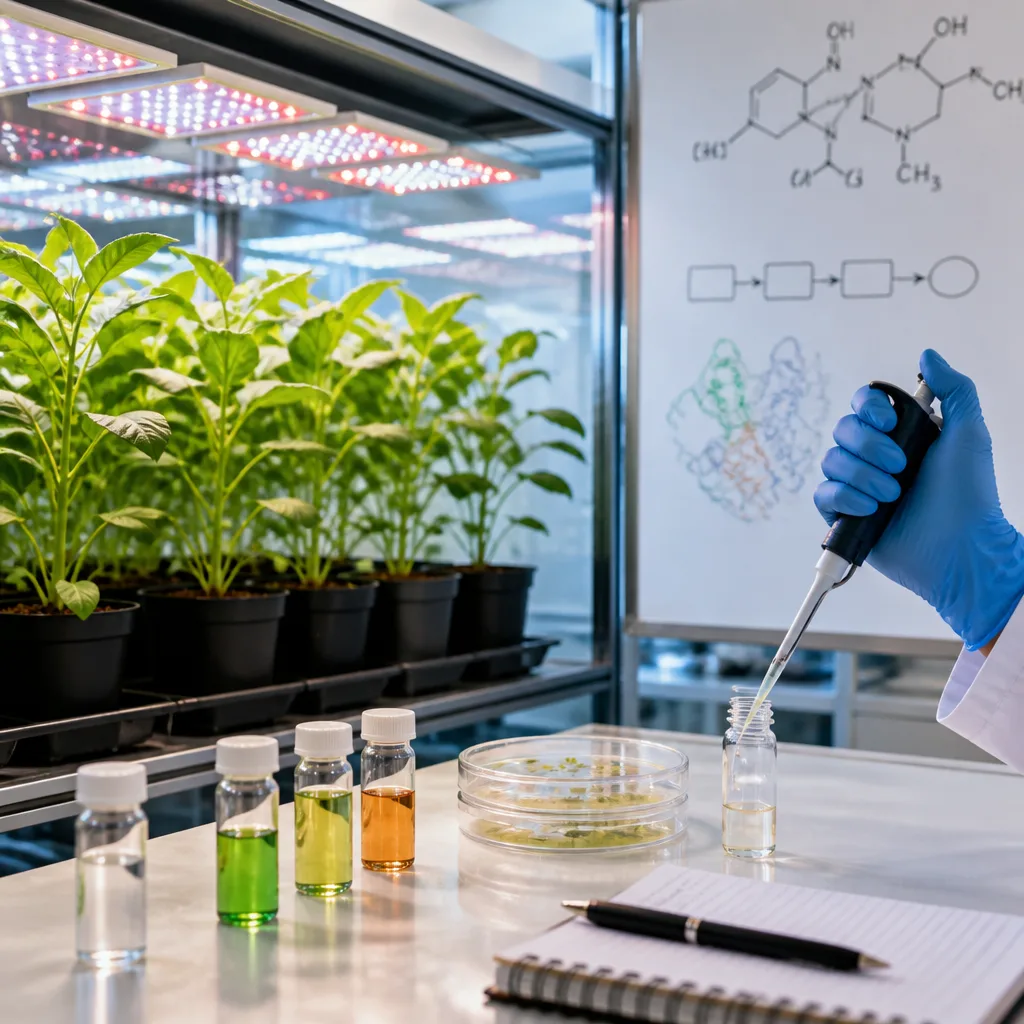
The international team, bringing together scientists from Michigan State University and the Czech Academy of Sciences, examined the genetic machinery in wolfsbane and larkspur (also known as delphinium). By analysing thousands of genes, they identified a set of enzymes required to assemble a complex molecule called atisinium. The group then reconstructed part of that biosynthetic pathway within tobacco plants, demonstrating that the chemistry can be reproduced outside the original species.
The work is published in the journal Molecular Plant. The research focused on diterpenoid alkaloids, a family of natural products that are highly toxic at low doses but are also of interest because of their biological activities.
"These plants have been used in different forms of medicine throughout the world for thousands of years," said Garret Miller, co‑first author and an MSU alumnus now at the University of Michigan‑Flint.
Study authors emphasised the long history of humans extracting useful chemistry from plants. Björn Hamberger, a co‑author and the James K. Billman Endowed Professor in MSU's Department of Biochemistry and Molecular Biology, noted that plants have evolved elaborate chemical repertoires over millions of years. Lana Mutabdžija, a graduate student at the Czech Academy of Sciences and co‑first author, pointed to familiar examples of plant‑derived compounds that have become everyday products and medicines.
Why the advance matters
Natural products remain a rich source of pharmaceuticals, yet sourcing them directly from wild plants can be unsustainable, slow and sometimes dangerous given the toxicity of certain species. Reconstructing plant pathways in a tractable host, such as tobacco, allows researchers to:
- Produce target molecules without harvesting endangered or toxic wild plants.
- Supply sufficient quantities for research and preclinical testing.
- Modify pathways to produce safer analogues or derivatives with improved medicinal properties.
The research highlights potential applications for compounds related to atisinium and other diterpenoid alkaloids, including analgesic (pain‑relief) agents, antimalarial and anticancer leads, and compounds that could be developed as agricultural pest controls. The paper does not claim any ready‑to‑market drugs; rather it describes a proof of concept that permits controlled study and future engineering of these complex chemistries.
Scientific and practical caveats
The authors caution that many steps remain between reproducing a biosynthetic pathway in a model plant and developing safe, effective medicines. Toxicity at low doses is a central concern with diterpenoid alkaloids, so any therapeutic use would require extensive chemical modification, safety testing and clinical trials. The present work provides a foundational tool for such downstream research by enabling access to compounds that previously were difficult to obtain in quantity.
| Item | Fact from the study |
|---|---|
| Plants studied | Wolfsbane and larkspur (delphinium) |
| Target molecule | Atisinium (complex diterpenoid alkaloid) |
| Key achievement | Identification of six enzymes and partial pathway reconstruction in tobacco |
| Published in | Molecular Plant |
Beyond immediate scientific interest, the work fits into a broader trend in synthetic biology and natural‑product research: harnessing and reshaping plant chemistry for human benefit while reducing pressure on wild species. For South African researchers and industry, advances of this kind could inform local work on plant‑derived medicines and agricultural chemicals, provided appropriate partnerships and regulatory frameworks are developed.
As the authors stress, plants remain unparalleled 'chemists' with diverse molecules that have evolved for ecological reasons. The challenge now is to translate that diversity into safe, effective and sustainable technologies without overstating the pace of progress.