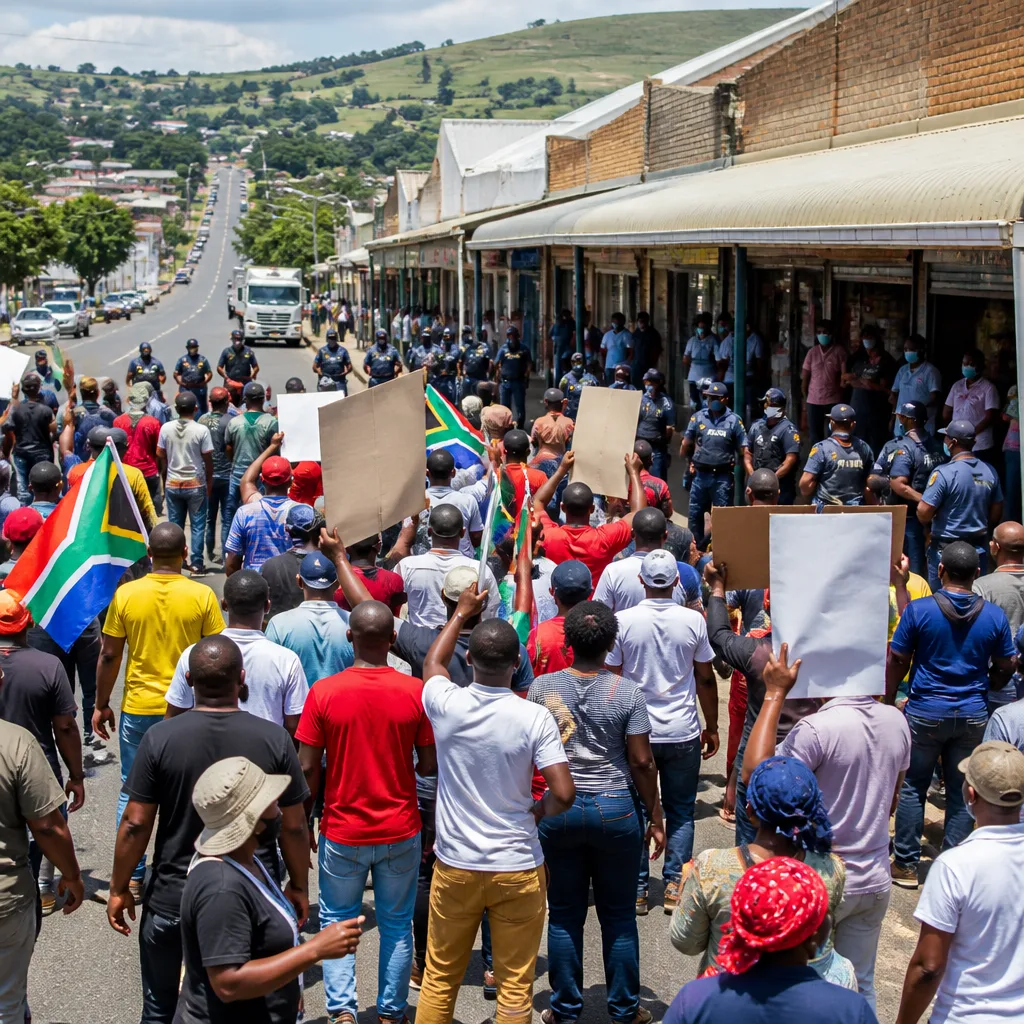
About 200 protesters marched through Mooi River in the KwaZulu‑Natal midlands this week, calling on foreign‑owned businesses to comply with South African business rules and to show what they described as social responsibility, the report said. The town — an important economic hub on a national transport route — saw local business owners gather under police protection while the demonstration proceeded peacefully.
What happened in Mooi River
The march, organised by groups including the All Truck Drivers Forum and Allied South Africa (ATDF‑ASA) and March and March, comprised unemployed truck drivers and activists. A heavy SAPS presence prevented the demonstration from escalating, the account said.
Addressing a group of foreign business owners in the town, anti‑migrant leader Nkosikhona “Phakel’umthakathi” Ndabandaba criticised them for failing to respect South African small business rules and for not meeting expectations around investment and community obligations. He singled out one shopkeeper by name and raised the length of his stay in the country and the length of time he had been in business.
“There are laws in the country about small businesses. When are you guys going to respect that and make way for South Africans to do business?”
The business owner mentioned — identified in the report as Muhammad Jaffar — told those gathered he complied with South African laws but was uncertain about the social responsibility claim.
Rules and the R5m minimum
Ndabandaba told the assembled crowd that Treasury required an investment of R5m for certain applicants to qualify for a business visa. The report notes the R5m threshold applies to some business visa applicants under immigration regulations, but that this is administered by the Department of Home Affairs rather than the national treasury. The account also said the R5m minimum can be waived in some circumstances.
| Item | Detail from the report |
|---|---|
| Size of march | About 200 participants |
| Location | Mooi River, KwaZulu‑Natal midlands |
| Policy cited | R5m minimum investment for some business visa applicants (may be waived) |
Business and policy implications
For the local economy, such demonstrations can be disruptive: Mooi River sits on a major transport corridor, and a sustained deterioration in relations between traders and anti‑migrant groups could affect foot traffic and investor confidence. The presence of truck drivers among the protesters highlights potential friction along logistics routes that support national freight movements.
- Protesters demanded foreign traders respect small‑business rules and social responsibilities.
- Business owners in the town remained under police guard during the march.
- The R5m business visa investment threshold was cited, with the report noting it is part of home affairs regulations and can be waived.
The report did not provide details on any arrests or criminal cases opened at local police stations. It also did not specify how many of the foreign business owners present held particular visa categories or whether any shops were closed as a result of the march.
Longer term, the exchange underscores tensions around how immigration, investment requirements and community expectations intersect at the level of small businesses. Questions raised in the town echo broader national debates about informal employment, legal compliance by foreign nationals and the effectiveness of visa rules in balancing investment attraction with local job creation.
Local authorities and the Department of Home Affairs administer and enforce immigration and business visa rules. The report quoted participants and local leaders on the ground but did not include comment from the department or from national treasury officials about the interpretation or enforcement of the R5m threshold.