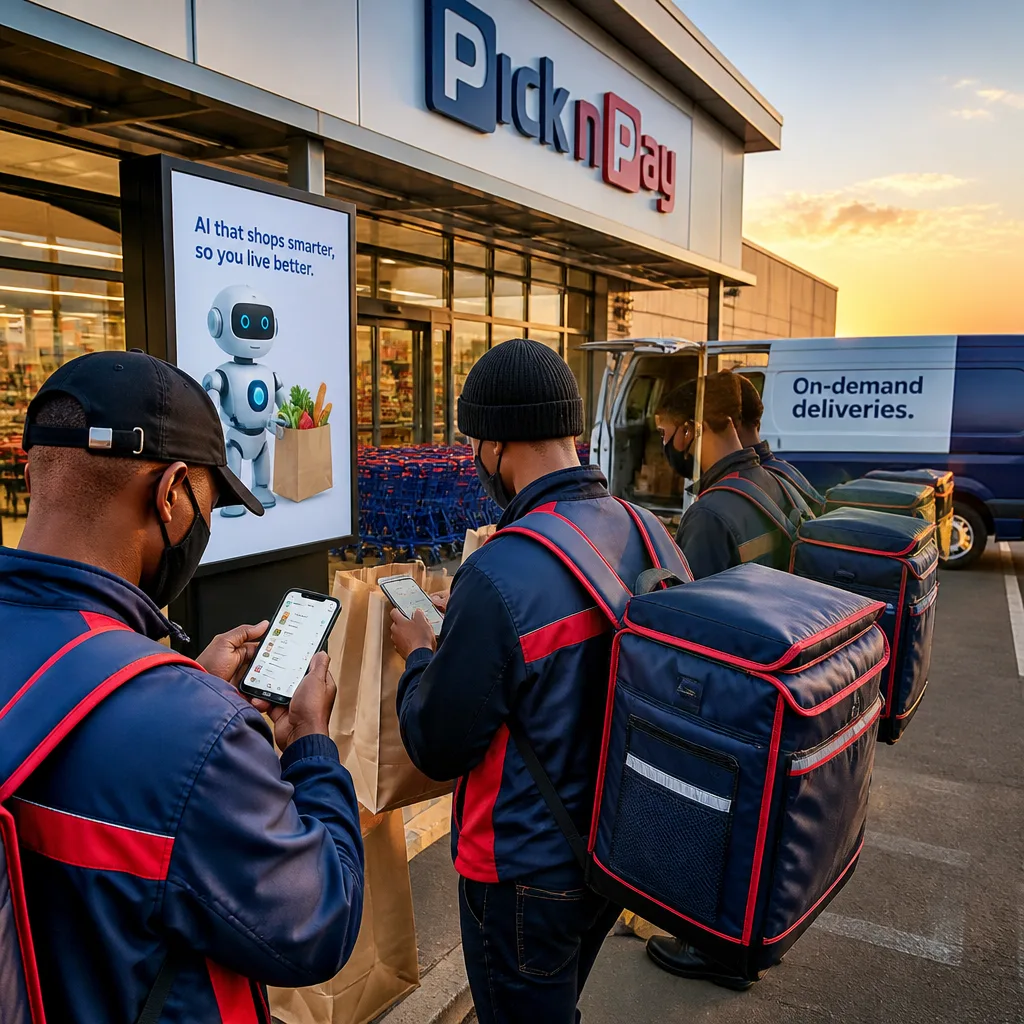
Pick n Pay reported a 37.5% increase in online turnover in the 20 weeks ended 19 July 2026, driven by the continued expansion of its on‑demand delivery service, Pick n Pay Asap!, and grocery sales through its integration with the Mr D platform. The retailer said the rise in e‑commerce activity aligns with trends shown in its integrated annual results for the year ended 1 March 2026.
Scale, partnerships and technology
The company said growth was supported by a network of more than 620 Pick n Pay stores nationwide that now enable on‑demand deliveries via Asap!, encompassing company supermarkets, franchise outlets and hypermarkets. Asap! also operates with a delivery workforce that exceeds 2,500 drivers, a scale Pick n Pay says improves the speed and reliability of fulfilment.
Pick n Pay highlighted that its online performance was augmented by sales routed through Mr D, reflecting the retailer’s strategy of combining internal digital capability with third‑party marketplace reach. The partnership with Takealot Group and Mr D was singled out as an important channel extension for on‑demand fulfilment.
Personalisation and a new AI assistant
In its March reporting, Pick n Pay attributed stronger online engagement to continued investment in digital tools that enhance personalisation, search and customer engagement on its platform. The retailer recently added a Google Gemini‑powered shopping assistant to the Asap! app, branded “Penny”, which can be prompted in a conversational way to suggest grocery items for specific meals or help plan monthly shopping.
“Pick n Pay continues to strengthen its omnichannel offering through the evolution of the Pick n Pay Asap! app, which serves as Pick n Pay’s integrated digital platform,” the company said previously.
Pick n Pay described the Asap! app as an integrated digital interface that brings grocery shopping, Pick n Pay Clothing, Smart Shopper rewards and other services together. The retailer said it had focused on improving search capabilities and tailoring offers to drive conversion and repeat business.
How this matters for consumers and the sector
For South African households, the reported growth suggests broader availability and improved reliability of on‑demand grocery delivery — particularly in areas served by the expanding roll‑out. Faster, more reliable deliveries and an AI shopping assistant may shorten the time consumers spend planning and shopping, and could influence where shoppers choose to buy groceries.
For the retail sector, the figures underline the importance of omnichannel investments and logistics scale. Pick n Pay’s model combines in‑store inventory with app fulfilment and third‑party marketplace placement, offering several levers to drive online sales. Retail competitors will be watching how technology such as conversational AI affects basket sizes and order frequency.
- Online turnover growth: 37.5% in the 20 weeks to 19 July 2026.
- Store coverage: more than 620 stores enabled for Asap! deliveries.
- Delivery fleet: over 2,500 drivers operating for Asap!.
| Metric | Reported figure |
|---|---|
| Online turnover growth (20 weeks to 19 Jul) | 37.5% |
| Stores supporting Asap! | 620+ |
| Asap! drivers | 2,500+ |
Pick n Pay’s online expansion reflects a wider industry shift toward digital grocery channels that accelerated during the pandemic and continues as retailers invest in logistics, data and platforms to retain customers. The company’s mixed strategy — direct app sales, integration with third‑party delivery marketplaces, and in‑store fulfilment — aims to capture customers across multiple touchpoints.
While the trading update focuses on online turnover and omnichannel reach, Pick n Pay also reported that like‑for‑like sales grew by 2.6% over the comparable period, signalling that in‑store trade is still contributing to overall revenue despite the surge in digital demand.
How this growth translates to pricing, margins or costs for consumers was not detailed in the trading update. However, the scale in drivers and store fulfilment capacity is likely to be a factor in delivery fees, service levels and the speed of expansion into new suburbs and towns.
Retailers across South Africa will be watching how investments in conversational AI, delivery scale and marketplace partnerships translate into sustained online penetration and profitability in a market where households are price sensitive and logistics can be costly.