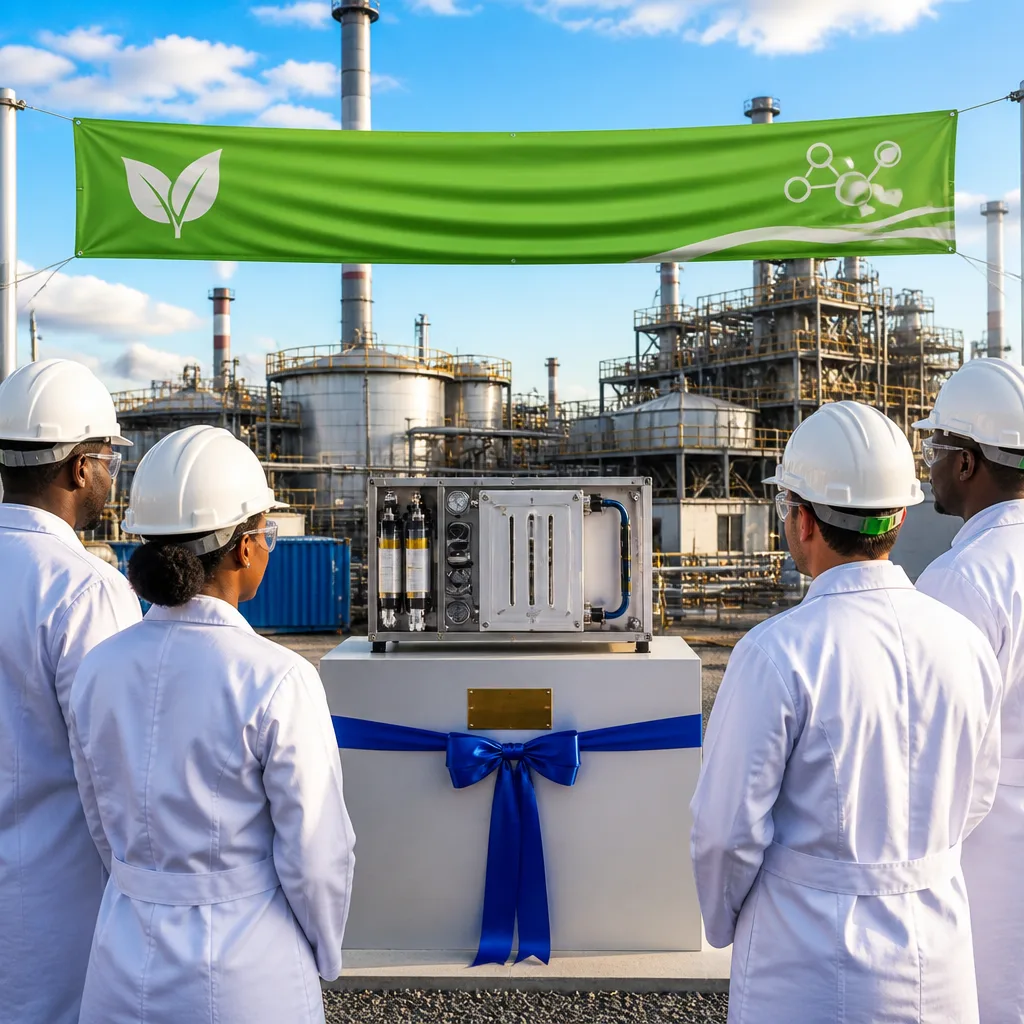
The Chairperson of the Portfolio Committee on Science, Technology and Innovation, Ms Lusizo Makhubela, has called the unveiling of a 2 kW proton exchange membrane (PEM) electrolyser at Sasol One Site in Sasolburg a notable milestone in South Africa’s effort to develop a knowledge-based, globally competitive economy.
Government, industry and academia partnership
Ms Makhubela said the project demonstrates what can be achieved when the Department of Science, Technology and Innovation (DSTI), industry and universities coordinate their resources and expertise. The unveiling, she said, shows growing capacity to develop indigenous technologies and to translate laboratory research into commercial solutions that can generate jobs and bolster local industry.
"The unveiling of the electrolyser is more than a technological achievement. It is evidence of South Africa’s growing capacity to develop indigenous technologies," Ms Makhubela said.
The project brings together a number of national bodies and institutions. According to Parliament’s statement, partners include Sasol, the South African National Energy Development Institute (SANEDI) and the HySA Infrastructure Centre of Competence at North-West University, working alongside the DSTI.
| Partner | Role (as reported) |
|---|---|
| Department of Science, Technology and Innovation | Lead government partner |
| Sasol | Project host (Sasol One Site) |
| South African National Energy Development Institute (SANEDI) | Energy development partner |
| HySA Infrastructure Centre of Competence, North-West University | Academic and technical partner |
Implications for the hydrogen economy and skills
Parliament’s report frames hydrogen technologies as a strategic opportunity for South Africa. It highlights three underlying national strengths the country can leverage: scientific expertise, renewable energy resources and platinum group metal reserves. The committee argues these position South Africa to develop green hydrogen technologies and fuel cells.
Ms Makhubela told Parliament the committee has long advocated for greater investment in research, innovation and the commercialisation of technology. She said discoveries must move beyond the laboratory and be converted into practical applications that create jobs and strengthen industry.
- Local technical capability: the electrolyser project is presented as contributing to the development of engineering and manufacturing skills.
- Industrial localisation: the collaboration aims to support domestic supply chains for hydrogen technologies.
- Just energy transition: the project is cited as aligning with an inclusive, innovation-driven shift to cleaner energy.
According to the statement, projects such as the 2 kW PEM electrolyser provide hands-on opportunities for entrepreneurs, researchers and young scientists and are part of efforts to build a competitive position in emerging global markets for hydrogen and fuel-cell systems.
Context and next steps
Parliament did not provide timelines for commercial rollout, cost details or broader deployment plans for the technology. The announcement focuses on the symbolic and capacity-building value of the demonstration unit and on the message that coordinated public–private–academic projects can accelerate technology development.
As South Africa seeks to balance industrial development with emissions reduction, hydrogen—particularly green hydrogen produced using renewable energy—has been identified by several government strategies as a potential growth sector. The electrolyser demonstration at Sasol One Site will now be one of a number of indicators policymakers and industry observers will watch as they assess whether local projects can scale, attract investment and create sustainable employment.
The Portfolio Committee said it welcomed the collaboration and insisted on continued support for research, skills development and commercial pathways to ensure scientific advances translate into measurable economic and social benefits.