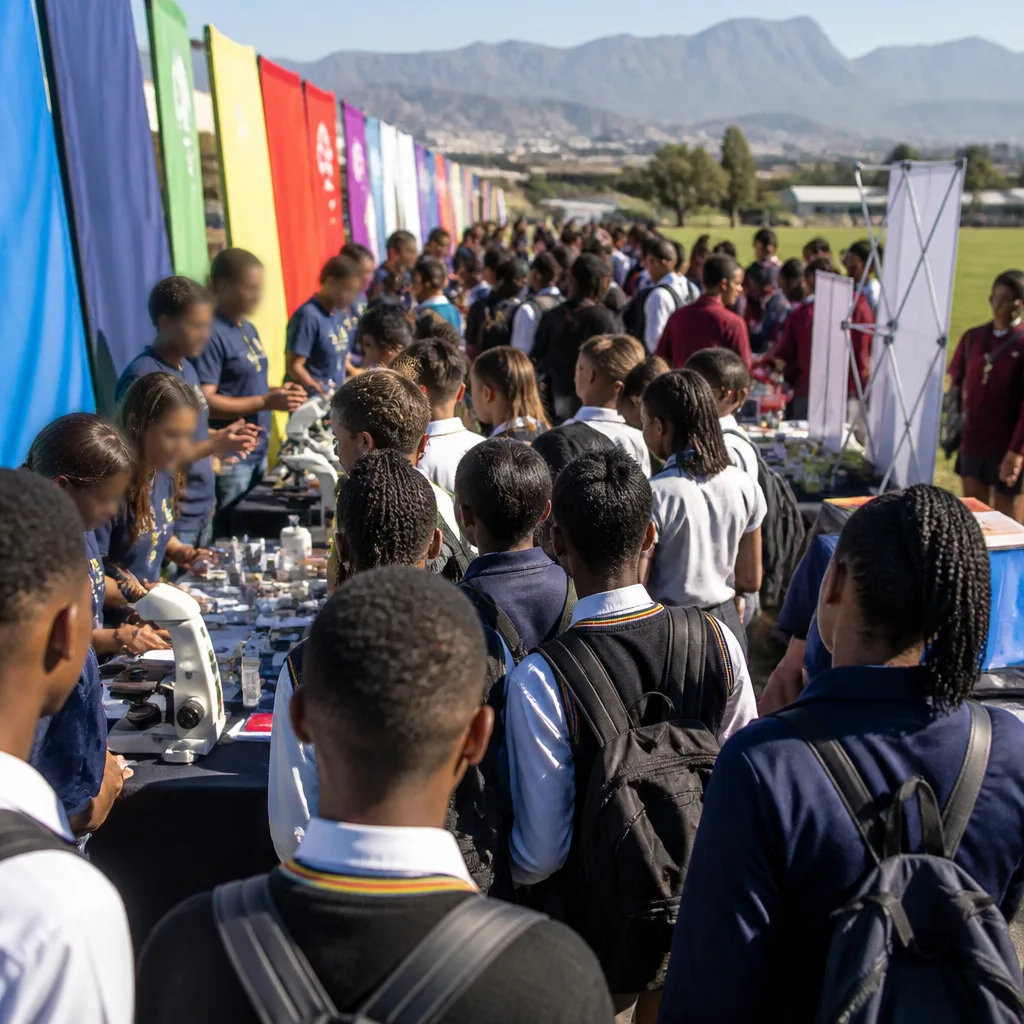
More than 1 500 learners from schools across the Dr Kenneth Kaunda District took part in the North‑West University's fourth annual Vice‑Chancellor's Science Day at Hoërskool Wolmaransstad on 5 August, the university reported. The event formed part of National Science Month under the national theme, "Science, technology and innovation are for everyone", and aimed to extend access to science, technology, engineering and mathematics (STEM) learning beyond campus boundaries.
University outreach taken to the community
The one‑day programme brought university staff, students and laboratory demonstrations directly into the town, combining keynote addresses with practical activities designed to spark interest in scientific study and careers. The initiative follows previous Science Days held in Mabeskraal (2023), Taung (2024) and Kuruman (2025), and is intended to rotate across communities in the region.
NWU principal and vice‑chancellor Prof. Bismark Tyobeka delivered the keynote address and framed the university's role as extending beyond teaching and research into social impact and community engagement, according to the university's report. He urged learners to be active participants in the exhibits rather than passive observers.
"Do not walk past an exhibition as a spectator. Stop. Ask a question. Touch what you are permitted to touch. Test an idea. Speak to a scientist," Prof. Tyobeka said.
Hands‑on learning and career exposure
Organisers said the day combined a range of activities to showcase STEM pathways and applications. Learners had access to:
- Career exhibitions featuring NWU faculties, government departments and industry partners;
- Practical demonstrations and laboratory displays brought by students and lecturers;
- Interactive competitions including science quizzes, puzzles and debate rounds;
- Science shows designed to illustrate scientific principles in accessible ways.
The university said the event sought to connect classroom learning with possible academic pathways and workplace applications, making it easier for learners to imagine futures in science and technology. Prof. Tyobeka also reflected on his personal journey from a rural village to becoming a nuclear engineer and university vice‑chancellor, using that narrative to stress that talent exists in every community when supported by opportunity and education, the report adds.
Context and potential consequences
National Science Month aims to increase public engagement with science across South Africa, and activities such as the NWU Science Day contribute to that objective by reaching learners who may otherwise have limited contact with higher‑education resources. By bringing laboratories, lecturers and career information into a school setting, universities can:
- raise awareness of STEM career routes among learners in under‑served districts;
- help demystify tertiary study and the skills required to succeed in scientific fields;
- create partnerships between higher education, government and industry that may lead to further outreach or bursary opportunities.
| Item | Detail |
|---|---|
| Event | NWU Vice‑Chancellor's Science Day (fourth annual) |
| Date | 5 August |
| Location | Hoërskool Wolmaransstad, Dr Kenneth Kaunda District |
| Participants | More than 1 500 learners |
While the university's account highlights immediate engagement, the longer‑term impact of such events depends on follow‑up measures: sustained contact, mentoring, access to resources and clear pathways into tertiary study. The NWU report did not provide figures on subsequent enrolments or tracking of learners who attended past Science Days.
Organised outreach remains an important strategy for addressing uneven access to quality science education in South Africa. By rotating the programme to different communities, NWU expects to broaden participation and support the national aim of making science and innovation accessible to a wider public.