Genetic evidence has split giraffes into four distinct species, forcing a rethink of conservation priorities across Africa and offering new hope — and new challenges — for populations in southern Africa.
What changed and why it matters
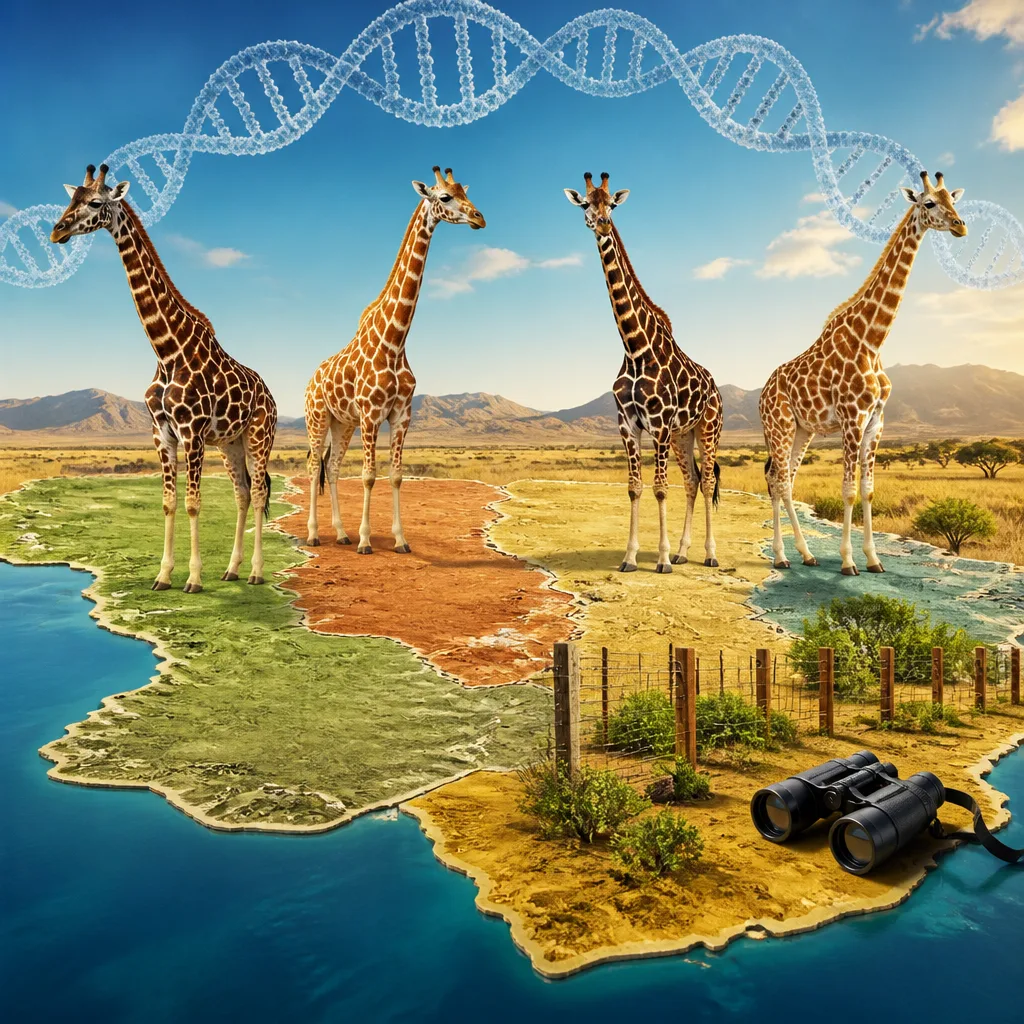
For more than 250 years, scientists treated the giraffe as a single species, Giraffa camelopardalis. That view shifted after genetic studies published in 2016 and 2018 analysed nuclear and mitochondrial DNA from populations across the continent and identified four evolutionary lineages that rarely interbreed. In 2025 the International Union for Conservation of Nature (IUCN) formally recognised those four lineages as separate species.
The decision has two immediate consequences for conservation. First, it removes the masking effect that averaged population figures had produced: a strong population in one area can no longer be used to infer security for all giraffes. Second, each species now requires a tailored strategy that reflects its particular threats, population distribution and dependence on protected areas.
Which giraffe groups are most at risk
Not all giraffes face the same pressures. The reclassification highlights species-specific vulnerabilities:
- Northern giraffe — described as the most threatened, surviving in fragmented populations across East and Central Africa, and under sustained pressure from habitat loss, poaching and conflict.
- Reticulated giraffe — found mainly in northern Kenya, southern Ethiopia and Somalia; the vast majority live outside formal protected areas and their future depends heavily on community-based conservation.
- Masai giraffe — Africa’s largest giraffe species; it has lost almost half its population over recent decades because of habitat fragmentation and hunting for bushmeat.
- Fourth species — while the recent coverage notes a conservation success in southern Africa for one of the species, the broader picture is mixed and region-specific responses are required.
The new taxonomy means conservationists and governments must avoid one-size-fits-all measures and instead consider local population trends, land-use pressures and community incentives.
Implications for southern Africa
Southern Africa may hold pockets of relative success, but the scientific reclassification underscores the need for continued vigilance. Populations that appear secure at a national level may be genetically distinct from more threatened groups elsewhere; conversely, lessons from successful local initiatives could be adapted and scaled across borders where the same species occur.
Community conservation emerges as a recurring theme for the Reticulated giraffe, where more than 95% of individuals live outside protected areas. That reality points to the importance of agreements with landowners, incentives for coexistence and strengthened anti-poaching measures that work beyond park boundaries.
Simple data snapshot
| Giraffe group | Key conservation note |
|---|---|
| Northern giraffe | Most threatened; fragmented populations; habitat loss, poaching and conflict |
| Reticulated giraffe | Mostly outside protected areas; relies on community conservation |
| Masai giraffe | Population declined by almost half; fragmentation and bushmeat hunting cited |
These summaries reflect findings from the genetic studies and the IUCN recognition that changed giraffe taxonomy; they indicate where conservation effort and policy should be prioritised.
Conservation strategies that follow the science
Scientists and conservationists must now match interventions to species’ specific needs. That will include:
- Targeted anti-poaching and habitat-protection measures where fragmentation and illegal hunting drive declines.
- Strengthening community-led conservation for populations that exist mainly outside formal reserves.
- Cross-border cooperation to manage migratory and transboundary populations of the same species.
Recognising multiple giraffe species reframes both the threat assessment and the toolkit available to conservationists. It is a reminder that advances in genetics do not just rewrite scientific classifications; they change how scarce conservation resources should be allocated across landscapes and across nations.
The long-term survival of giraffes in southern Africa will depend on integrating genetic knowledge with practical measures on the ground — from protected-area management to incentives that support people and wildlife living side by side.