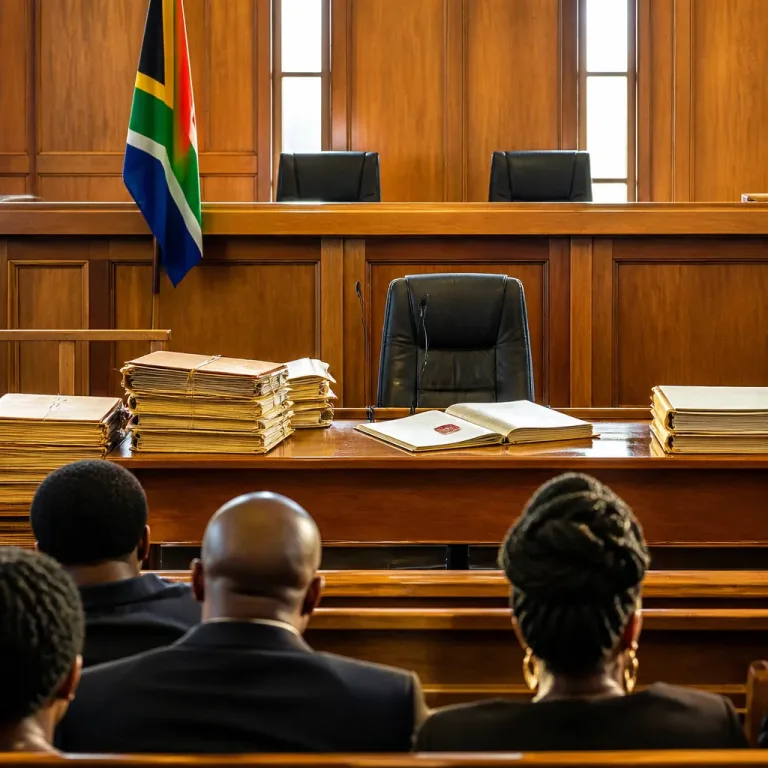
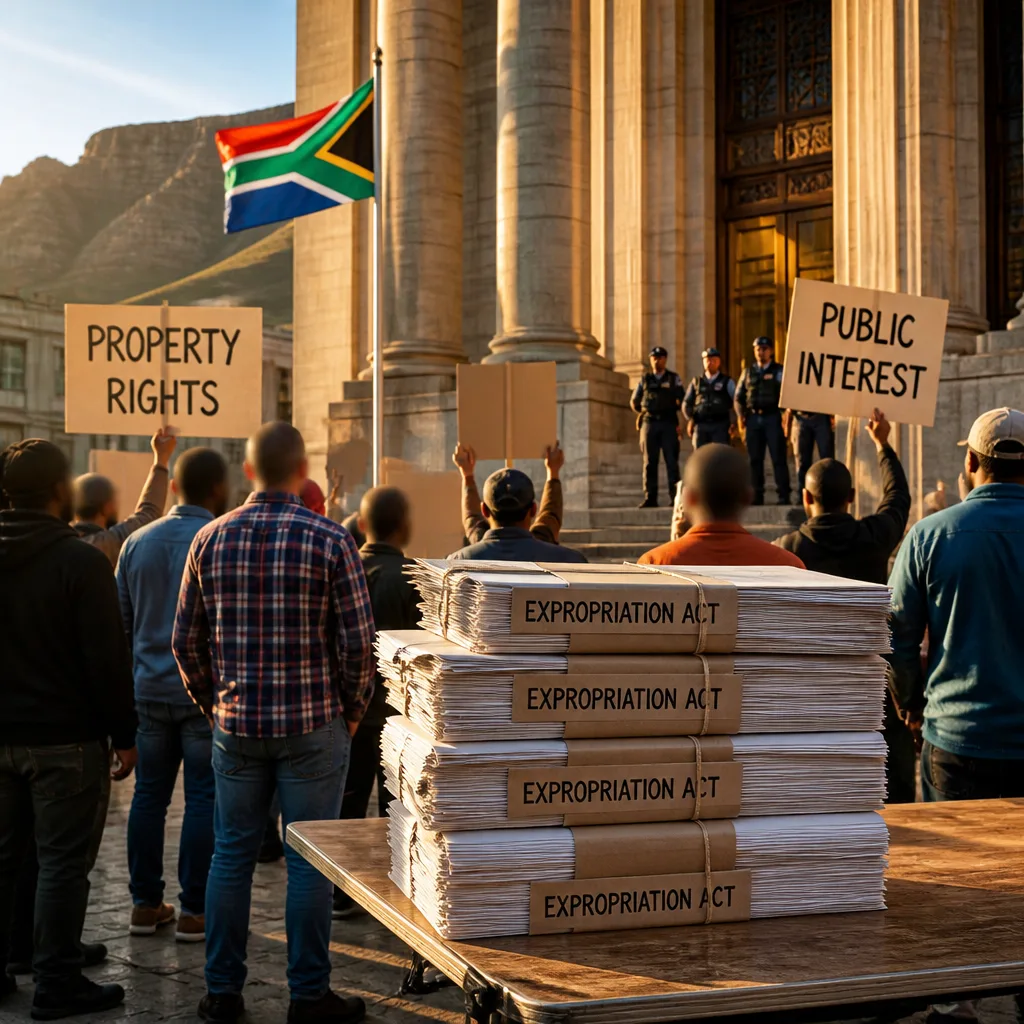
The Western Cape High Court on 3 August 2026 began hearing a constitutional challenge to the Expropriation Act, the law signed by President Cyril Ramaphosa last year that allows government to seize private land in the public interest and permits expropriation without compensation where negotiations have failed.
The case, brought by the Democratic Alliance alongside several lobby groups, argues the statute infringes the Constitution’s protections for private property and prohibits expropriation without compensation except in strict, constitutionally permissible circumstances, the applicants said in court papers reported on Monday.
Who is before the court
Parties named in the proceedings include:
- Plaintiffs: Democratic Alliance, Institute for Race Relations, AfriForum and allied lobby groups.
- Defendant: The South African government, represented in the matter arising from the Expropriation Act.
| Party | Argument reported |
|---|---|
| Democratic Alliance & lobby groups | Act violates constitutional property protections; insufficient safeguards against uncompensated expropriation. |
| Government | Law aims to make unused land productive and does not permit arbitrary seizure. |
Context and stakes
The Expropriation Act was enacted as part of government efforts to address the historic dispossession of land and persistent economic inequality dating from apartheid and colonial eras. Under the law, state institutions may expropriate land where it is demonstrably in the public interest, and the statute provides a route to proceed without compensation if negotiations for a reasonable settlement have failed.
Opponents of the law say those provisions do not adequately protect landowners’ property rights and risk enabling seizures that the Constitution would not permit. Among the claimants, the Institute for Race Relations has argued that the Act lacks sufficient procedural and substantive safeguards. The Afrikaner advocacy group AfriForum is also a party to the challenge.
The government, facing the challenge, has maintained that the law cannot be used arbitrarily and is designed to redress longstanding inequalities by bringing underused land into productive use.
International fallout mentioned
The case has drawn attention abroad. The report noted that the administration of former US President Donald Trump has publicly criticised the Act and told reporters it viewed the law as a reason to withdraw financial aid and impose higher trade tariffs on South Africa. The US administration has also raised concerns that the law could be used against particular groups, a claim the South African government denies.
How the High Court rules could have ramifications beyond the immediate dispute: a judgment upholding the constitutional validity of the Act would clear the way for its continued implementation, while an adverse ruling could force Parliament and the executive to amend the law or its application. Judges are scheduled to hear argument through the week, but the court’s judgment could take weeks or months to deliver, the report said.
What to watch
- Procedural developments in the Western Cape High Court hearings through the week.
- Whether the court issues an interim order pending a full judgment—this could affect planned expropriations.
- Any legislative or executive responses should the court find parts of the Act unconstitutional.
The hearing marks the latest high-profile legal test of South Africa’s land reform approach, pitting measures intended to address structural inequality against legal protections for property enshrined in the Constitution.