Business Leadership South Africa (BLSA) chief executive Busisiwe Mavuso has warned that deteriorating municipal performance is forcing firms to shoulder costs that should be delivered by local government, eroding investment and business confidence ahead of the 2026 municipal elections. The comments were made during the PSG Think Big webinar, reported Bizcommunity.
Businesses absorb the cost of state failure
Mavuso described a pattern in which municipalities that struggle to provide reliable electricity, water, roads and safety push companies to secure their own alternatives. "This year's municipal elections are rather important," she said, noting that many municipalities are "seriously eroding, deteriorating, and failing to provide the basic services for which they were designed to provide."
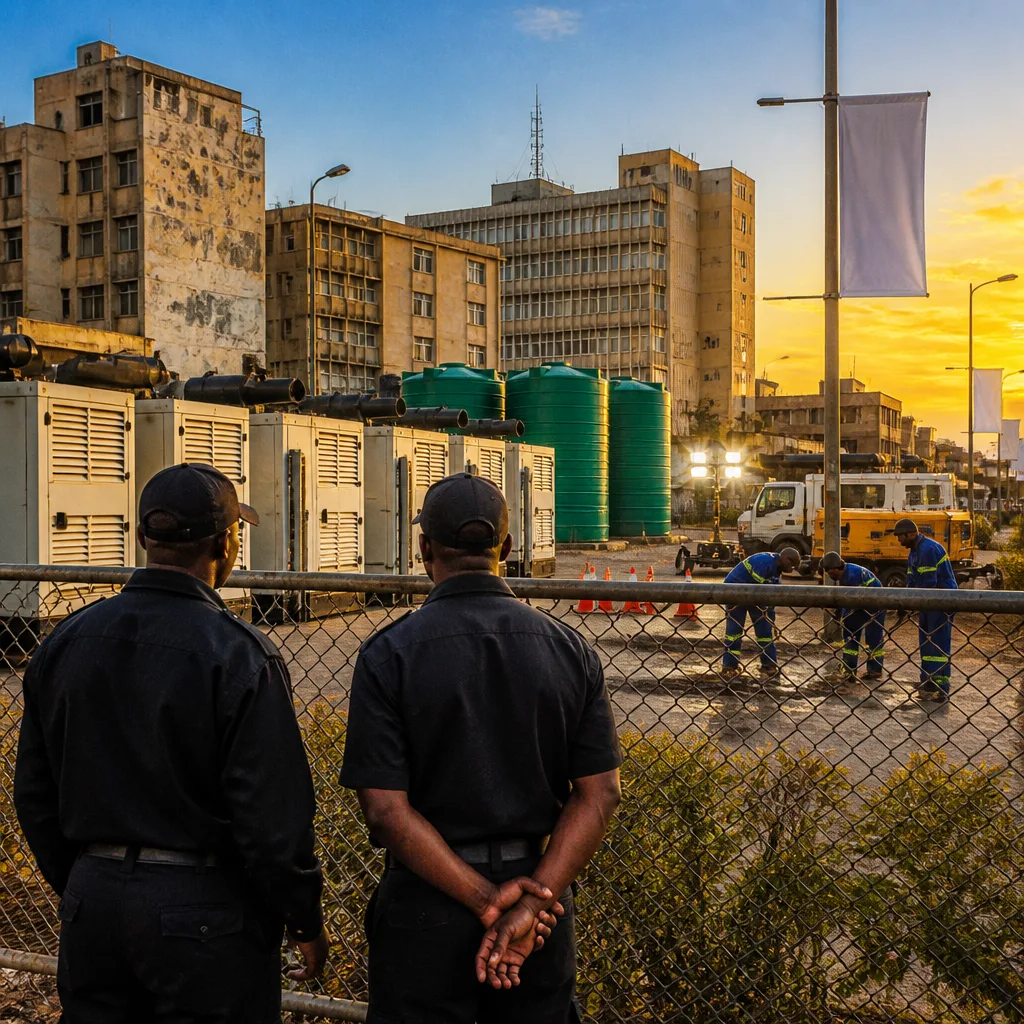
She said the effect is visible: firms are investing in contingency measures to remain operational. These include backup power, water storage, private security and temporary logistics solutions, often at significant expense to their balance sheets and against the public interest.
"You are seeing businesses having to invest in backup power, in water storage, in road repairs, in private security, in logistics, in alternative solutions and in infrastructure maintenance simply to remain operational."
Concrete examples and regional pressure
Mavuso pointed to manufacturing centres such as Nelson Mandela Bay as examples where companies have had to assume responsibilities normally borne by municipalities. She highlighted Volkswagen's decision to adopt four substations so that the company can respond quickly when faults occur — a step that shifts operational risk and cost from the municipality to the private sector.
According to the Bizcommunity report, this repricing of municipal risk can prompt firms to quietly relocate or withdraw investment rather than publicly criticise local government — a trend with long-term implications for jobs and local economic resilience.
- Direct costs borne by business: backup power, water storage, private security, road repairs and infrastructure maintenance.
- Indirect costs: higher logistics and insurance costs, lost production time, and the reputational impact on regions that are seen as risky for investment.
- Investment response: some companies redirect capital away from high-risk municipalities.
What this means for the wider economy
Where municipalities fail to deliver, business responses have fiscal and competitive consequences. Firms that invest in their own power and water infrastructure increase their operating costs, which can reduce margins, raise prices for consumers, or deter expansion. For labour-intensive sectors, the risk is particularly acute: declining investment and rising costs could translate into fewer jobs in cities that are already struggling with unemployment.
Mavuso framed the 2026 municipal elections as consequential for restoring confidence: effective, accountable municipal governance underpins local investment decisions and the functioning of national supply chains. She called for urgent reforms to unlock inclusive growth, saying that a lack of reliable basic services is a core obstacle to creating a stable environment for business.
| Service failure | Business response |
|---|---|
| Frequent power interruptions | Investment in backup generators, adoption of substations (example: VW) |
| Unreliable water supply | Water storage facilities and alternative sourcing |
| Poor roads and street lighting | Private road repairs, increased security spend |
The broader point from BLSA is that municipal dysfunction is not merely a service delivery or political issue; it is an economic risk that can dissuade domestic and foreign investors and shift costs onto the private sector and, ultimately, consumers.
As the country moves towards the municipal ballot, business leaders, investors and policymakers will be watching whether candidates and parties present credible plans to stabilise finances, rebuild infrastructure and restore the basic services that firms rely on. Until those fixes materialise, companies are likely to continue internalising the costs of public failure — a development that alters investment calculus and narrows the scope for inclusive economic growth.